Sufficient Sleep & Gut Health
We all know sufficient sleep matters. When life gets busy it's still the first thing to go — and the bacteria in your gut are keeping their own schedule whether you keep yours or not.
Sleep is when the body gets its work done — tissue repair, neural processing, a long list of maintenance tasks that don't fit around a waking day. Physical and mental health both depend on it.
So let's look at what governs it, and at the surprising number of passengers who have opinions.
What is a circadian rhythm, exactly?
Not a metaphor, for a start. Your circadian rhythm is driven by the routine expression of specific genes at the molecular level, in tissues throughout the body.1
Those expressions are shaped by what's going on around you — light, sound, and nutrition among them. Which is why a bright screen at eleven at night is doing something more literal than making you feel awake.
And science keeps finding new connections. You can probably guess where this is going.
Does what you eat affect how you sleep?

Anyone who has tried to sleep after something aggressively spicy already suspects the answer. Anyone who has fallen asleep in a chair after a holiday lunch is certain of it.
Nutrient intake shapes circadian rhythms in two distinct ways.1
1. When you eat
Meal timing helps your natural sleep cycle line up with the gene expression driving it — researchers call this an entrainment mechanism. Beyond the psychology of habit, it's a large part of why we eat at roughly the same times each day.
2. What you eat
Nutrient-specific pathways act on gene expression further down the line. A high-fat meal and a high-carbohydrate meal produce different circadian gene expression — same clock, different instructions.
Do bacteria have a circadian rhythm too?
They do, and this is the part that surprises people.
Gut bacteria oscillate through the day. Their numbers, their position along the intestinal lining and the metabolites they produce all rise and fall on a schedule.2 Different species peak at different hours, which means the lining of your gut meets a slightly different crowd at breakfast than it does at midnight.
Your gut is not one environment. It's a rota.
The traffic runs both ways
That shifting exposure can influence circadian gene expression in the human host — and the relationship is bidirectional, so the influence travels in both directions.2,3
Sleep cycle → bacteria

Disrupt the sleep cycle and the gut microbiome shifts with it. Night shift workers, whose days run against the grain of daylight, show gut communities that differ from those of people working and living on a daytime schedule.4
Bacteria → sleep cycle
Bacteria help govern the tight junctions between the cells lining your intestine. Those junctions regulate intestinal permeability and keep the barrier doing its job.3 When that regulation slips, compounds that should have stayed in the gut can reach the lymphatic system and bloodstream, and the immune system responds.
Where cortisol actually sits in this
Cortisol is a glucocorticoid, and glucocorticoids are the body's principal anti-inflammatory signal — it's the reason steroid medications calm inflammation down.
The interesting part is what happens under chronic stress. Tissues become less responsive to cortisol, a phenomenon called glucocorticoid receptor resistance, so the hormone stops damping inflammation the way it should.5 The problem isn't that cortisol drives inflammation. It's that under sustained stress, the body stops listening to the thing telling inflammation to stop.
And since cortisol follows its own daily curve — high in the morning, low at night — anything that flattens that curve tends to show up in how well you sleep.
So how much sleep do you actually need?
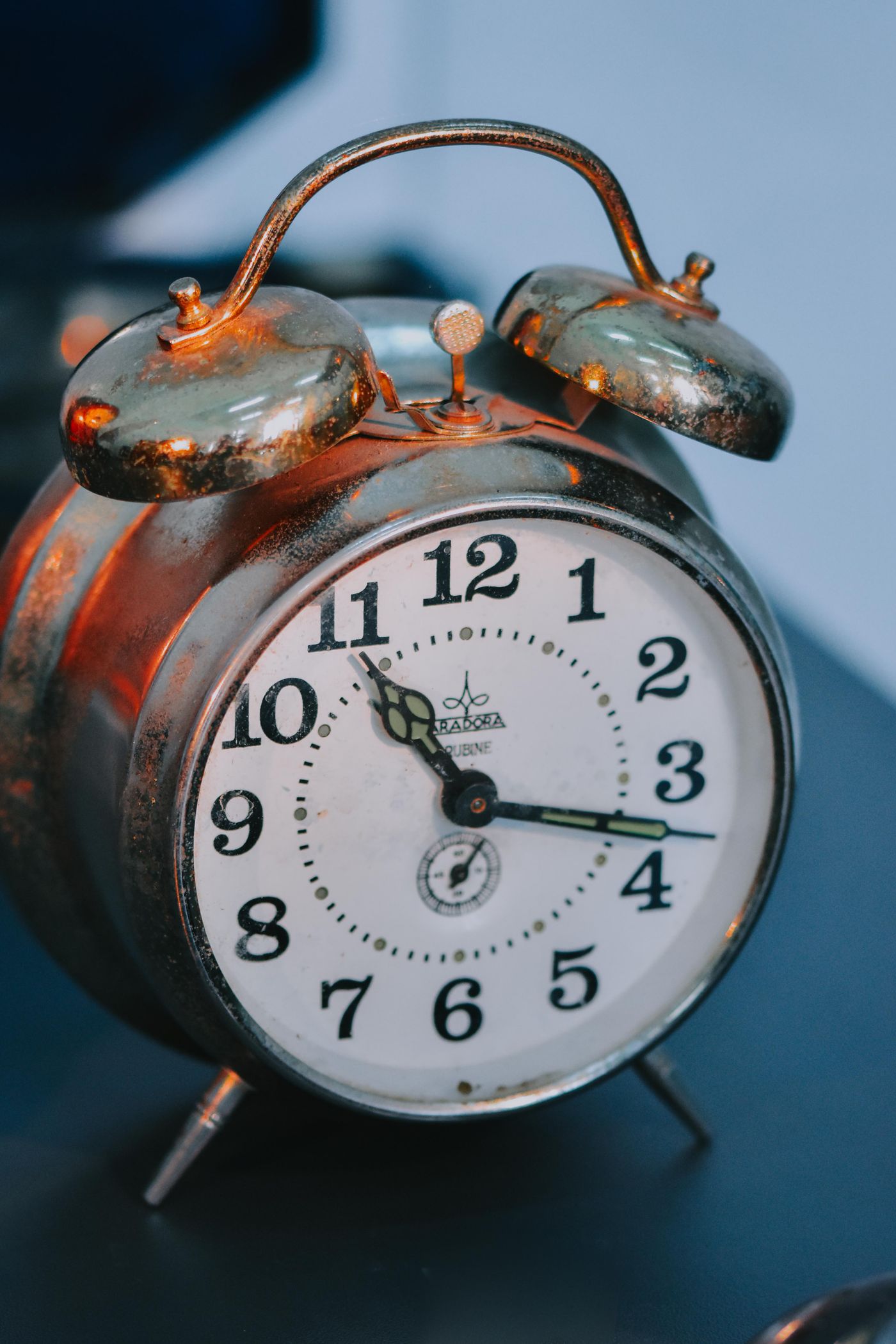
Enough that the CDC publishes guidance by age.6 Use it as a starting point rather than a verdict — then check it against how you actually feel after a night's sleep, and adjust.
| Age group | Recommended per 24 hours |
|---|---|
| Newborn (0–3 months) | 14–17 hours |
| Infant (4–12 months) | 12–16 hours (including naps) |
| Toddler (1–2 years) | 11–14 hours (including naps) |
| Preschooler (3–5 years) | 10–13 hours (including naps) |
| Kids (6–12 years) | 9–12 hours |
| Teens (13–18 years) | 8–10 hours |
| Adults (18–60 years) | 7 or more hours |
| Adults (61–64 years) | 7–9 hours |
| Adults (65+ years) | 7–8 hours |
Note that the older brackets aren't a license to sleep less — the recommendation stays at seven hours or more throughout adult life.
What now?
The fact of the matter is our bodies are fearfully and wonderfully made. They live in community — each system offering support to others and receiving it back, bacteria tagging along throughout. Every positive choice you make in one place tends to show up somewhere else.
Take the first step today. Improve a sleep habit, add one day of exercise, look into what it would take to stop smoking, or put some more fiber on your plate. One choice starts spilling benefits into the rest.
If falling asleep is the hard part
- Keep meals at roughly consistent times — timing is one of the two levers above
- Get daylight early; it's the strongest signal your clock receives
- Limit screens in the last hour
- Move caffeine to the morning
- Give any change two weeks before judging it
Where does Flourish fit?
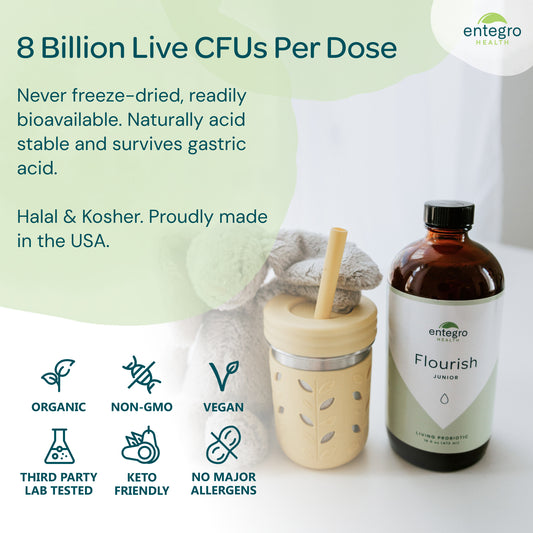
Flourish Original and Flourish Junior are living liquid probiotics — eleven strains from five families, small-batch fermented in Iowa — taken daily to support digestive and microbiome health.
That's the gut end of a two-way street. It isn't a sleep aid, and taking it won't buy back an hour you didn't spend in bed.
Flourish is a dietary supplement made to support digestive and microbiome health. It isn't a sleep aid and isn't a treatment for insomnia or any other condition. If you have persistent trouble sleeping, talk to your doctor — sleep problems are worth investigating properly.

Ready to try a living probiotic?
Eleven living strains. One daily shot. For the whole family.
Shop Flourish Original · Shop Flourish Junior · Why we keep it liquid
A few questions we hear a lot
Do gut bacteria really keep their own schedule?
Yes. Their abundance, location along the gut lining and the metabolites they produce all oscillate across the day.2 The community your gut lining meets at breakfast isn't quite the one it meets at midnight.
Does working nights change your gut microbiome?
Evidence suggests it does — shift workers show gut communities that differ from those on a daytime schedule.4 Sleep and the microbiome influence each other in both directions, so disruption to one tends to register in the other.
Does cortisol cause inflammation?
The opposite, normally — cortisol is the body's main anti-inflammatory hormone. What goes wrong under chronic stress is that tissues stop responding to it properly, so inflammation isn't damped the way it should be.5
Does meal timing really matter for sleep?
It's one of two ways food acts on the clock. Eating at consistent times helps your sleep cycle line up with the gene expression driving it; what you eat acts separately on gene expression further down the line.1
Is seven hours enough?
Seven or more is the adult recommendation across every bracket the CDC publishes.6 Treat it as a floor rather than a target, and let how you feel in the morning settle the rest.
Will a probiotic help me sleep?
We're not claiming that. Flourish supports digestive and microbiome health. If sleep is the problem, that's a conversation for your doctor.
About this article
Written by: Lorilyn Van Dyke, Entegro Health | Originally published: April 2021
Important information
This article is for general education and isn't a substitute for professional medical advice, diagnosis, or treatment. Persistent sleep difficulty can have medical causes worth identifying — please speak to your physician rather than managing it alone. Always seek qualified advice before starting a new supplement. These statements have not been evaluated by the Food and Drug Administration. This product is not intended to diagnose, treat, cure, or prevent any disease.
Sources
- Andreani, T. S., Itoh, T. Q., Yildirim, E., Hwangbo, D. S., & Allada, R. (2015). Genetics of Circadian Rhythms. Sleep Medicine Clinics, 10(4), 413–421. Source
- Thaiss, C. A., Zeevi, D., Levy, M., et al. (2014). Transkingdom control of microbiota diurnal oscillations promotes metabolic homeostasis. Cell, 159(3), 514–529. Source
- Li, Y., Hao, Y., Fan, F., & Zhang, B. (2018). The Role of Microbiome in Insomnia, Circadian Disturbance and Depression. Frontiers in Psychiatry, 9, 669. Source
- Matenchuk, B. A., Mandhane, P. J., & Kozyrskyj, A. L. (2020). Sleep, circadian rhythm, and gut microbiota. Sleep Medicine Reviews, 53, 101340. Source
- Cohen, S., Janicki-Deverts, D., Doyle, W. J., et al. (2012). Chronic stress, glucocorticoid receptor resistance, inflammation, and disease risk. PNAS, 109(16), 5995–5999. Source
- Centers for Disease Control and Prevention. About Sleep — recommended hours of sleep by age group. Source