Immune System + Microbiome
Your immune system and your gut bacteria didn't meet recently. They grew up together — which is why your body tolerates trillions of microbes without raising an alarm, and why looking after them is looking after yourself.

Most of the immune system isn't where people assume it is. The gut holds roughly 70% of the body's antibody-producing plasma cells, which makes it the largest single compartment of the humoral immune system.1,10
So this isn't a stretch of a connection. The gut is where most of the action happens.
The innate immune system: your first line of defense
The innate — or non-specific — immune system is what meets a pathogen first. It works in a couple of broad ways, and neither of them is glamorous.
The physical barrier
Epithelial cells line both the outside of your body and the whole length of the gastrointestinal tract, top to bottom. In the gut they're packed together so tightly that large pathogens can't slip between them. The seals holding them together are called tight junctions, and they're what keeps the contents of your intestine out of your bloodstream.
Your skin does a related job on the outside — barrier, temperature regulation, preventing water loss. But skin is a relatively simple problem: a few layers of dead cells and you're done. The gut has to be permeable enough to absorb nutrients while still keeping bacteria out. That's a considerably harder brief.
Those epithelial cells solve part of it by producing mucus, which makes it difficult for pathogens and debris to get a grip, and keeps the tissue underneath from drying out.
The bit that's genuinely clever: two layers of mucus
In the colon, the mucus isn't one layer. It's two.
The inner layer is dense, firmly attached to the epithelium, and essentially free of bacteria — a physical exclusion zone. The outer layer is looser, movable, and is where your bacteria actually live.2,3
So the mucus houses the microbiome and holds it at arm's length from your cells at the same time. And the relationship runs both ways — the bacteria help maintain the integrity of the very layers keeping them in place.
The chemical barrier
That mucus also carries chemicals that make life difficult for pathogens. And further up the line, the stomach holds a low pH that finishes off a great many viruses and pathogenic bacteria before they get anywhere.
Which is a problem if you're a probiotic, because you have to survive the same trip.
Flourish Original and Flourish Junior are fermented in a way that keeps the bacteria in the acidic environment they created themselves. By the time they meet your stomach, low pH isn't a shock — it's what they've lived in the whole time.

One honest note: probiotics are largely transient. They pass through rather than moving in permanently.4 That's not a failure — they can still influence the resident community and the environment of the gut while they're there. It's simply the reason consistency matters more than any single dose.
Partnership, not tolerance
The bacteria covering you inside and out work with your immune system rather than despite it.
Your immune system and your gut microbiota developed together, which is why your body doesn't treat its own microbiome as an invasion. A diverse gut full of beneficial bacteria also makes it harder for pathogenic species to establish, simply by competing for the same space and the same food.

Friendly bacteria support the mucosal lining directly. That lining, in turn, keeps large particles from crossing into the bloodstream and lymph system. Each side is maintaining the other's home.
About Peyer's patches
Peyer's patches are clusters of lymphoid tissue that act as the gut's immune sensors, sampling what passes by and deciding whether it warrants a response or should be tolerated. Essentially all of them sit in the small intestine — and roughly half are concentrated in the distal ileum, the final stretch before the colon.5
What you can actually do about it
Plenty, as it happens, and none of it exotic.
1. Eat more fiber — and know the real number
The Adequate Intake for fiber is 38 grams a day for men under 50 and 25 grams for women under 50. Over 50 those drop to 30 and 21 respectively, since calorie needs fall. If you'd rather one rule: about 14 grams per 1,000 calories.6
Two things worth saying about that. It's an Adequate Intake, not a minimum. And roughly 94% of American adults don't hit it, with average intake sitting near 17 grams.7 If you're short, you have company.
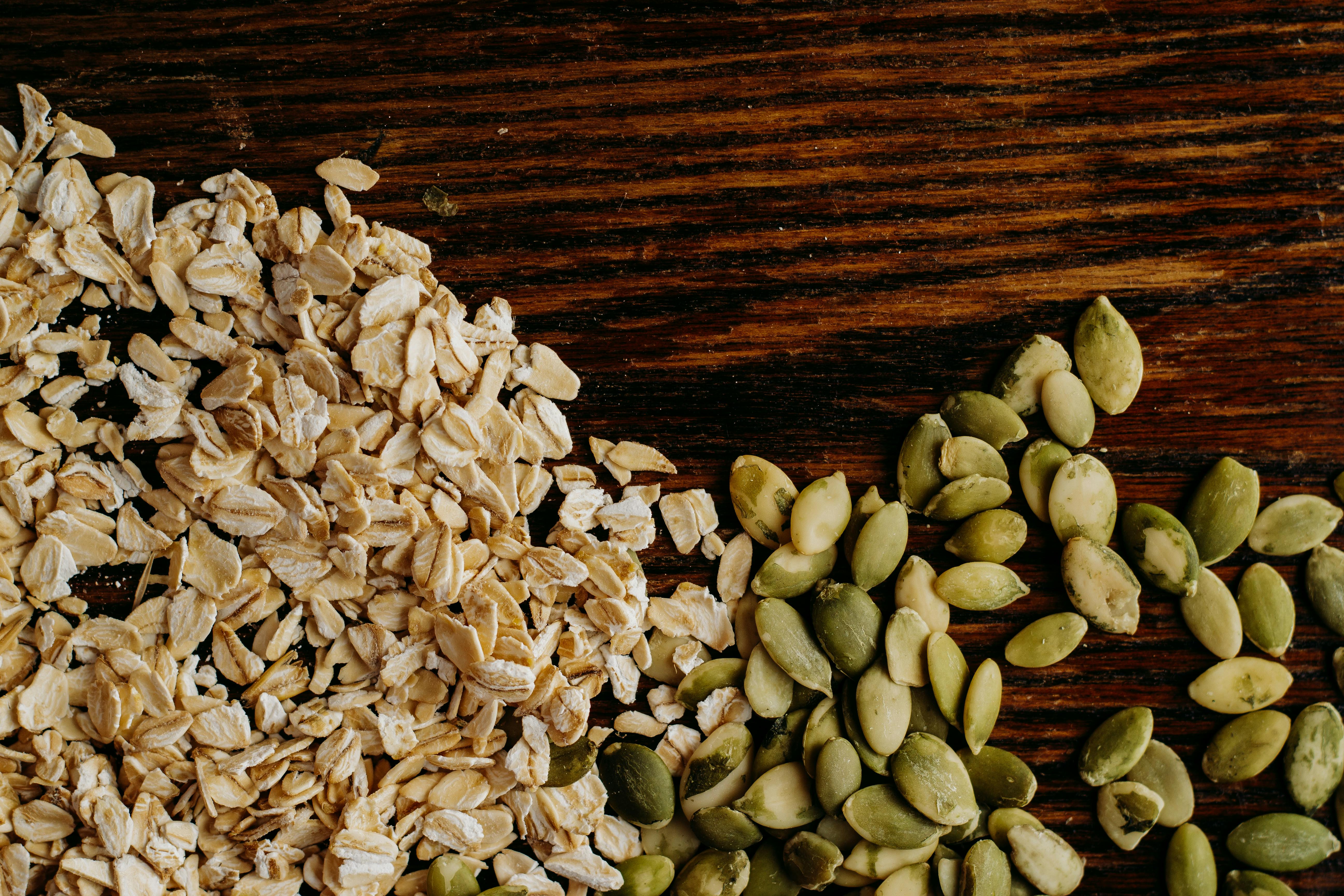
Increase it gradually — around 2 to 3 grams every few days — and drink enough water alongside. Going from 15 grams to 35 overnight is how you end up bloated and blaming fiber. Fruits and vegetables, lentils and beans, whole grains, nuts and seeds. Here are ten worth keeping in the house.
2. Sleep
Not always possible, frequently sacrificed first, and genuinely one of the higher-leverage things on this list.
Cytokines — the signaling proteins immune cells use to talk to each other — follow a daily rhythm, and several of the pro-inflammatory ones peak during nocturnal sleep. Cut the sleep short and you blunt that response.8
Adults want seven hours or more on a regular basis. Children need considerably more, on a sliding scale by age.9 Make it a priority where you can.

3. Move
Exercise supports a more diverse microbiome and appears to increase short-chain fatty acid production. We went into the research properly in Made to Move, including which bits are solid and which are still mostly rodent studies.

4. Feed it living bacteria
Fermented foods, and a daily probiotic if it suits you.
Flourish Original and Junior are living liquid probiotics — eleven strains from five families. Each dose also carries the metabolites the bacteria produced as they grew: short-chain fatty acids, bioactive peptides, amino acids, enzymes and minerals. Those stay in the bottle rather than being spun out in a centrifuge, which is the main thing that separates a living liquid from a freeze-dried capsule.

Original ferments on molasses and tastes stout. Junior ferments on sorghum and tastes sweet, closer to apple cider. Same probiotic — a flavor choice, not an age one, which is the single most common thing we get asked to clear up.

Flourish is a dietary supplement made to support digestive and microbiome health. It isn't a treatment for any condition and it won't prevent illness. Check with your doctor before starting a new supplement, and with your pediatrician before giving one to a child.

Ready to try a living probiotic?
Eleven living strains. One daily shot. For the whole family.
Shop Flourish Original · Shop Flourish Junior · Why we keep it liquid
A few questions we hear a lot
Is most of the immune system really in the gut?
No — that's the version everyone repeats. A 2023 census of the immune cells in the human body puts the gastrointestinal tract at about 3% of them, and around 5% of lymphocytes; most live in bone marrow, lymph nodes and the spleen. What is true is that roughly 70% of your antibody-producing plasma cells are in the gut, which makes it the largest single compartment of the antibody side of your immune system.
Can a probiotic boost my immune system?
"Boost" is the wrong word. A probiotic supports the gut, which is where most immune activity takes place. It won't stop you catching a cold, and anyone telling you otherwise is overselling.
Do probiotics permanently colonise the gut?
Generally no — most are transient and pass through. They can still influence the resident bacteria and the gut environment while they're present, which is why taking one consistently matters more than any single dose.4
How much fiber do I actually need?
38 grams a day for men under 50, 25 for women under 50; 30 and 21 respectively over 50. Or roughly 14 grams per 1,000 calories.6
What are tight junctions?
The seals between the epithelial cells lining your gut. They're what keeps large particles and bacteria from crossing straight into your bloodstream.
What are Peyer's patches?
Clusters of lymphoid tissue in the wall of the small intestine that sample what's passing through and decide whether to mount a response or tolerate it. Around half are concentrated in the distal ileum.5
About this article
Written by: Lorilyn Van Dyke, Entegro Health | Originally published: June 2020
Important information
This article is for general education and isn't a substitute for professional medical advice, diagnosis, or treatment. Talk to your physician or another qualified health provider about any questions regarding a medical condition, and before starting a new supplement — including for a child. These statements have not been evaluated by the Food and Drug Administration. This product is not intended to diagnose, treat, cure, or prevent any disease.
Sources
- Vighi, G., Marcucci, F., Sensi, L., Di Cara, G., & Frati, F. (2008). Allergy and the gastrointestinal system. Clinical and Experimental Immunology, 153(Suppl 1), 3–6. Source
- Johansson, M. E. V., Phillipson, M., Petersson, J., Velcich, A., Holm, L., & Hansson, G. C. (2008). The inner of the two Muc2 mucin-dependent mucus layers in colon is devoid of bacteria. PNAS, 105(39), 15064–15069. Source
- Johansson, M. E. V., Holmén Larsson, J. M., & Hansson, G. C. (2011). The two mucus layers of colon are organized by the MUC2 mucin, whereas the outer layer is a legislator of host–microbial interactions. PNAS, 108(Suppl 1), 4659–4665. Source
- International Scientific Association for Probiotics and Prebiotics. Is probiotic colonization essential? Source
- Peyer Patches. StatPearls, NCBI Bookshelf. Source
- International Food Information Council / Institute of Medicine Dietary Reference Intakes. Fiber Fact Sheet. Source
- The Role of Dietary Fiber in Health Promotion and Disease Prevention. StatPearls, NCBI Bookshelf. Source
- Besedovsky, L., Lange, T., & Born, J. (2012). Sleep and immune function. Pflügers Archiv: European Journal of Physiology, 463(1), 121–137. Source
- Paruthi, S., Brooks, L. J., D'Ambrosio, C., et al. (2016). Recommended Amount of Sleep for Pediatric Populations: A Consensus Statement of the American Academy of Sleep Medicine. Journal of Clinical Sleep Medicine, 12(11). Source
- Sender, R., Weiss, Y., Navon, Y., et al. (2023). The total mass, number, and distribution of immune cells in the human body. PNAS, 120(44), e2308511120. Source