Strawberry Banana Blue Smoothie Bowl Recipe
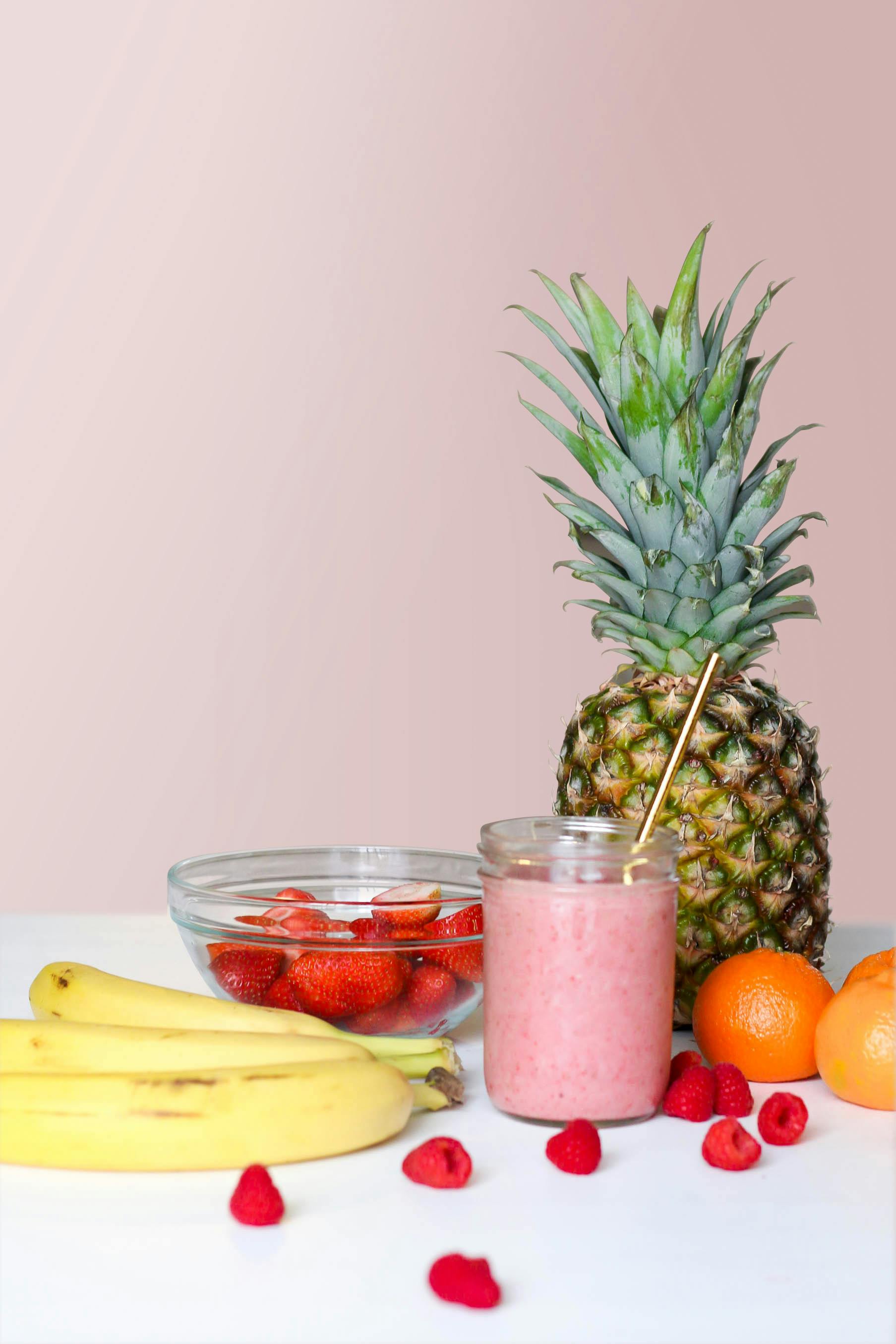
A smoothie bowl you can eat with a spoon… or a straw. Four ingredients, one blender, and roughly ninety seconds between you and breakfast.

This one exists because sometimes you want something sweet and filling and you have about four minutes to produce it. Frozen fruit does most of the work. The blender does the rest.
It's also a good project to hand to the kids, mostly because the toppings are the fun part and they'll happily argue about them for longer than the recipe takes.
Why a bowl instead of a juice
Worth knowing, since it's the bit people get backwards.
Blending doesn't destroy fiber. It breaks it into smaller pieces, but every bit of pulp, skin and seed that went into the blender is still in your bowl. Juicing is the one that strips fiber out — the juice goes one way and the fiber-rich pulp goes in the bin.1
That matters here because fiber is what your gut bacteria actually eat. A smoothie bowl keeps it; a juice doesn't.
And the berries are doing something clever
The deep colour in blueberries comes from anthocyanins. Here's the interesting part: only around 5% of them are absorbed in the small intestine. The rest travel onward to the colon, where your gut bacteria get hold of them and convert them into other compounds entirely.2
Strawberries do something similar with a different family of polyphenols. So the colour isn't only decoration — a good deal of it is headed straight for the bacteria.
Research on what that ultimately does for us is still developing, and most of it is early. But "eat the colourful thing" is not bad advice while we wait.

The recipe
Strawberry Banana Blue Smoothie Bowl
Ingredients
- 1 frozen banana
- 2 cups frozen strawberries
- ½ cup frozen blueberries
- ¾–1 cup unsweetened coconut milk
Instructions
- Combine the frozen banana, strawberries, blueberries and coconut milk in a blender.
- Purée until smooth. Add coconut milk a splash at a time until you hit the consistency you want — less for a spoonable bowl, more for something you can drink.
- Pour into a bowl and pile on the toppings. Or into a glass, if a straw is more your speed today.
- Eat it.
Toppings — pick your own adventure
- Coconut flakes
- Fresh sliced strawberries
- Sliced banana
- Fresh blueberries
- Chia seeds
- Cocoa covered granola
- Anything else you like
All four ingredients frozen is the point. That's what makes it thick enough to hold a spoon upright rather than a sad pink soup. If your banana isn't frozen yet, peel it, snap it in half, and stash it in a freezer bag — you'll want a supply anyway.
No added sweetener needed. Between the banana and two cups of strawberries there's plenty going on. Taste it before you reach for the honey.
Where Flourish fits
Two options, and they both work.
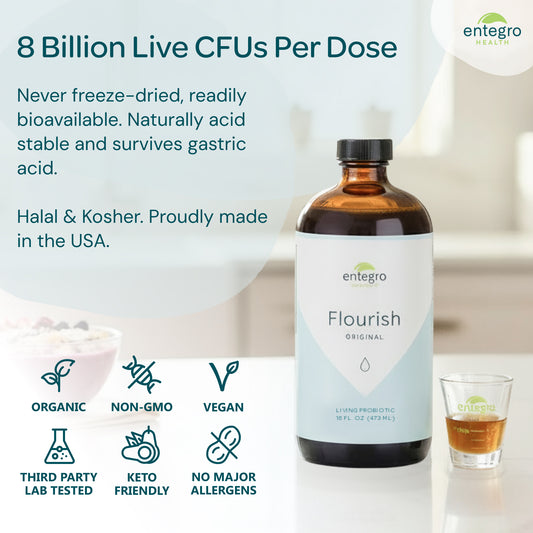
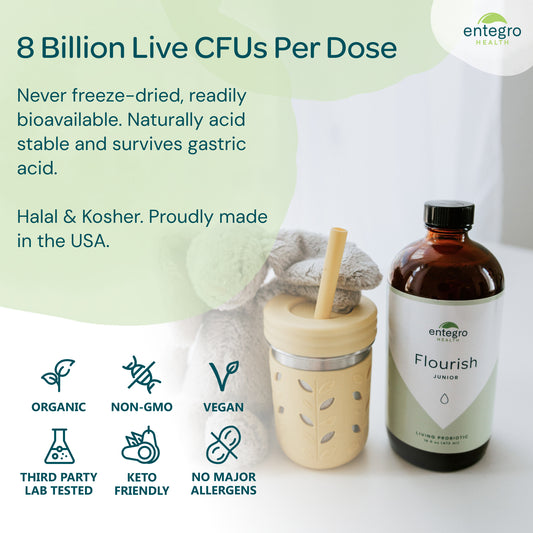
Take your daily dose of Flourish Original or Flourish Junior before the smoothie, or stir it into the bowl once it's blended.
Stirring in after is the bit to remember. Flourish is a living liquid, so it's happy going into something cold — but don't run the blender on it for a minute, and don't stir it into anything hot. Cold is fine. Heat is how you undo it.

Original ferments on molasses and tastes stout. Junior ferments on sorghum and tastes sweet, closer to apple cider. Same eleven strains from five families in both — it's a flavour choice, not an age one. Junior tends to disappear faster into a berry bowl, for obvious reasons.
Flourish is a dietary supplement made to support digestive and microbiome health. It isn't a treatment for any condition. Check with your doctor before starting a new supplement, and with your pediatrician before giving one to a child.
A genuinely good recipe to cook with kids
Small helpers can practise their slicing on the banana that's going in the blender — a butter knife and a soft banana is about as low-stakes as knife practice gets, though it's still worth staying within arm's reach.
Big kids can make the whole thing themselves after school, which is the actual win: a nutrient-dense snack they can produce without you.
And letting them build their own toppings turns a two-minute recipe into a proper activity. Everyone gets a bowl. Everyone's bowl looks different. Nobody argues about it. (That last part may not be true in your house.)

Want to make the granola too? Ours is cocoa covered and built on oats and pecans, and it sits on top of this bowl very nicely. There's also a rundown of ten high-fiber foods if you're stocking a kitchen with your bacteria in mind.

Ready to try a living probiotic?
Eleven living strains. One daily shot. For the whole family.
Shop Flourish Original · Shop Flourish Junior · Why we keep it liquid
A few questions we hear a lot
Can I use fresh fruit instead of frozen?
You can, but you'll get a drink rather than a bowl. If fresh is what you have, cut the coconut milk right back and add a handful of ice, or freeze the banana at least — it does most of the thickening.
Does blending destroy the fiber?
No. Blending breaks fiber into smaller pieces but keeps all of it in the bowl. Juicing is the process that removes it.1
Can I blend Flourish straight into the smoothie?
Stir it in after blending instead. Cold is no problem for a living probiotic — heat is. Running a blender on it for a minute is a needless bit of violence when a spoon will do.
What can I use instead of coconut milk?
Any milk or milk alternative works. Almond and oat both blend well. Dairy milk is fine too; it'll come out slightly creamier.
Can I make it ahead?
It's best straight from the blender — smoothies separate and lose a little vitamin C to oxidation as they sit.3 If you want a head start, portion the frozen fruit into bags so all you're doing in the morning is tipping one in and adding liquid.
Is this a suitable breakfast on its own?
It's fruit and not much else, so it's light on protein. Add Greek yogurt, a spoon of nut butter, or the granola if you want it to hold you until lunch.
About this article
Written by: Lynn, Entegro Health | Originally published: July 2020
Important information
This article is for general education and isn't a substitute for professional medical advice, diagnosis, or treatment. Talk to your physician or another qualified health provider about any questions regarding a medical condition, and before starting a new supplement — including for a child. These statements have not been evaluated by the Food and Drug Administration. This product is not intended to diagnose, treat, cure, or prevent any disease.
Sources
- University of Colorado Anschutz Medical Campus. Blending vs. Juicing: The Fiber Factor. Source
- In vitro fermentation characteristics of blueberry anthocyanins and their impacts on gut microbiota. (2023). Food Research International. Source
- GoodRx Health. Does Blending Fruit Destroy the Fiber? Source