Gut-Skin Connection
People have suspected a link between the gut and the skin for centuries. It turns out they were onto something — though not quite for the reasons anyone thought.
Remember the height of our acne prevention years? We were told greasy pizza and chocolate were the likely culprits. Which is a good place to start, because that advice was wrong and right at the same time.
So was the greasy pizza theory correct?
Not in the way it was meant. Grease on your fingers doesn't travel to your face and clog anything — that mechanism was always folklore.
But diet does seem to matter, just through a different door. Randomized trials of low-glycemic-load diets have found improvement in acne compared with conventional high-glycemic diets, with associated changes in insulin-like growth factor signaling.1,2 The pizza may well have been implicated. The refined flour underneath it is the better suspect than the oil on top.
Chocolate specifically has had much less consistent evidence behind it, so if you were carrying guilt about that one, you can put some of it down.
What do your gut and your skin actually have in common?
More than most people assume, and it isn't that they're made of the same thing.
Your skin, hair, nails and their associated glands make up the integumentary system.3 The lining of your digestive tract is something else — mucosal epithelium, a different tissue in a different system.
What they share is a job. Both are epithelial barriers standing between you and the outside world, both are densely populated with their own microbial communities, and both are wired into immune function.4,5 Two doors onto the same house, watched by the same security team.
If a reaction involves the throat or breathing, that's an emergency
Food allergy reactions often start at the skin — hives, itching, tingling in the mouth. They can escalate to swelling of the throat or tongue and difficulty breathing, and that is anaphylaxis.
Anaphylaxis is a medical emergency. Use epinephrine if it has been prescribed, and call 911 or your local emergency number immediately. It is not something to wait out or manage at home.6
How does a gut talk to a skin?
Through chemistry, mostly.
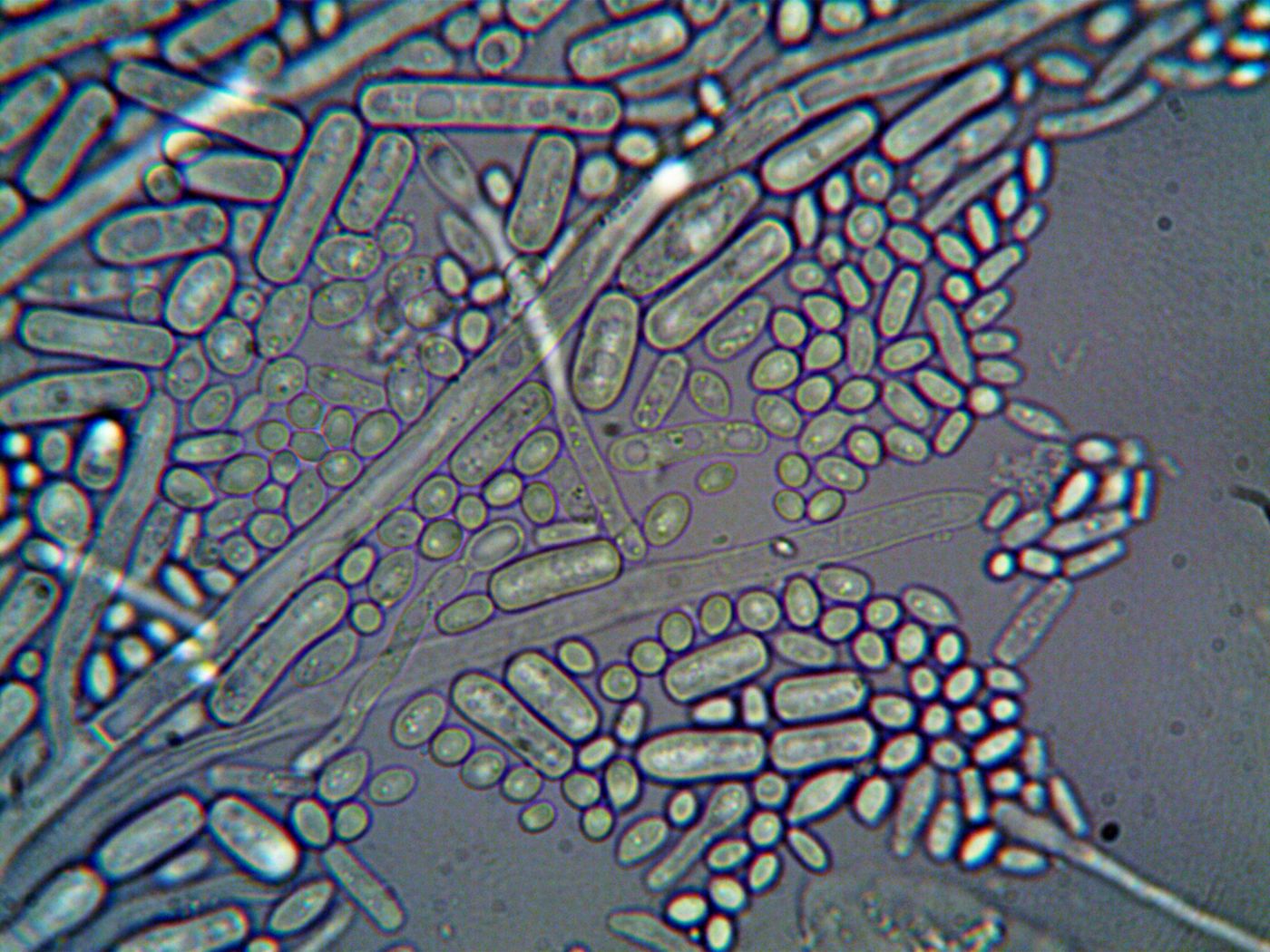
Gut bacteria and the metabolites they produce interact with receptors on cells of the innate immune system. That can set off a cascade linking the innate response — the fast, non-specific one — with the adaptive response your body learns over time, through a series of signaling pathways that can ultimately show up in the skin.4
Worth being clear about what kind of knowledge that is. The gut-skin axis is a genuine and active field, and the mechanisms above are well described.4,7 What's much less settled is the arrow: whether shifting a gut community reliably shifts a skin condition. Interesting, unfinished, and not the same as proven.
What happens to a skin cell on its way up?
Skin cells undergo a veritable butterfly transformation.
They begin as basal cells at the bottom of the epidermis, become spinous cells, then granular cells, and finally corneocytes — the flattened, dead, tightly packed cells that form the outermost layer you can actually touch.3 The whole journey takes roughly a month.
Which is a useful thing to know when you're impatient. The skin you're looking at today was being assembled several weeks ago, so anything you change now shows up on a delay.
What about antibiotics and antibacterial soap?
Worth knowing about, though not worth panicking over.
Antibiotics don't discriminate. They kill harmful bacteria and beneficial bacteria alike, and heavy use of antibacterial soaps and cleaners works on the same principle at the surface. A disrupted microbial community may play a role in some common skin complaints.5,7
None of which is an argument against taking antibiotics you've been prescribed. Take them exactly as directed, finish the course, and think about the rebuild afterwards rather than instead.
So what actually helps?

Healthy skin does begin on the inside, and the list is unglamorous.
- Swap refined sugars and heavily processed food for whole grains, vegetables and fruit — the fiber in them is what your gut bacteria actually eat
- Eat fermented foods where you enjoy them — kimchi, sauerkraut, yogurt, natto
- Give it time. A month, at minimum, given how long the skin takes to turn over
Realistically, most American teenagers are not piling kimchi onto their pizza, and we're not going to pretend that's about to change. Start with the swaps somebody will actually make.
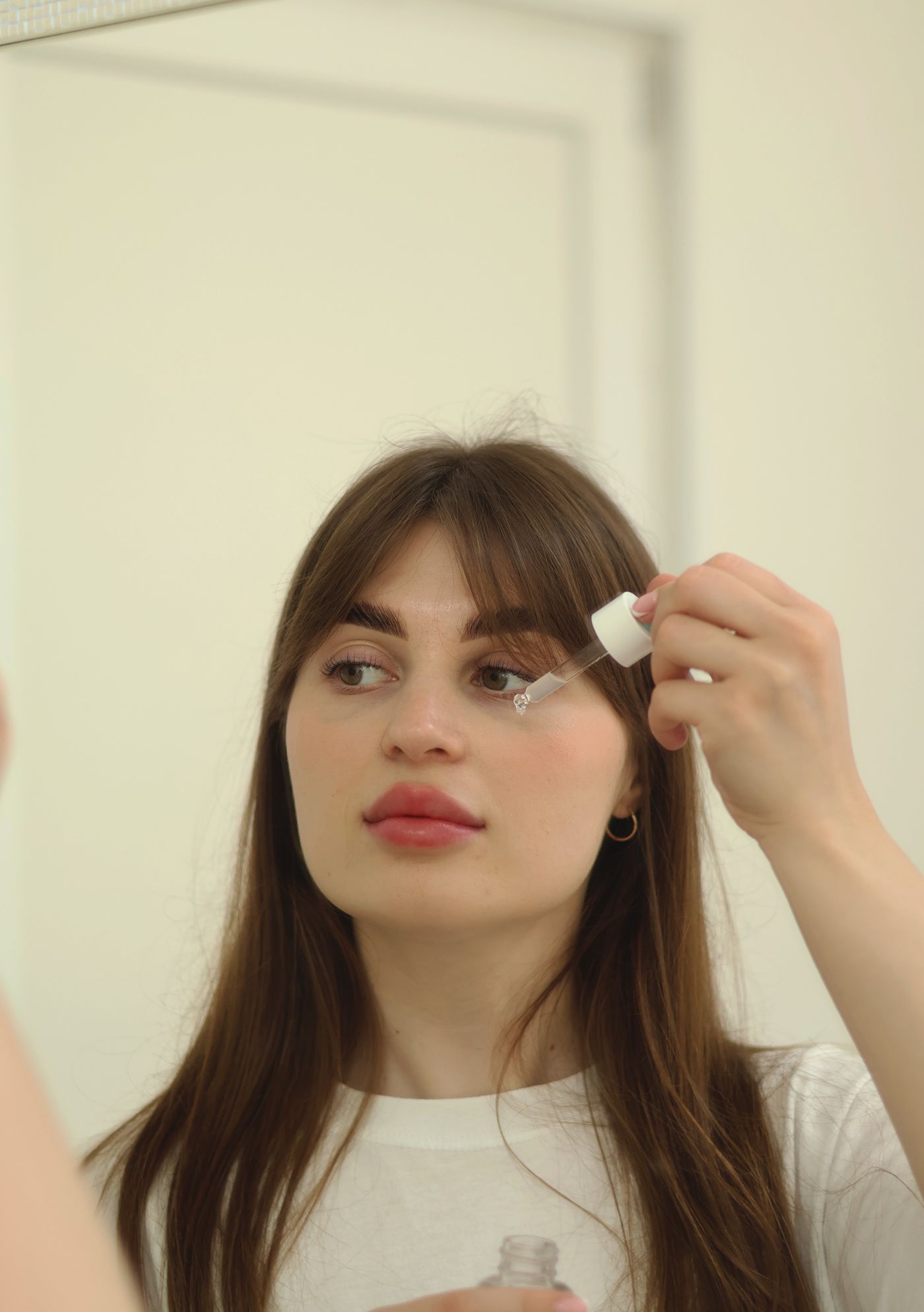
And keep doing whatever your dermatologist told you to do. A gut-first approach is a complement to skin care, not a replacement for it — particularly for anything diagnosed.
Where does Flourish fit?
Flourish Original and Flourish Junior are living liquid probiotics — eleven strains from five families, small-batch fermented in Iowa — taken daily to support digestive and microbiome health.
That's the claim, and it's the whole claim. We're not telling you it clears acne or calms eczema, because the evidence doesn't support anyone saying that. It's one input on the gut side of a connection researchers are still mapping.
Flourish is a dietary supplement made to support digestive and microbiome health. It isn't a treatment for acne, eczema, dermatitis or any other skin or medical condition. For a diagnosed skin condition, see a dermatologist, and check with your doctor before starting a new supplement.

Ready to try a living probiotic?
Eleven living strains. One daily shot. For the whole family.
Shop Flourish Original · Shop Flourish Junior · Why we keep it liquid
A few questions we hear a lot
Does chocolate really cause breakouts?
The evidence for chocolate specifically is weak and inconsistent. The stronger signal is glycemic load — diets heavy in refined carbohydrates, where trials have shown improvement when that load comes down.1,2
Is my gut lining the same as my skin?
No. Skin, hair and nails make up the integumentary system; the gut is lined with mucosal epithelium.3 They're different tissues doing a similar job — acting as a barrier and hosting their own microbial communities.
Will fixing my gut clear my skin?
Nobody can promise that. The mechanisms connecting the two are well described, but whether changing a gut community reliably changes a skin condition is still being worked out.4,7 Eating better is worth doing regardless; treat clear skin as a possible bonus rather than the plan.
How long before I'd see anything?
Give it at least a month. Epidermal cells take roughly that long to travel from the basal layer to the surface,3 so today's skin reflects several weeks ago.
Should I stop taking antibiotics because of my microbiome?
No. Take what you've been prescribed, exactly as directed. The microbiome conversation is about what you do afterwards, not about skipping treatment.
Is antibacterial soap bad for my skin?
Ordinary handwashing with plain soap does the job in most everyday situations, and heavy antibacterial use acts on your resident skin bacteria too.5 Wash your hands; you don't need everything in the house to be antibacterial.
About this article
Written by: Lorilyn Van Dyke and Lynn Haak, Entegro Health | Originally published: December 2020
Important information
This article is for general education and isn't a substitute for professional medical advice, diagnosis, or treatment. If a reaction involves swelling of the throat or tongue, or difficulty breathing, treat it as an emergency and call 911 or your local emergency number. Always seek the advice of your physician, dermatologist or another qualified provider with any questions regarding a medical condition, and before starting a new supplement. These statements have not been evaluated by the Food and Drug Administration. This product is not intended to diagnose, treat, cure, or prevent any disease.
Sources
- Smith, R. N., Mann, N. J., Braue, A., Mäkeläinen, H., & Varigos, G. A. (2007). The effect of a high-protein, low glycemic-load diet versus a conventional, high glycemic-load diet on biochemical parameters associated with acne vulgaris: a randomized, investigator-masked, controlled trial. Journal of the American Academy of Dermatology, 57(2), 247–256. Source
- Burris, J., Shikany, J. M., Rietkerk, W., & Woolf, K. (2018). A Low Glycemic Index and Glycemic Load Diet Decreases Insulin-like Growth Factor-1 Among Adults with Moderate and Severe Acne. Journal of the Academy of Nutrition and Dietetics, 118(10), 1874–1885. Source
- Yousef, H., Alhajj, M., & Sharma, S. Anatomy, Skin (Integument), Epidermis. StatPearls. NCBI Bookshelf. Source
- Salem, I., Ramser, A., Isham, N., & Ghannoum, M. A. (2018). The Gut Microbiome as a Major Regulator of the Gut-Skin Axis. Frontiers in Microbiology, 9, 1459. Source
- Byrd, A. L., Belkaid, Y., & Segre, J. A. (2018). The human skin microbiome. Nature Reviews Microbiology, 16, 143–155. Source
- American Academy of Allergy, Asthma & Immunology. Anaphylaxis — symptoms, emergency treatment and when to call 911. Source
- Ellis, S. R., Nguyen, M., Vaughn, A. R., et al. (2019). The Skin and Gut Microbiome and Its Role in Common Dermatologic Conditions. Microorganisms, 7(11), 550. Source