Prioritize Gut Health as your New Year’s Resolution
Most health resolutions are subtraction — less sugar, fewer drinks, no bread. Here are five that work by addition instead, built small enough that you might actually still be doing them in three months.

Photo: Alina Vilchenko/ https://www.pexels.com
January is the traditional moment for this, but nothing here depends on the calendar. The pattern is always the same: a few days of enthusiasm, then a missed day, then a promise to restart on Monday, and Monday quietly never arrives.
The fix is not more willpower. It is picking habits small enough that a bad week does not end them, and attaching each one to something you already do. Five of them, all pointing at the same place.
A note on how habits actually form
The "make it obvious / make it easy / make it satisfying" structure below comes from James Clear’s Atomic Habits, whose Four Laws of Behavior Change are: make it obvious, make it attractive, make it easy, make it satisfying.1 Worth naming, since it is his framework and it is a good one.
The research underneath it is worth knowing too, because it is more encouraging than the popular version:
- Attach the new habit to an existing routine. Repeating an action in a consistent context is what builds automaticity, and a cue inside a routine you already have — "when I go on my lunch break" — gives you a stable starting point.2
- Write the plan as "if–then." Implementation intentions — if situation X arises, then I will do Y — are the single strongest tool in this literature. A meta-analysis of 94 studies found an effect of d = 0.65 on goal attainment, and d = 0.77 specifically on not getting derailed partway through.3
- Start smaller than feels worthwhile. Simpler actions become habitual faster.2
- One missed day does not undo it. In the study behind the famous "66 days" figure, a missed opportunity reduced automaticity by less than half a point, and scores recovered quickly.4
About that 66 days
The number is real but routinely oversold. The median time to plateau was 66 days — with a range of 18 to 254 days, and drawn from the 39 of 96 participants whose data fit the model cleanly. For exercise the modelled median was 91 days, longer than the study itself ran.4
Take the range, not the median. Some habits stick in three weeks. Some take most of a year. Neither means anything about you.
1. Protect your sleep

Photo: Hanna Pad/ https://www.pexels.com
Sleep is not downtime. During it, the brain consolidates the day’s memories through replay between the hippocampus and neocortex,5 and growth hormone is released in pulses tied to deep slow-wave sleep. In mice, the spaces between brain cells expand by around 60% during sleep, letting cerebrospinal fluid flush metabolic waste out roughly twice as fast as during waking.6
The target is 7 or more — not 9
The American Academy of Sleep Medicine and the Sleep Research Society recommend that adults aged 18 to 60 "sleep 7 or more hours per night on a regular basis to promote optimal health."7
More is not better. The same statement says that for most people "it is uncertain whether sleeping more than 9 hours per night is associated with health risk."7 And in a meta-analysis of 16 studies covering 1.38 million people, long sleep carried a larger mortality association than short sleep — probably because illness causes long sleep rather than the reverse, but certainly not a reason to chase nine hours.8
Seven to nine, consistently. Consistency is the goal, not maximization.
Make it obvious and easy
Set an alarm for when the wind-down starts, not just for waking. Make the bedroom cool, dark and boring. The if–then version: if it is 9:30 pm, then screens go on the charger in the kitchen.
Make it satisfying
Notice the mornings after a good night and say so out loud. Cook the breakfast you actually like. The reward has to land close enough in time to register.
And on the gut connection
You will see confident claims that sleep and the gut microbiome are tightly linked. The honest state of it: small observational studies find people with better sleep efficiency tend to have more diverse gut bacteria — one widely cited study had 26 participants, all men, and its authors noted they "cannot pinpoint directionality."9 Controlled experiments have been mixed: restricting healthy men to two hours a night for three days lowered one measure of microbial richness but "minimally impacted community composition and did not affect intestinal permeability."10 Sleep is worth protecting on its own considerable merits. The microbiome angle is a research area, not a selling point.
2. Drink water, sensibly

Photo: cottonbro studio/ https://www.pexels.com
Water is genuinely essential — for thermoregulation, for electrolyte balance, and for kidney function. The National Academies set an adequate intake of about 3.7 L (125 oz) a day for men and 2.7 L (91 oz) for women. Two things people miss: that is total water, and roughly 20% of it comes from food. The panel also explicitly declined to issue a glasses-per-day rule, noting that most healthy people meet their needs by letting thirst be the guide.11
Two hydration myths, retired
Extra water does not improve digestion if you are already hydrated. In a controlled study of healthy volunteers, adding fluid raised urine output but produced no significant change in stool output.12 What matters is not becoming dehydrated in the first place — genuine dehydration is a documented cause of constipation.13
Hydration does not "improve nutrient absorption." Healthy subjects dehydrated to 3% of body mass — a serious deficit — showed no change in intestinal permeability or glucose absorption. The measurable effects were slower gastric emptying and more nausea during exercise.14
Make it obvious and easy
Keep a bottle where you already sit. Fill it when you make coffee. If I sit down at my desk, then the bottle gets filled.
Make it satisfying
Cucumber, lemon, mint, a splash of something tart. Cold, if that is what gets you drinking it.
A word about daily electrolyte packets
They are having a moment, and for most people they are not needed. Electrolyte replacement is genuinely indicated for exercise beyond about an hour, heavy sweating, heat exposure, or illness with vomiting or diarrhea. As a daily habit for a moderately active adult, the arithmetic is unkind: commercial packets carry roughly 500 to 1,000 mg of sodium per serving, and Americans already average about 3,400 mg a day against a Daily Value of less than 2,300 mg.15
A daily 1,000 mg packet puts a typical person near double the recommended limit. If you have high blood pressure, this one is worth raising with your doctor rather than adding to a wellness routine.
3. Eat — or drink — your live cultures

Photo: Kai-Chieh Chan/ https://www.pexels.com
Yogurt, kefir, kimchi, unpasteurized sauerkraut, miso. The 2025–2030 Dietary Guidelines name these directly, noting that "vegetables, fruits, fermented foods (e.g., sauerkraut, kimchi, kefir, miso), and high-fiber foods support a diverse microbiome."16
The best trial evidence backs it. In a 10-week randomized study at Stanford, adults on a high-fermented-food diet showed increased gut microbial diversity and decreases in 19 inflammatory proteins — while the high-fiber arm, over the same period, did not increase diversity.17
Read the label — fermented does not always mean live
Shelf-stable sauerkraut is usually pasteurized, and most supermarket pickles are vinegar-brined rather than fermented at all. Neither contains live cultures. Look for "live and active cultures," and look in the refrigerated section.
One more: stir miso in off the heat. Boiling it kills the cultures.
Worth knowing that "fermented food," "contains live cultures" and "probiotic" are three different things — most commercial fermented foods carry undefined microbial mixtures without demonstrated health benefits, so few of their microbes meet the definition of a probiotic.18
Where Flourish fits

If fermented foods are not your thing, a live liquid probiotic is a reasonable alternative or complement. Flourish is fermented and bottled live rather than freeze-dried, so there is no rehydration step.
What we are not going to tell you is that it is "more absorbed" than a capsule. Probiotics are live organisms that act in the gut — they are not meant to be absorbed into the bloodstream at all, and describing them that way gets the biology backwards.19 Nor is there a head-to-head human trial showing liquid outperforms capsules; enteric-coated capsules are specifically engineered to survive stomach acid, so the comparison is not even obviously in liquid’s favor.
What actually matters, per the field’s own consensus, is the specific strains, the dose, and whether the live count on the label holds to the end of shelf life.20 Pick on that, not on format.
Make it obvious and easy
Front and center on the fridge shelf, at eye level. If I open the fridge in the morning, then I take my dose.
Make it satisfying
In a smoothie, or straight into a dosing glass. Pair it with something you already look forward to.
4. Add fiber, slowly

Photo: Vural Yavas/ https://www.pexels.com
There is a lot of room to move here. American adults average about 17 g of fiber a day against an FDA Daily Value of 28 g, and by one analysis only around 5% of the population meets fiber recommendations at all.21,22,23
Some fibers are fermented by gut bacteria into short-chain fatty acids that support the gut lining. Not all of them — only a subset of dietary fibers qualify as true prebiotics, and insoluble fibers like wheat bran work mechanically instead, adding bulk and speeding transit.24 Both jobs are worth doing, which is the argument for variety rather than for one miracle ingredient.
The pace matters more than the amount
Increase by about 2 to 3 grams every few days and let your gut adapt. Going too fast reliably causes bloating, gas and cramping21 — which is the fastest way to conclude that fiber is not for you and quit.
Make it obvious and easy
Anchor it to one meal rather than the whole day. Oatmeal, chia pudding, or a smoothie. If I make breakfast, then something with fiber goes in it.
Make it satisfying
Some approximate fiber per standard serving, so you can aim at the things that actually move the number:
- Navy beans — 9.6 g per ½ cup. The highest-density common source, and the single most effective thing you can add.25
- Artichoke — 9.6 g per cup cooked.25
- Raspberries — 8.0 g per cup.25
- Chickpeas — 6.3 g per ½ cup, hummus included.25
- Brussels sprouts — 6.4 g per cup cooked. Broccoli — 5.2 g. Avocado — 5.0 g per half cup.25
- Chia seeds — 4.1 g per tablespoon. Almonds — 3.5 g per ounce.25
- Oatmeal — around 3 g per serving. A fine habit; just not the heavy lifter people assume.25
One honest note on smoothies: a handful of raw spinach carries well under a gram of fiber. It is a good ingredient and a poor fiber strategy. The beans are where the work gets done.
5. Move, even briefly

Photo: MART PRODUCTION/ https://www.pexels.com
The full recommendation is 150 to 300 minutes of moderate-intensity activity a week, plus muscle-strengthening on at least two days.26 That is where to end up. It is a poor place to start.
Start absurdly small instead, and know that the guidelines are on your side: the 2018 edition removed the old rule that activity only counted in 10-minute blocks, specifically to encourage moving more often through the day.26
Very short bursts genuinely count
In a study of 25,241 UK adults who did no formal exercise at all, those accumulating around three brief bursts of vigorous activity a day — one to two minutes each, roughly four and a half minutes in total — had about 39% lower all-cause mortality and roughly half the cardiovascular mortality over about seven years.27
The catch is intensity. This means stairs taken fast enough to breathe hard, or a brisk uphill walk, or carrying groceries quickly — not an amble to the coffee shop. It is also observational, so treat it as strong encouragement rather than proof.
The everyday benefits are better established than the microbiome ones. A review of 13 cohort studies covering 119,426 people found higher activity associated with roughly a third lower risk of constipation,28 and an umbrella review spanning 1,039 trials found physical activity meaningfully reduces symptoms of depression, anxiety and distress.29
Exercise does shift the gut microbiome — but in a controlled study, six weeks of supervised training changed it and a six-week sedentary washout "largely reversed" those changes.30 Which is a tidy summary of this entire article: the benefit is in the continuing, not the starting.
Make it obvious and easy
Stairs instead of the elevator. A walk that is already attached to something — the dog, the commute, the lunch break. If I finish lunch, then I walk once around the block.
Make it satisfying
Music you actually like. A friend expecting you. And the oldest trick there is: put the shoes by the door tonight.
The short version
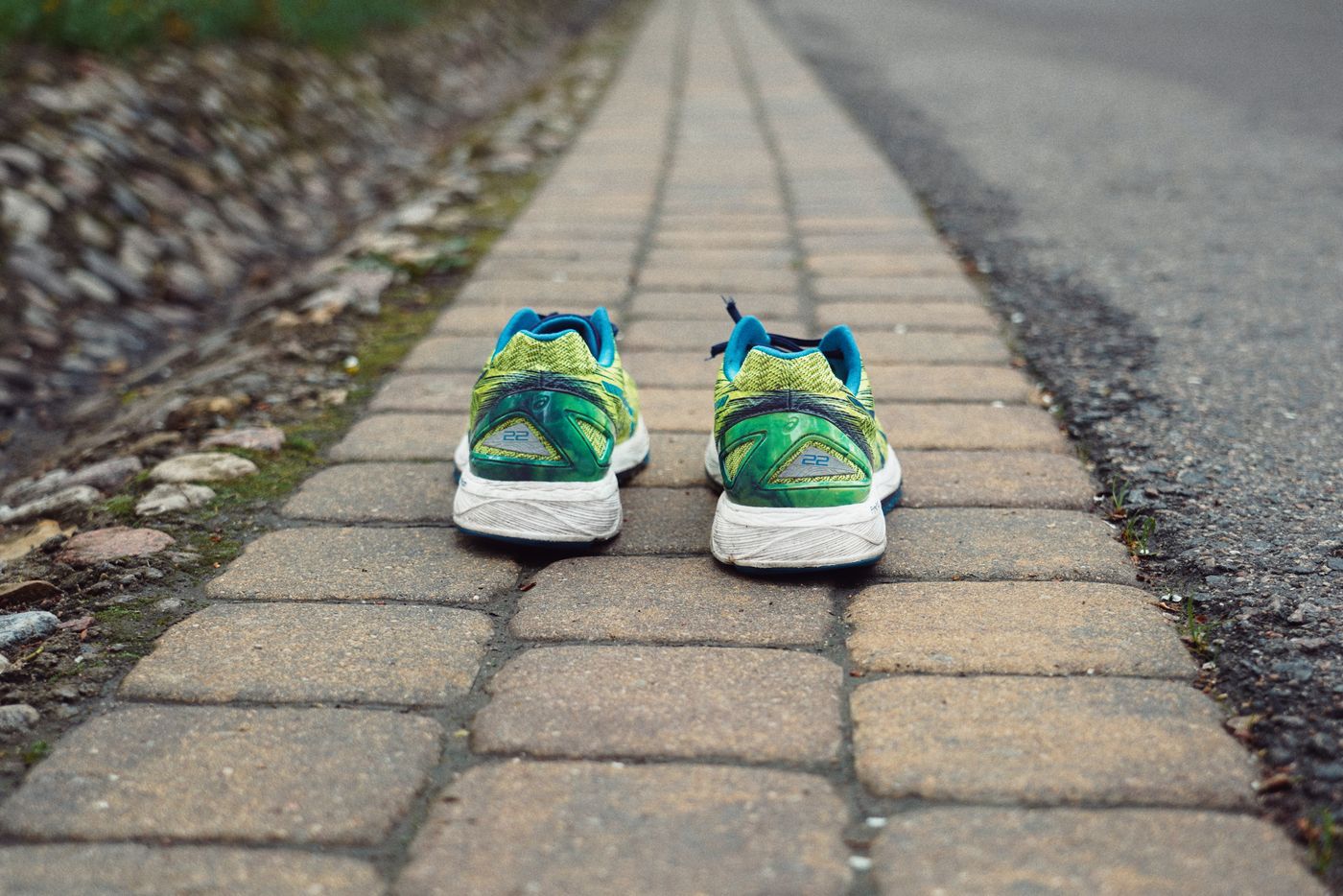
Photo: Dmitry/ https://www.pexels.com
- Sleep seven or more hours, consistently. Nine is not a target.
- Drink to thirst; extra water past that does not improve digestion. Skip the daily electrolyte packet unless you have earned it.
- Live cultures from refrigerated fermented foods, a live probiotic, or both. Check the label.
- Fiber up by 2–3 g every few days. Beans do the most work.
- Move in short vigorous bursts now, 150 minutes a week eventually, strength twice a week.
One caution on the framing you will hear everywhere, including from us: "small changes compound" is a nice line, and small changes really are easier to start and easier to keep. But when a small-change approach was tested against monitoring alone in a three-year randomized trial of 320 adults, its early advantage had disappeared by two years.31 The honest version is narrower and more useful: a small habit you keep beats an ambitious one you abandon in February.
You do not need a new year. You need a cue, a plan that fits, and permission to miss a day.
About this article
Written by: Carlos Bahena Arteaga, Entegro Health | Originally published: January 2025
Important information
This article is for general education and is not a substitute for professional medical or dietary advice, diagnosis, or treatment. If you have high blood pressure, a diagnosed digestive condition, a sleep disorder, or are considering a substantial change to your fiber intake or activity level, speak with your physician or a registered dietitian first. Fiber values vary with variety, ripeness and preparation, so treat them as good estimates. Effects described in the research summarized here are specific to the intervention, dose and population studied, and do not transfer automatically to other products. These statements have not been evaluated by the Food and Drug Administration. This product is not intended to diagnose, treat, cure, or prevent any disease.
Sources
- Clear, J. (2018). Atomic Habits: An Easy & Proven Way to Build Good Habits & Break Bad Ones. New York: Avery — the Four Laws of Behavior Change and the identity-based habits concept used as the structure of this article. Source
- Gardner, B., Lally, P., & Wardle, J. (2012). Making health habitual: the psychology of "habit-formation" and general practice. British Journal of General Practice, 62(605), 664–666 — context-dependent repetition, using an existing routine as a cue, and why simpler actions become habitual faster. Source
- Gollwitzer, P. M., & Sheeran, P. (2006). Implementation intentions and goal achievement: a meta-analysis of effects and processes. Advances in Experimental Social Psychology, 38, 69–119 — 94 studies, roughly 8,000 participants; d = 0.65 on goal attainment and d = 0.77 on preventing derailment. See also Gollwitzer, P. M. (1999). Implementation intentions: strong effects of simple plans. American Psychologist, 54(7), 493–503. Source
- Lally, P., van Jaarsveld, C. H. M., Potts, H. W. W., & Wardle, J. (2010). How are habits formed: modelling habit formation in the real world. European Journal of Social Psychology, 40(6), 998–1009 — median 66 days, range 18–254, modelled from 39 of 96 participants; a missed opportunity reduced automaticity by less than half a point. Source
- Rasch, B., & Born, J. (2013). About sleep’s role in memory. Physiological Reviews, 93(2), 681–766. Source
- Xie, L., Kang, H., Xu, Q., et al. (2013). Sleep drives metabolite clearance from the adult brain. Science, 342(6156), 373–377 — a mouse study; interstitial space increased roughly 60% during sleep, with amyloid-beta cleared about twice as fast. Human evidence for this mechanism is thinner. Source
- Watson, N. F., Badr, M. S., Belenky, G., et al. (2015). Recommended amount of sleep for a healthy adult: a joint consensus statement of the American Academy of Sleep Medicine and Sleep Research Society. Sleep, 38(6), 843–844. Source
- Cappuccio, F. P., D’Elia, L., Strazzullo, P., & Miller, M. A. (2010). Sleep duration and all-cause mortality: a systematic review and meta-analysis of prospective studies. Sleep, 33(5), 585–592 — 16 studies, 1,382,999 participants; short sleep RR 1.12, long sleep RR 1.30. Observational, and very likely reflecting reverse causation. Source
- Smith, R. P., Easson, C., Lyle, S. M., et al. (2019). Gut microbiome diversity is associated with sleep physiology in humans. PLOS ONE, 14(10), e0222394 — n=26, all male, cross-sectional; the authors state they cannot pinpoint directionality. Source
- Karl, J. P., Whitney, C. C., Wilson, M. A., et al. (2023). Severe, short-term sleep restriction reduces gut microbiota community richness but does not alter intestinal permeability in healthy young men. Scientific Reports, 13, 213 — randomized crossover, 19 men, two hours of sleep per night for three days. Source
- Institute of Medicine, Panel on Dietary Reference Intakes for Electrolytes and Water (2004). Dietary Reference Intakes for Water, Potassium, Sodium, Chloride, and Sulfate. Washington, DC: National Academies Press — adequate intake 3.7 L (men) and 2.7 L (women) of total water, about 20% of it from food; the panel declined to issue a glasses-per-day rule. Source
- Chung, B. D., Parekh, U., & Sellin, J. H. (1999). Effect of increased fluid intake on stool output in normal healthy volunteers. Journal of Clinical Gastroenterology, 28(1), 29–32 — extra fluid raised urine output but did not significantly change stool output. Source
- Arnaud, M. J. (2003). Mild dehydration: a risk factor of constipation? European Journal of Clinical Nutrition, 57(Suppl. 2), S88–S95 — hydration status is the moderator; drinking above normal intake produces minimal benefit in people who are not dehydrated. Source
- van Nieuwenhoven, M. A., Vriens, B. E. P. J., Brummer, R.-J. M., & Brouns, F. (2000). Effect of dehydration on gastrointestinal function at rest and during exercise in humans. European Journal of Applied Physiology, 83(6), 578–584 — 3% body-mass dehydration did not change intestinal permeability or glucose absorption. Source
- U.S. Food and Drug Administration. Sodium in Your Diet (updated 5 March 2024) — Daily Value less than 2,300 mg; Americans average about 3,400 mg per day. Source
- U.S. Departments of Agriculture and Health and Human Services. Dietary Guidelines for Americans, 2025–2030 — fermented foods and high-fiber foods named as supporting a diverse microbiome. Source
- Wastyk, H. C., Fragiadakis, G. K., Perelman, D., et al. (2021). Gut-microbiota-targeted diets modulate human immune status. Cell, 184(16), 4137–4153 — 10-week randomized trial; the fermented-food arm increased microbial diversity and decreased 19 inflammatory proteins, while the high-fiber arm did not increase diversity. Source
- Marco, M. L., Sanders, M. E., Gänzle, M., et al. (2021). The International Scientific Association for Probiotics and Prebiotics (ISAPP) consensus statement on fermented foods. Nature Reviews Gastroenterology & Hepatology, 18(3), 196–208 — fermented foods and probiotics are not interchangeable terms; most commercial fermented foods contain undefined microbial consortia without demonstrated health benefits. Source
- U.S. Food and Drug Administration, 21 CFR 314.3 — bioavailability defined as the rate and extent to which an active ingredient is absorbed and becomes available at the site of action, a concept that does not apply to live microorganisms acting in the gut lumen. Source
- Hill, C., Guarner, F., Reid, G., et al. (2014). Expert consensus document: the ISAPP consensus statement on the scope and appropriate use of the term probiotic. Nature Reviews Gastroenterology & Hepatology, 11(8), 506–514 — effects are strain-specific, and convincing evidence is required for the specific strain or combination in the specified health indication. Source
- Daley, S. F., & Shreenath, A. P. The role of dietary fiber in health promotion and disease prevention: a practical guide for clinicians. StatPearls — adequate intakes, US average intake of about 17 g/day, and guidance to increase by 2 to 3 grams every few days to limit bloating, gas and cramping. Source
- U.S. Food and Drug Administration (October 2021). Interactive Nutrition Facts Label — Dietary Fiber — Daily Value of 28 g per day on a 2,000-calorie diet. Source
- Quagliani, D., & Felt-Gunderson, P. (2017). Closing America’s fiber intake gap. American Journal of Lifestyle Medicine, 11(1), 80–85 — only about 5% of the population meets fiber recommendations. Source
- International Scientific Association for Probiotics and Prebiotics. Prebiotics — only a subset of dietary fibers qualify as prebiotics, and prebiotics may derive from non-fiber substances such as polyphenols. Source
- U.S. Department of Agriculture, Agricultural Research Service. FoodData Central, via Food Sources of Dietary Fiber, DietaryGuidelines.gov — fiber per standard portion for the foods listed. Source
- U.S. Department of Health and Human Services (2018). Physical Activity Guidelines for Americans, 2nd edition — 150 to 300 minutes of moderate-intensity aerobic activity per week plus muscle-strengthening on at least 2 days; the second edition removed the requirement that activity be accumulated in 10-minute bouts. Source
- Stamatakis, E., Ahmadi, M. N., Gill, J. M. R., et al. (2022). Association of wearable device-measured vigorous intermittent lifestyle physical activity with mortality. Nature Medicine, 28(12), 2521–2529 — 25,241 non-exercisers; a median of three 1–2 minute vigorous bouts per day (about 4.4 min/day) associated with all-cause mortality HR 0.61 and cardiovascular mortality HR 0.51. Observational. Source
- Cui, J., Xie, F., Yue, H., et al. (2024). Physical activity and constipation: a systematic review of cohort studies. Journal of Global Health, 14, 04197 — 13 cohort studies, 119,426 participants; high versus low activity RR 0.69. Source
- Singh, B., Olds, T., Curtis, R., et al. (2023). Effectiveness of physical activity interventions for improving depression, anxiety and distress: an overview of systematic reviews. British Journal of Sports Medicine, 57(18), 1203–1209 — 97 reviews, 1,039 trials, 128,119 participants. Source
- Allen, J. M., Mailing, L. J., Niemiro, G. M., et al. (2018). Exercise alters gut microbiota composition and function in lean and obese humans. Medicine & Science in Sports & Exercise, 50(4), 747–757 — six weeks of supervised training followed by a six-week sedentary washout; exercise-induced changes were largely reversed once training ceased. Source
- Ross, R., Latimer-Cheung, A. E., Day, A. G., Brennan, A. M., & Hill, J. O. (2022). A small change approach to prevent long-term weight gain in adults with overweight and obesity: a randomized controlled trial. CMAJ, 194(9), E324–E331 — 320 adults; the small-change advantage was present at 3 to 15 months and absent at 24 and 36 months. Source