Pregnancy, Delivery & the Gut Microbiome
Your gut goes through its own version of pregnancy, mostly in the back half. Here's what actually changes, why the story about how babies get their first bacteria turned out to be wrong, and what's genuinely in your hands.

Babies. They're the cutest.
Little toes, chubby cheeks, those perfect tiny hands. Enough to make anyone swoon. I think part of why we love them so much is that they're all potential. Nothing has happened yet.
Some of that potential turns out to be microbial, which is less romantic but no less real. A baby's gut community starts taking shape early, and the single biggest influence on it is the person carrying them.
So what actually happens to your gut during pregnancy?
Quite a lot. Most of it in the back half.
Everything else is changing too, obviously. The hormones bring heartburn, morning sickness that pays no attention to the clock (and honestly, why is it called morning sickness? It knows no time restraints), things stretching in unbelievable ways, hair that looks like you pay someone for it, food combinations you'd be embarrassed to say out loud, more blood volume, brain fog, and a new tendency to cry at dog adoption commercials.
Your microbiome is going through its own version of all that. You just can't see it.
The shift tracks with rising estrogen and progesterone, and it follows a fairly predictable arc.2
In the first trimester, things look surprisingly ordinary. Gut diversity looks a lot like it does in someone who isn't pregnant at all. Hand a sample to a lab without telling them, and they'd have a hard time picking it out. Whatever your microbiome looked like going in is roughly what you're working with for these first few months.1,3
By the second trimester, the community starts rearranging itself. Nothing you'd notice from the outside, and nothing that shows up as a symptom. But as estrogen and progesterone climb, the composition begins shifting underneath. This is the quiet middle stretch where the change is already underway.2
By the third trimester, it's a different neighborhood. Diversity within a person goes down. Differences between people go up, so two women at the same stage can look quite unalike. And bacteria associated with inflammatory states become more abundant in close to 70% of women.1,3,7
That last number sounds alarming. It isn't, or at least the research doesn't read it that way. This looks like something the body is doing on purpose.

Wait, doesn't that sound like a problem?
You'd be forgiven for thinking so. The late-pregnancy microbiome has been described as resembling what's been reported in obesity, specifically in the ratio between two big bacterial groups, Firmicutes and Bacteroidetes.1,3
The usual explanation makes intuitive sense. Growing an entire person takes an enormous amount of energy and effort on a mama's body, so it retools to pull more out of whatever you eat. Anyone who has been pregnant and starving at two in the morning will find that believable.
But we should be straight with you about something. That comparison leans on a piece of science that has gotten shakier since those papers came out. The Firmicutes-to-Bacteroidetes ratio spent roughly a decade as shorthand for "the obese microbiome," and a 2020 review went back through the evidence and found that most of the studies were too small to detect a real difference in the first place.8 Two large datasets found no association at all.
There's also a wrinkle inside the pregnancy research itself. The landmark study on this found the third-trimester microbiome was linked to more energy leaving the body in stool, which is roughly the opposite of what the obesity comparison would predict.7
So the shifts are real and well documented. What they mean is still being argued about. We'd rather say that than tidy it up.
Where fiber comes in, and which kind actually matters
This is the part you can do something about, so it's worth getting right. It's also the part that gets muddled nearly everywhere, including in the earlier version of this article.
Your gut bacteria ferment fiber. In doing that, they produce short chain fatty acids: acetate, propionate, butyrate. The cells lining your intestine, the ones acting as the barrier between your insides and the outside world, use these as fuel. These are the good guy byproducts. We want them, pregnant or not.2,9
But not all fiber does this job.
Fermentable fiber is the kind your bacteria can actually break down. Pectin, beta-glucans, inulin, gums, resistant starch. In practice that means oats, beans, lentils, apples, barley, bananas.
Insoluble fiber, the structural stuff like cellulose, is only somewhat fermentable. It's doing a different job, mostly bulk and keeping things moving.9
Both are worth eating. Only one feeds your bacteria in this particular way. And if you've read somewhere that insoluble fiber is what produces short chain fatty acids, that's backwards. We know, because we had it backwards on this page for years.
So how does a baby get their first bacteria?
The story most of us learned goes like this. A baby passes through the birth canal and picks up a founding dose of mom's bacteria. Some people call it a bacterial baptism. Miss it, the theory goes, and you see the consequences later: more asthma, more allergies, more immune trouble.
It's a tidy story. It hasn't held up.
A 2018 review went back through the evidence and concluded that while cesarean delivery is genuinely associated with differences in a baby's microbiome, missing out on vaginal bacteria probably isn't the reason why. The authors pointed instead at why the cesarean happened in the first place, antibiotics given during labor, whether labor happened at all, differences in breastfeeding, and gestational age.4
That changes the picture quite a bit. A baby's early gut community gets built from several directions at once. Skin contact. Breast milk. What they eat. The house they live in. And the differences that do show up by delivery mode tend to narrow over the first several months anyway.5
If you had a cesarean, or you have one scheduled, that's worth sitting with for a second. This isn't a window you missed. Most of it is still ahead of you.

And what about vaginal seeding?
It comes up often enough that we should take it head on.
Vaginal seeding means transferring fluid from the mother to the newborn after a cesarean, trying to recreate what a vaginal birth would have provided. It picked up attention because asthma and allergy rates have climbed alongside cesarean rates.
Major medical bodies advise against it outside of research. The American College of Obstetricians and Gynecologists does not recommend or encourage vaginal seeding outside an institutional review board-approved research protocol. The American Academy of Pediatrics says the same thing.5,6
The concerns are specific, not hand-wavy. Infections a mother may not know she has, including group B strep, herpes simplex, gonorrhea, chlamydia, and HPV, can be passed to a newborn, and screening doesn't rule that out.5,6 The same review we mentioned above went further and called for stopping the practice until there's solid evidence that it's needed, that it works, and that it's safe.4
If you've read about this and you're thinking about it, that's a conversation for your OB or midwife. They know your situation. We don't.
So what's actually in your hands?
More than you'd think.
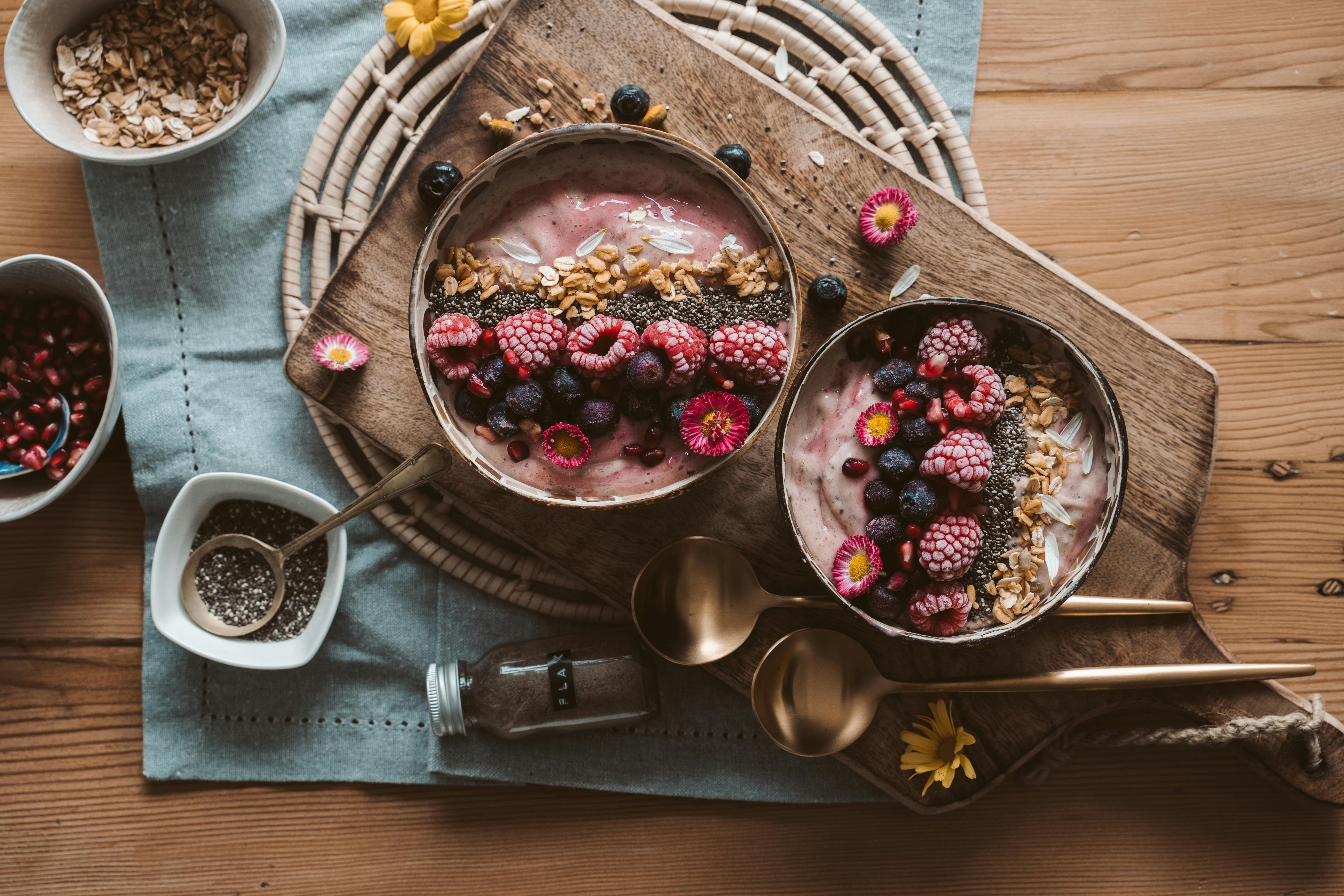
Eat a range of fiber. Variety of plants tends to mean variety of bacteria, and you don't need a spreadsheet for it. Oats, beans, lentils, berries, bananas, whole grains, nuts, seeds. Range beats precision here.
Eat fermented foods if they agree with you. Yogurt, kefir, sauerkraut, kimchi. We wrote a much longer thing about what fermentation actually is, if you want to go down that road, and here's where to begin if you'd rather just start eating them.
Ask before you add a supplement. Any supplement, probiotics included. That isn't throat clearing on our part. Your prenatal care team knows your history, and pregnancy is exactly the moment to ask rather than assume.

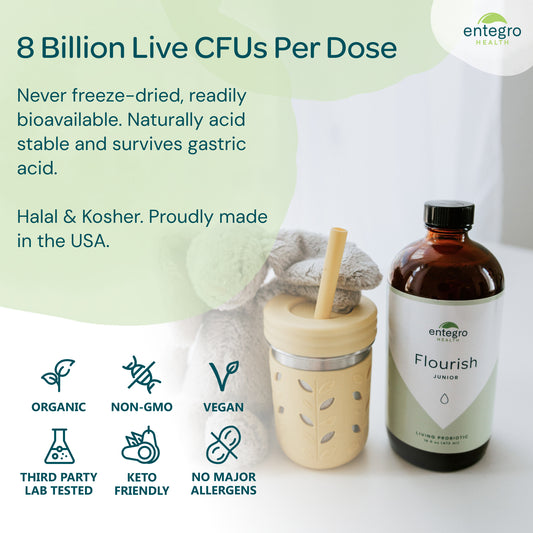
Flourish Original is small batch fermented, eleven living strains from five families, made here in Sioux Center. It's organic, non-GMO, free of major allergens, vegan and keto friendly, and every batch is third-party tested. We keep it alive, in liquid rather than freeze-dried, so the bacteria and the postbiotics they made stay together in the bottle. If you're pregnant or thinking about becoming pregnant, bring it to your OB, midwife, or doula and ask whether it makes sense. Not for pregnant women in general. For you.
Flourish is a dietary supplement made to support digestive and microbiome health. It isn't a treatment for any condition.
And after the baby comes
The fundamentals don't change much. They just get louder.
Parents put a staggering amount of work into getting kids ready for the world. Homework, instrument practice, tutoring, flashcards, church events, social activities, bake sales remembered at ten at night. Nobody does it perfectly and we're no exception, but you do the best you can. Gut habits are one of the quieter things you can start early and just keep going.

That means feeding the kids and feeding their bacteria. Fiber on the plate, fermented food where they'll tolerate it, consistency over intensity.
One thing worth clearing up here, because the names cause confusion. Flourish Original and Flourish Junior are the same probiotic. Same eleven strains from five families, same living liquid, same process, same third-party testing. What differs is what we ferment on and how it ends up tasting. Original is built on a molasses base and comes out stout, properly fermented. Junior is built on sorghum and comes out sweet, closer to apple cider.
So it's a taste decision, not an age decision. Junior tends to win with kids because it's the sweeter one, and it wins with plenty of adults for exactly the same reason. If someone in your house is going to make a face no matter what, start there.
And as with any supplement you'd give a child, check with your pediatrician first.
Got a high schooler about to head out the door? Teach them to do laundry, and introduce them to their microbiome buddies while you're at it. Maybe someday, when they have kids of their own, they'll thank you for both. Probably the laundry first.

Ready to try a living probiotic?
Eleven living strains. One daily shot. For the whole family.
Shop Flourish Original · Shop Flourish Junior · Why we keep it liquid
A few questions we hear a lot
Is it normal for gut bacteria to change during pregnancy?
Yes, and the change is substantial. The biggest shifts show up by the third trimester. Current understanding treats this as normal adaptation rather than a problem to fix.1,7
Does a C-section mean my baby misses out on good bacteria?
Delivery mode is associated with differences in a baby's microbiome, but the evidence suggests missing vaginal bacteria isn't the main reason. Antibiotics during labor, whether labor happened, breastfeeding patterns, and gestational age all appear to matter more, and early differences tend to narrow over the first several months.4,5
Should I do vaginal seeding after a cesarean?
ACOG doesn't recommend or encourage it outside an approved research protocol, and the AAP agrees, citing thin evidence of benefit and the risk of passing an infection to a newborn. Talk to your OB or midwife.5,6
What kind of fiber actually feeds gut bacteria?
Fermentable fiber. Pectin, beta-glucans, inulin, gums, resistant starch, which in practice means oats, beans, apples, barley. Insoluble fiber like cellulose is only somewhat fermentable and is doing a different job.9
Can I take a probiotic while pregnant?
That depends on your health history, and it's a question for your prenatal care provider. Bring the actual product and its strain list to your appointment so they can give you a real answer instead of a general one.
What's the difference between Flourish Original and Flourish Junior?
Taste, and taste only. Both are the same living liquid probiotic with the same eleven strains from five families, made by the same process. Original ferments on a molasses base and tastes stout. Junior ferments on sorghum and tastes sweet, a bit like apple cider. Despite the name, Junior isn't an age-specific formula. Pick whichever the person drinking it will actually enjoy.
About this article
Written by: Lynn Haak | Medically reviewed by: [REVIEWER NAME], [CREDENTIAL] | Originally published: November 2019 | Last reviewed: August 2026
Important information
This article is for general education and isn't a substitute for professional medical advice, diagnosis, or treatment. Always talk to your physician, midwife, or pediatrician about any questions regarding a medical condition, and before starting a new supplement during pregnancy, while breastfeeding, or for a child. These statements have not been evaluated by the Food and Drug Administration. This product is not intended to diagnose, treat, cure, or prevent any disease.
Sources
- Edwards, S. M., Cunningham, S. A., Dunlop, A. L., & Corwin, E. J. (2017). The Maternal Gut Microbiome During Pregnancy. MCN: The American Journal of Maternal/Child Nursing, 42(6), 310–317. Source
- Dunlop, A. L., Mulle, J. G., Ferranti, E. P., Edwards, S., Dunn, A. B., & Corwin, E. J. (2015). The Maternal Microbiome and Pregnancy Outcomes That Impact Infant Health: A Review. Advances in Neonatal Care, 15(6), 377–385. Source
- Santacruz, A., Collado, M. C., García-Valdes, L., et al. (2010). Gut microbiota composition is associated with body weight, weight gain and biochemical parameters in pregnant women. British Journal of Nutrition, 104(1), 83–92. Source
- Stinson, L. F., Payne, M. S., & Keelan, J. A. (2018). A Critical Review of the Bacterial Baptism Hypothesis and the Impact of Cesarean Delivery on the Infant Microbiome. Frontiers in Medicine, 5, 135. Source
- American College of Obstetricians and Gynecologists. (2017, reaffirmed 2022). Committee Opinion No. 725: Vaginal Seeding. Obstetrics & Gynecology, 130(5), e274–e278. Source
- American Academy of Pediatrics. (2022). Risks of Infectious Diseases in Newborns Exposed to Alternative Perinatal Practices. Pediatrics, 149(2), e2021055554. Source
- Koren, O., Goodrich, J. K., Cullender, T. C., et al. (2012). Host remodeling of the gut microbiome and metabolic changes during pregnancy. Cell, 150(3), 470–480. Source
- Magne, F., Gotteland, M., Gauthier, L., et al. (2020). The Firmicutes/Bacteroidetes Ratio: A Relevant Marker of Gut Dysbiosis in Obese Patients? Nutrients, 12(5), 1474. Source
- Alexander, C., Swanson, K. S., Fahey, G. C., Jr., & Garleb, K. A. (2019). Perspective: Physiologic Importance of Short-Chain Fatty Acids from Nondigestible Carbohydrate Fermentation. Advances in Nutrition, 10(4), 576–589. Source