What are Postbiotics?
Probiotics, prebiotics, and now postbiotics. The third one is the most interesting of the three, partly because nobody can quite agree what it means.

Photo: Maria Verkhoturtseva/ https://www.pexels.com
If you have got as far as prebiotics — the fibers that feed the good bacteria in your gut — you have probably seen the word postbiotic turn up next to them, usually described as the third member of a tidy little family.
It is a genuinely interesting corner of gut science. It is also the one place in this vocabulary where the experts are openly arguing, and where what you have read on most websites is not what the people who named the category actually meant.
This article is about research, not treatment. Flourish is a dietary supplement, not a medicine. Nothing here is intended to diagnose, treat, cure or prevent any condition. If you have a health concern, please speak to your doctor.
So what is a postbiotic?
Here is the version you will find almost everywhere: probiotics eat prebiotics, and the useful compounds they make in the process are postbiotics. Short-chain fatty acids, organic acids, peptides, enzymes, B vitamins, and so on.
It is a clean equation. It is also not what the field’s consensus definition says.
What the consensus panel decided
In 2021 the International Scientific Association for Probiotics and Prebiotics — the same group that defined prebiotics in 2017 and probiotics before that — convened a panel to settle the term, precisely because it was being used inconsistently. They landed on this:1
“A preparation of inanimate microorganisms and/or their components that confers a health benefit on the host.”
Which means, in practice
- The microbes have to be dead. “Inanimate” means live organisms were there and have been deliberately inactivated. The panel requires a described inactivation procedure and confirmation that it worked.
- The cells, or parts of them, have to be present. Metabolites alone are not enough.
- Purified metabolites are expressly excluded. The statement names short-chain fatty acids, peptides, exopolysaccharides and lactic acid as things that, on their own, are not postbiotics.
- A health benefit has to be demonstrated — in the panel’s words, from a controlled, high-quality trial.
- The organism has to be characterized before inactivation. Preparations from undefined microbes do not count.
By that standard, a jar of isolated butyric acid is butyric acid. A tub of heat-killed Lactobacillus cells that has been shown to do something in a trial is a postbiotic.
And why you keep reading the other version
Because the other version has not gone away. Plenty of published reviews still open with some form of “postbiotics are health-promoting microbial metabolites,”2 and mainstream health publishers use the metabolite meaning too — Harvard Health describes postbiotics as including “vitamins B and K, amino acids, and substances called antimicrobial peptides,”3 and the Cleveland Clinic also leads with the metabolite meaning — “the end products of bacterial metabolism” — though its list stretches to bacterial lysates and cell-wall components, which are cells rather than metabolites.4
And the consensus statement itself did not end the argument. Thirty-eight researchers wrote to Nature Reviews Gastroenterology & Hepatology to object, under the rather good title “Postbiotics — when simplification fails to clarify.”5 Their complaint is that the definition is too broad: lumping whole inactivated cells together with individual molecules means “well-defined molecular factors cannot be distinguished from complex matrices.” The panel replied, defending the choice and pointing out that a metabolite-only definition creates an odd situation where the same molecule counts as a postbiotic if a probiotic made it and does not if something else did.6
So which one is right?
Both are in circulation, and neither side of the published argument is claiming that free-floating metabolites should be called postbiotics — the dissenters want more separation between cells and molecules, not less.
So the terms below are used precisely. What your gut bacteria produce are fermentation metabolites. A deliberately inactivated preparation that has been through a trial is a postbiotic in the consensus sense.
What gut bacteria actually produce
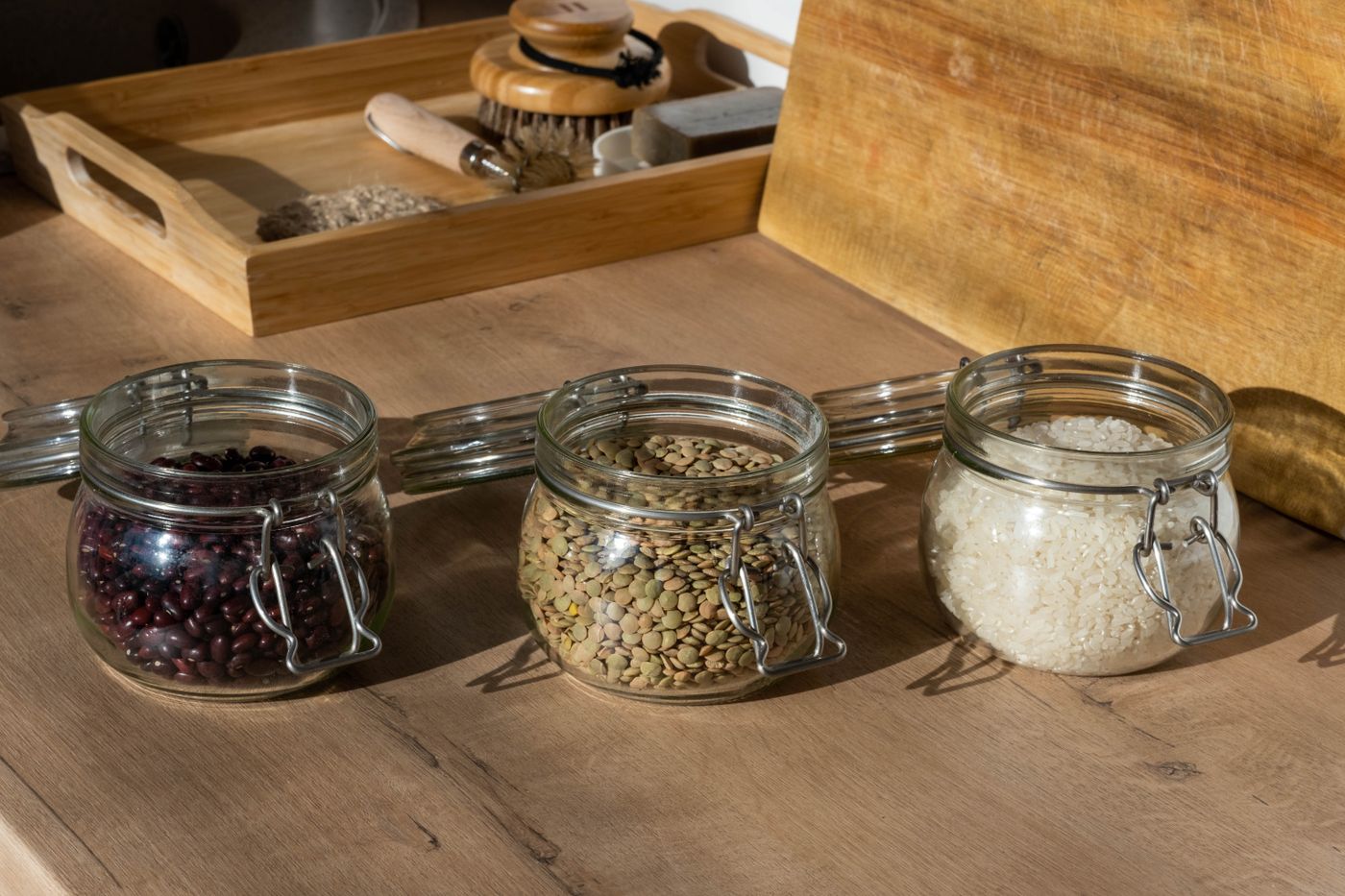
Photo: Ron Lach/ https://www.pexels.com
Whatever you call them, the compounds are real, and the process is the interesting part. Your gut bacteria ferment the fiber you cannot digest yourself, and in doing so they make short-chain fatty acids — acetate, propionate, butyrate — along with other organic acids, antimicrobial peptides, exopolysaccharides, enzymes and amino acids.7
The vitamin claim is worth taking slowly. Gut bacteria can manufacture B vitamins: a genome analysis of 256 common gut species predicted that each of the eight B vitamins could be produced by 40 to 65% of them.8 But that same analysis suggests the bacteria exchange these among themselves, keeping alive the species that cannot make their own. That is bacteria feeding bacteria, which is not the same as topping up your vitamin levels. Vitamin K2 is made in the gut too, but mostly by Bacteroides and E. coli — the Lactobacillus and Bifidobacterium species you find in supplements largely do not make menaquinones at all.9,25 And how much of it you absorb from the large intestine remains uncertain: the long-chain forms produced down there are probably not easily absorbed.9
The consensus statement is similarly hedged, noting that bacterially made vitamins are “probably” retained in postbiotic preparations, but that how much survives is “not well documented at present.”1
What the evidence actually shows
Photo: Sasha Sasha/ https://www.pexels.com
Each claim below comes with the kind of study it rests on, because that is what decides how much weight it carries.
Short-chain fatty acids and the gut environment
Fermentation lowers the pH of the colon, and pH shapes which bacteria thrive. In continuous culture fed with gut communities from two donors, holding the pH at 5.5 rather than 6.5 favored butyrate-producing Roseburia and suppressed Bacteroides; the researchers concluded that a fall in colonic pH may boost butyrate producers while curtailing Bacteroides.10 Worth knowing — but that is a benchtop system with two donors, and the acid in question is made in the colon by fermenting fiber. Nothing there shows that swallowing something acidic does the same thing.
On “keeping your gut bacteria in balance”
Gut bacteria matter for digestion and nutrient absorption. “Balance” is a metaphor rather than a measurement, though — there is no agreed definition of a balanced microbiome and no reference range for one, and the related term “dysbiosis” has been criticized in the literature for being used circularly.11 Ecological modeling has even made the case that competition between gut microbes is stabilizing rather than something to be minimized.12
The gut lining
In cell cultures and animal models, short-chain fatty acids affect the tight junctions that seal the gut lining. Whether tightening that barrier improves health in people is genuinely unresolved. A review of the question put it plainly: most of the data are correlative, barrier loss on its own appears insufficient to cause disease, and no barrier-restoring treatment has been shown effective in clinical trials.13
Blood sugar and blood fats
Short-chain fatty acids interact with receptors involved in glucose and lipid handling, and there is one striking human trial. Sixty overweight adults were randomized, and 49 completed 24 weeks, taking a compound engineered to release about 2.4 g of propionate a day directly into the colon. Far fewer of them put on a meaningful amount of weight — one in 25 gained 3% or more of their body weight, against six in 24 on the control — and the group avoided the deterioration in insulin sensitivity that the control group showed.14 Average weight change between the groups was not itself significant.
Two things about that trial. It used a purpose-built chemical compound at gram doses, not a supplement. And the review most often cited on this topic says in its own abstract that “a lack of well-designed and controlled human studies has hampered our understanding of the significance of SCFA in human metabolic health.”7
The immune system
Some inactivated bacterial preparations do shift immune markers. A randomized trial in 100 overweight adults found that 10 mg a day of heat-killed Lactobacillus plantarum L-137 changed immune-cell proliferation and some inflammatory and lipid measures.15 Those are laboratory readings rather than health outcomes, and the trial was run by the manufacturer.
Mechanism is a reason to run a trial. It is not the result of one.
Has anyone actually tested a postbiotic in people?
Yes — in the strict sense, on deliberately inactivated preparations. The results are early, specific, and mixed.
What has been tested in people
- Pasteurized Akkermansia muciniphila is the flagship example. In overweight, insulin-resistant volunteers taking it for three months, a modelled index of insulin sensitivity improved by about 29% against placebo and total cholesterol fell by about 9%. Changes in body weight and fat mass did not reach significance. The authors call it a proof-of-concept exploratory study; its primary endpoints were safety, tolerability and metabolic measures, and 32 of the 40 enrolled completed it. Note it was the pasteurized preparation that produced these results, not the live one. Depommier and colleagues, Nature Medicine, 2019.16
- Heat-killed Lactobacillus plantarum L-137 — 100 adults, changes in immune and lipid markers, manufacturer-run. Tanaka and colleagues, European Journal of Nutrition, 2020.15
- Heat-inactivated Lactobacillus acidophilus LB was rated very low quality of evidence, weak recommendation for treating acute gastroenteritis in children by a European pediatric working group in 2014 — and it does not appear at all in that group’s 2020 update. ESPGHAN Working Group, 201417 and 2020.24
- A bacterial lysate tested in 288 patients with chronic obstructive pulmonary disease missed its primary endpoint. Noted in the ISAPP consensus statement.1
Researchers have also tested short-chain fatty acids delivered straight to inflamed tissue. Eight randomized trials of butyrate enemas in 227 people with ulcerative colitis found only one reporting a significant difference in disease activity, with no significant effect on endoscopic or histological scores; the reviewers concluded the evidence does not support their use.18 That is a much higher local dose than anything a supplement delivers.
The pattern across all of it: results belong to the specific preparation tested. They do not transfer from one product to another.
The acetic acid question

Photo: Cihan Yüce/ https://www.pexels.com
Acetic acid is the acid in vinegar, and it is the one fermentation metabolite with a decent human literature behind it. It is also a clean illustration of why dose decides everything.
An umbrella review pooling ten meta-analyses and 38 primary studies found vinegar consumption associated with fasting glucose about 9 mg/dL lower, post-meal glucose about 15 mg/dL lower, HbA1c about 0.7 points lower, total cholesterol about 9 mg/dL lower, body weight about 1 kg lower and systolic blood pressure about 3 mmHg lower. There was no significant effect on fasting insulin, insulin resistance, LDL, HDL, triglycerides, BMI, waist circumference or diastolic blood pressure.19
The certainty attached to those figures varies a great deal, and that matters more than the numbers. Body weight and systolic blood pressure were graded high certainty; the glucose and HbA1c results moderate; the total cholesterol result very low.19 An earlier meta-analysis of nine apple cider vinegar trials found the same three markers moving, with severe disagreement between trials on the glycemic ones — I² of 75% for fasting glucose and 91% for HbA1c.20
The part that decides whether this applies
Those trials used roughly 15 to 30 ml of vinegar a day — somewhere around 750 to 1,500 mg of acetic acid, taken as a food, usually with meals.
A tablespoon of a fermented probiotic contains acetic acid at trace levels, orders of magnitude below that. There is no basis for expecting the same effects, and we are not claiming them.
Where Flourish fits

Flourish is a living liquid probiotic. The cultures are never freeze-dried, which means they stay in the medium they grew in — and that medium carries the compounds they produced while growing: organic acids, peptides, amino acids, enzymes and other fermentation metabolites.
Those compounds are what a great deal of writing calls postbiotics. In the looser sense that most of the internet uses, that is a fair description. In the strict consensus sense it is not, and the reason is worth stating: a postbiotic requires deliberately inactivated cells, and the entire point of Flourish is that the cultures are alive. A living product cannot contain postbiotics as ISAPP defines them.1 So we call them fermentation metabolites, and we have not measured what they do in the body.
Two things worth being precise about
The first is acid. Fermentation makes Flourish naturally tart, and it is tempting to read that as helping the cultures survive the trip. It does not follow — your stomach is considerably more acidic than any fermented drink, so a product cannot protect its contents by being acidic. What the laboratory work actually suggests is close to the opposite: in a model of the upper digestive tract, survival was best when the probiotic went in with a meal or 30 minutes before one, and the researchers put that down more to the meal’s fat content than to anything else about it.21
The second is the strains. Growing eleven cultures together is genuinely different from blending them after separate production, and it is a real feature of how Flourish is made. It does not mean they stop competing — bacteria in a shared medium always compete for nutrients to some degree, and some also cross-feed on each other’s products.12 We have not published strain-level data on how ours interact, so we make no synergy claim.
What we’d claim for Flourish is digestive and microbiome support, taken consistently — which is why consistency is key. Eleven live cultures from five genera, grown together on non-GMO sugarcane molasses or sweet sorghum, with every batch third-party tested.
Flourish is a dietary supplement made to support digestive and microbiome health. It is not a treatment for any condition. Follow the dosage on the label. Check with your doctor before starting a new supplement, and with your pediatrician before giving one to a child.
Ready to try a living probiotic?
Eleven living cultures. One daily shot. For the whole family — grown-ups and older kids alike.
Shop Flourish Original · Shop Flourish Junior · More on prebiotics
And since taking it regularly is the part that actually matters, that’s what Subscribe & Save is for: 5% off all Subscribe & Save orders, plus free shipping on subscriptions of 2+ Flourish.
A few questions we hear a lot
Probiotics, prebiotics, postbiotics — what is the difference?
Probiotics are “live microorganisms which when administered in adequate amounts confer a health benefit on the host” — the dose clause is part of the definition.22 Prebiotics are substrates that your microbes selectively use to your benefit, and that word is load-bearing too.23 Postbiotics, under the 2021 consensus definition, are preparations of inactivated microorganisms or their components that have been shown to do something.1 The popular version — postbiotics as whatever probiotics produce — is looser than that.
Can a live probiotic contain postbiotics?
Not in the strict sense. Under the consensus definition a postbiotic requires deliberately inactivated cells, so a product built around live cultures does not have them.1 It does contain fermentation metabolites, which is what a lot of people mean when they say postbiotics.
Are short-chain fatty acids postbiotics?
Not on their own. The consensus statement names them specifically among the things that, in purified form, fall outside the definition — along with peptides, exopolysaccharides and lactic acid.1 They can be present within a postbiotic preparation.
Should I take a postbiotic supplement?
That is a conversation to have with your doctor. A few specific inactivated preparations have been tested in people, with early and mixed results, and findings for one preparation do not carry across to another.16,17
Do gut bacteria make vitamins I can use?
They make B vitamins and vitamin K2. How much reaches you is less clear than the headline suggests — much of the B vitamin production is traded between bacteria rather than absorbed by you,8 and colonic vitamin K absorption is poorly quantified.9 Food remains the reliable route.
Is the tartness of Flourish doing anything?
It tells you fermentation happened. It does not help the cultures survive your stomach — your stomach is more acidic than the bottle. Taking it with or just before a meal is the better bet.21
About this article
Written by: Kelsy Armstrong, Entegro Health | Originally published: January 2024
Important information
This article is for general education and isn’t a substitute for professional medical advice, diagnosis, or treatment. Effects described in the research are specific to the preparation and dose studied; evidence for one product does not transfer to another. Nothing here treats or prevents any condition. If you have a health concern, please speak to a qualified health professional. These statements have not been evaluated by the Food and Drug Administration. This product is not intended to diagnose, treat, cure, or prevent any disease.
Sources
- Salminen, S., Collado, M. C., Endo, A., et al. (2021). The International Scientific Association of Probiotics and Prebiotics (ISAPP) consensus statement on the definition and scope of postbiotics. Nature Reviews Gastroenterology & Hepatology, 18(9), 649–667 — the definition, the exclusion of purified metabolites, and the criteria a preparation must meet. Source
- Vrzáčková, N., Ruml, T., & Zelenka, J. (2021). Postbiotics, metabolic signaling, and cancer. Molecules, 26(6), 1528 — an example of a review using the older metabolite-based definition, opening “postbiotics are health-promoting microbial metabolites.” Source
- Harvard Health Publishing. What are postbiotics? — describes postbiotics as including “vitamins B and K, amino acids, and substances called antimicrobial peptides.” Source
- Cleveland Clinic. Postbiotics: what they are and their benefits. Source
- Aguilar-Toalá, J. E., Arioli, S., Behare, P., et al. (2021). Postbiotics — when simplification fails to clarify. Nature Reviews Gastroenterology & Hepatology, 18(11), 825–826 — 35 researchers argue the consensus definition is too broad because it does not distinguish molecular factors from complex cell-derived matrices. Source
- Salminen, S., Collado, M. C., Endo, A., et al. (2021). Reply to: Postbiotics — when simplification fails to clarify. Nature Reviews Gastroenterology & Hepatology, 18(11), 827–828. Source
- Morrison, D. J., & Preston, T. (2016). Formation of short chain fatty acids by the gut microbiota and their impact on human metabolism. Gut Microbes, 7(3), 189–200 — “a lack of well-designed and controlled human studies has hampered our understanding of the significance of SCFA in human metabolic health.” Source
- Magnúsdóttir, S., Ravcheev, D., de Crécy-Lagard, V., & Thiele, I. (2015). Systematic genome assessment of B-vitamin biosynthesis suggests co-operation among gut microbes. Frontiers in Genetics, 6, 148 — a genome analysis of 256 gut species; each of the eight B vitamins predicted to be produced by 40–65%, and largely exchanged among the bacteria themselves. Source
- EFSA Panel on Dietetic Products, Nutrition and Allergies (2017). Dietary reference values for vitamin K. EFSA Journal, 15(5), e04780 — “most bacteria of their microbiota, including Bifidobacterium, Lactobacillus and Clostridium species, do not produce menaquinones”; menaquinones from gut microbiota are “probably not easily absorbed from the distal bowel,” and their contribution to vitamin K status is unclear. Source
- Walker, A. W., Duncan, S. H., McWilliam Leitch, E. C., Child, M. W., & Flint, H. J. (2005). pH and peptide supply can radically alter bacterial populations and short-chain fatty acid ratios within microbial communities from the human colon. Applied and Environmental Microbiology, 71(7), 3692–3700 — anaerobic continuous cultures seeded with faecal communities from two donors. Source
- Brüssow, H. (2020). Problems with the concept of gut microbiota dysbiosis. Microbial Biotechnology, 13(2), 423–434. Source
- Coyte, K. Z., Schluter, J., & Foster, K. R. (2015). The ecology of the microbiome: networks, competition, and stability. Science, 350(6261), 663–666 — “hosts can benefit from microbial competition when this competition dampens cooperative networks and increases stability.” Source
- Odenwald, M. A., & Turner, J. R. (2013). Intestinal permeability defects: is it time to treat? Clinical Gastroenterology and Hepatology, 11(9), 1075–1083 — most available data are correlative; barrier loss alone appears insufficient to initiate disease; no barrier-restoring treatment has been proven effective. Source
- Chambers, E. S., Viardot, A., Psichas, A., et al. (2015). Effects of targeted delivery of propionate to the human colon on appetite regulation, body weight maintenance and adiposity in overweight adults. Gut, 64(11), 1744–1754 — 60 randomized, 49 analysed over 24 weeks; inulin-propionate ester delivering an estimated 2.36 g/day of propionate to the colon; 1 of 25 vs 6 of 24 gained ≥3% of body weight (p = 0.036), while mean weight change did not differ significantly (p = 0.099); deterioration in insulin sensitivity seen in the inulin control was prevented. Source
- Tanaka, Y., Hirose, Y., Yamamoto, Y., Yoshikai, Y., & Murosaki, S. (2020). Daily intake of heat-killed Lactobacillus plantarum L-137 improves inflammation and lipid metabolism in overweight healthy adults: a randomized-controlled trial. European Journal of Nutrition, 59(6), 2641–2649 — 100 participants, 10 mg/day, conducted by the manufacturer. Source
- Depommier, C., Everard, A., Druart, C., et al. (2019). Supplementation with Akkermansia muciniphila in overweight and obese human volunteers: a proof-of-concept exploratory study. Nature Medicine, 25(7), 1096–1103 — 40 enrolled, 32 completers; primary endpoints were safety, tolerability and metabolic parameters; pasteurized A. muciniphila improved a HOMA-derived insulin sensitivity index by 28.62% (p = 0.002) and reduced total cholesterol by 8.68% (p = 0.02), while body weight (p = 0.091) and fat mass (p = 0.092) did not reach significance. The live preparation did not produce these effects. Source
- Szajewska, H., Guarino, A., Hojsak, I., et al.; ESPGHAN Working Group for Probiotics and Prebiotics (2014). Use of probiotics for management of acute gastroenteritis: a position paper. Journal of Pediatric Gastroenterology and Nutrition, 58(4), 531–539 — heat-inactivated Lactobacillus acidophilus LB rated very low quality of evidence, weak recommendation, for the treatment of acute gastroenteritis in children; the paper also notes it “does not fit with the definition of probiotics.” Source
- Jamka, M., Kokot, M., Kaczmarek, N., et al. (2021). The effect of sodium butyrate enemas compared with placebo on disease activity, endoscopic scores, and histological and inflammatory parameters in inflammatory bowel diseases: a systematic review of randomised controlled trials. Complementary Medicine Research, 28(4), 344–356 — 8 studies, 227 patients with ulcerative colitis; the evidence does not support the use of butyrate enemas. Source
- Shahmohammadi, F., et al. (2026). Vinegar consumption and health: an umbrella review of meta-analyses of randomized controlled trials. Food Science & Nutrition, 14(5), e71849 — 10 meta-analyses, 38 primary studies; body weight and systolic blood pressure graded high certainty, fasting and post-meal glucose and HbA1c moderate, total cholesterol very low; no significant effects on fasting insulin, HOMA-IR, LDL, HDL, triglycerides, BMI, waist circumference or diastolic blood pressure. Source
- Hadi, A., Pourmasoumi, M., Najafgholizadeh, A., Clark, C. C. T., & Esmaillzadeh, A. (2021). The effect of apple cider vinegar on lipid profiles and glycemic parameters: a systematic review and meta-analysis of randomized clinical trials. BMC Complementary Medicine and Therapies, 21(1), 179 — nine studies; total cholesterol I² = 39%, fasting plasma glucose I² = 75%, HbA1c I² = 91%; no significant effect on LDL, HDL, fasting insulin or HOMA-IR. Source
- Tompkins, T. A., Mainville, I., & Arcand, Y. (2011). The impact of meals on a probiotic during transit through a model of the human upper gastrointestinal tract. Beneficial Microbes, 2(4), 295–303 — survival was best when given with a meal or 30 minutes before one, and significantly better in milk and oatmeal-milk than in apple juice or spring water; the authors judged the meal’s fat content more important than its protein content. Source
- Hill, C., Guarner, F., Reid, G., et al. (2014). Expert consensus document: the ISAPP consensus statement on the scope and appropriate use of the term probiotic. Nature Reviews Gastroenterology & Hepatology, 11(8), 506–514 — reinforces the FAO/WHO definition, “live microorganisms which when administered in adequate amounts confer a health benefit on the host.” Source
- Gibson, G. R., Hutkins, R., Sanders, M. E., et al. (2017). Expert consensus document: the ISAPP consensus statement on the definition and scope of prebiotics. Nature Reviews Gastroenterology & Hepatology, 14(8), 491–502 — “a substrate that is selectively utilized by host microorganisms conferring a health benefit”; the requirement for selective, microbiota-mediated mechanisms was retained. Source
- Szajewska, H., Guarino, A., Hojsak, I., et al.; ESPGHAN Working Group on Probiotics and Prebiotics (2020). Use of probiotics for the management of acute gastroenteritis in children: an update. Journal of Pediatric Gastroenterology and Nutrition, 71(2), 261–269 — the updated recommendations do not include heat-inactivated Lactobacillus acidophilus LB. Source
- Conly, J. M., & Stein, K. (1992). Quantitative and qualitative measurements of K vitamins in human intestinal contents. American Journal of Gastroenterology, 87(3), 311–316 — long-chain menaquinones (MK-9,10) at 14.54 µg/g dry weight of distal colonic contents against 5.55 for MK-4 to MK-7, with E. coli and Bacteroides identified as the major menaquinone producers. Source