Gut-Healthy Traveling
Travel is hard on your digestive system, and the reasons are more interesting than "foreign germs." Here's what actually goes wrong, what genuinely reduces the risk, and where probiotics honestly sit in that list.
Photo: Chait Goli / https://www.pexels.com
To travel is to experience the world, as people say, usually while waiting in line. New places, new food, new everything — and a digestive system that has opinions about all of it.
What actually happens to your gut when you travel
Three separate things, and only one of them involves a pathogen.
Stress, which your gut takes personally. Packing, airports, connections, the small ongoing dread of the passport. Acute stress releases corticotropin-releasing factor, which slows your stomach down and speeds your colon up at the same time.1 That's not a metaphor — it's measurable, and it's why nerves and travel days feel the way they do.
Your body clock, which the microbes share. Gut bacteria run on a daily rhythm, and disrupting that rhythm disrupts them. The landmark study on this induced jet lag in mice and found the microbial community lost its normal daily fluctuation — then found the same pattern in two human travelers flying between the US and Israel.2 Two people is a proof of concept, not a population, and the outcome measured was metabolic rather than digestive. But the mechanism is real and the mouse work behind it is strong.
Everything else falling apart at once. Less water, less sleep, less fiber, more airport food, less moving around, and a bathroom routine that's suddenly negotiable. Constipation is the underrated travel complaint: one study of travelers found around 9% developed it during a trip, and half of those still had symptoms after getting home.3
Then there's travelers' diarrhea
The famous one, and common enough to deserve the attention: attack rates run at 30% to 70% of travelers over a two-week trip, depending where you go and when.4
Bacteria cause the large majority — 75% to 90% of cases — most often E. coli, then Campylobacter, Shigella and Salmonella. Viruses account for a further chunk, and parasites turn up more in longer trips.4 It arrives, as a rule, through contaminated food or water.
Higher-risk destinations include Central and South America, Mexico, Africa, South Asia and Southeast Asia. Lower-risk: northern and western Europe, Japan, Canada, Singapore, Australia, New Zealand and the US.5
When it stops being a nuisance and needs a doctor
In most healthy adults this is unpleasant and self-limiting, and settles in a few days. It is not harmless, though — dehydration is the real risk, and it develops fastest in infants, young children, older adults and anyone with a chronic illness.4
Get medical help if diarrhea lasts more than two days, or at any point for bloody or black stools, fever above 102°F (39°C), severe abdominal or rectal pain, or signs of dehydration.5
For children, seek care sooner: ongoing vomiting, fever of 102°F or above, bloody stools, dry mouth, unusual sleepiness or reduced urination.5
What actually reduces the risk
This is the part worth reading twice, because the measures with the best evidence are also the least exciting.
- Food and water care. Choosing carefully lowers risk — though the CDC is refreshingly honest that travelers can't control restaurant hygiene, and that advice on its own doesn't always translate into fewer infections.4
- Handwashing. Soap where you can get it; otherwise sanitizer with at least 60% alcohol.4
- Oral rehydration. Replacing fluid is the actual treatment. For significant losses, use proper oral rehydration salts made up with boiled or treated water. Very sweet drinks can make things worse.4
- Bismuth subsalicylate. The quiet workhorse: taken four times daily it cuts travelers' diarrhea incidence by roughly half. It blackens the tongue and stool, and it isn't for everyone — check it against pregnancy, aspirin allergy, gout, kidney problems, anticoagulants and children's ages before you pack it.4
- Antibiotics, but not in advance. Preventive antibiotics are not recommended for almost any traveler — the risks outweigh the benefit, and they select for resistant organisms.4
Handwashing and a bottle of bismuth beat almost anything else you could pack.
So where do probiotics sit?
Lower down the list than most travel articles will tell you, and we'd rather be the ones to say it.
There is a real result here. A 2007 meta-analysis of twelve randomized trials found probiotics reduced travelers' diarrhea, with a relative risk of 0.85 (95% CI 0.79–0.91).6 A 2018 meta-analysis of eleven double-blind placebo-controlled trials reported the same figure.7
Then it gets more specific, and less flattering.
Three things that pooled figure hides
The author of that 2007 analysis revisited it in 2019, this time separating the strains rather than pooling them. Only Saccharomyces boulardii held up (RR 0.79). Lactobacillus rhamnosus GG managed a non-significant trend. Lactobacillus acidophilus showed no significant effect at all.8 A 2024 review reached much the same place.9
Against the alternatives, probiotics come fourth. A network meta-analysis of 31 trials and nearly 11,000 people ranked them behind bismuth subsalicylate and rifaximin, with most probiotic comparisons rated low confidence.10
And official guidance doesn't recommend them for this. The CDC's Yellow Book says results are inconclusive and "data are insufficient to recommend their use."4 The International Society of Travel Medicine's expert panel says there is "insufficient evidence to recommend the use of commercially available prebiotics or probiotics to prevent or treat travelers' diarrhea."11
Note which organism survived that filtering: S. boulardii is a yeast, not one of the Lactobacillus or Bifidobacterium species most probiotics are built around. Probiotic effects are specific to the strain, and they don't transfer between products.
So: none of this is a claim about Flourish, and we aren't making one. If you already take a probiotic daily, carrying on while you travel is a perfectly sensible thing to do. Just pack it after the hand sanitizer.
One thing probiotics don't do
Restore your microbiome. It's the most common promise in the category and the evidence doesn't support it: in healthy adults, supplementation produces no measurable change in the composition of the resident gut community.12 Colonization turns out to be highly individual, and what appears in a stool sample doesn't reliably reflect what reached the gut lining.13
Worth knowing for this particular article: one study found that after a course of antibiotics, probiotics delayed the gut's return to normal compared with simply waiting.14 If a trip ends with antibiotics, that's a conversation for your doctor rather than an assumption.
What probiotic organisms do is work in transit — producing metabolites, competing with less helpful bacteria for food and space, supporting the gut lining. Those mechanisms are well described, mostly from laboratory and animal work, and they're strain-specific.1516 The effect lasts while you're taking them, which is the argument for consistency rather than for a pre-trip loading phase.
Packing a liquid probiotic
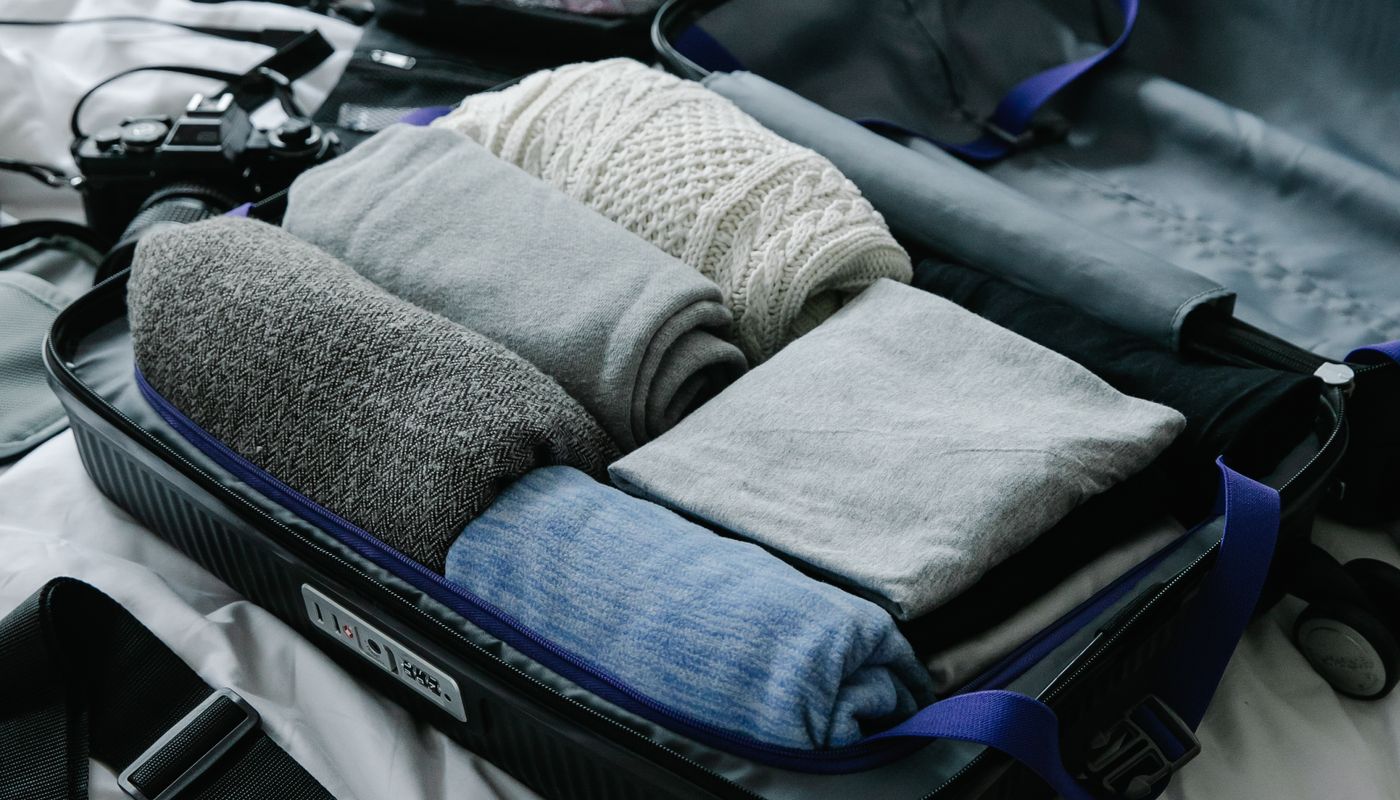
Photo: Timur Weber / https://www.pexels.com
Practical notes, since a liquid takes more thought than a capsule.
Cabin bag rules. Flourish TO GO comes in 3.4 fl oz (100 ml) bottles, which is exactly the ceiling for liquids in hand luggage — each one holds just over six adult doses at the 15 ml (one tablespoon) daily serving. A full-size bottle goes in checked luggage.
Bag it, and open it gently. Living cultures keep metabolizing, which produces carbon dioxide and nitrogen, and cabin pressure changes do the rest — a bottle can arrive pressurized. Don't shake it: rock it gently to disperse the cultures, then open and close the cap slowly to let the pressure off, every time. Put the whole thing in a zip-top bag. Leakage is usually minimal, and you'll be glad of the bag the one time it isn't.
Storage. The fridge is its recommended home: cool bacteria metabolize more slowly, which keeps the culture at its best for longer and keeps bottle pressure down. For travel, though, a bottle can sit at room temperature for up to four weeks — which is what makes it travel-friendly, and comfortably longer than most trips. Don't freeze it, and keep it out of direct sun and away from heat above 140°F. Check the 'best if used by' date before you pack rather than after you land.
Where Flourish fits

Flourish is a living liquid probiotic taken daily to support digestive and microbiome health — eleven strains across five families, grown together as one culture, with every batch third-party tested and cleared for delivery of billions of live CFUs per dose.
That's the claim we make and it's the one we can support. Taken consistently is how it's meant to be used, which is covered in Best Time to Take Probiotics — and if that habit happens to survive two weeks away, so much the better.
Flourish is a dietary supplement made to support digestive and microbiome health. It is not a treatment for any condition and will not prevent illness while you travel. Follow the dosage on the label. Check with your doctor before starting a new supplement — particularly if you are pregnant, immunocompromised, seriously ill, or considering one for a child — and see a travel clinic before visiting a higher-risk destination.

Ready to try a living probiotic?
Eleven living strains. One daily shot. For digestive and microbiome support.
Shop Flourish Original · Shop Flourish TO GO · When to take it
A few questions we hear a lot
Will a probiotic stop me getting travelers' diarrhea?
We can't tell you that. The pooled evidence shows a modest effect, but once the strains are separated only S. boulardii holds up,8 and both the CDC and the International Society of Travel Medicine decline to recommend probiotics for this.4,11 Food and water care, handwashing and bismuth subsalicylate are the better-evidenced answers.
How far ahead should I start taking one?
Nobody has established an optimal lead-in time — there's no trial behind any of the numbers you'll see quoted. One clinical summary suggests starting a couple of days before you go and continuing through the trip.17 If you already take one daily, just keep going.
Can I take Flourish through airport security?
The 3.4 fl oz (100 ml) TO GO bottles are within the cabin liquid limit. Full-size bottles need to go in checked luggage. Bag anything you're carrying, in case pressure changes push a little product past the cap.
Does it need to stay cold on the trip?
Refrigeration is recommended — cool bacteria metabolize more slowly, which preserves potency and keeps bottle pressure down — but it isn't required for a trip. A bottle can be kept at room temperature for up to four weeks, which covers most trips comfortably. Don't freeze it, and keep it away from direct sun and from heat above 140°F.
Why am I constipated every time I travel?
Dehydration, less fiber, less movement, disrupted sleep and a bathroom routine you keep postponing — all at once. It's common enough to have been studied: around 9% of travelers in one study developed it during a trip.3
Does jet lag really affect gut bacteria?
In mice, clearly. In humans the evidence is one two-person observation from the same study, so treat it as an interesting lead rather than a finding.2
What should I actually pack?
Hand sanitizer at 60% alcohol or above, oral rehydration salts, and — if it suits your medical history — bismuth subsalicylate.4 For a higher-risk destination, see a travel clinic before you go.
About this article
Written by: Kelsy Armstrong, Entegro Health | Originally published: March 2023
Important information
This article is for general education and is not a substitute for professional medical advice, diagnosis, or treatment. Travelers' diarrhea and other travel-related illness should be assessed by a qualified healthcare provider; never delay seeking care on the basis of anything you read here. Speak to a travel health clinic before visiting a higher-risk destination, and check any medication — including over-the-counter options such as bismuth subsalicylate — against your own medical history. Probiotic effects are specific to the strain, the dose and the outcome studied; evidence for one product does not transfer to another. These statements have not been evaluated by the Food and Drug Administration. This product is not intended to diagnose, treat, cure, or prevent any disease.
Sources
- Taché, Y., & Bonaz, B. (2007). Corticotropin-releasing factor receptors and stress-related alterations of gut motor function. The Journal of Clinical Investigation, 117(1), 33–40. Source
- Thaiss, C. A., Zeevi, D., Levy, M., et al. (2014). Transkingdom control of microbiota diurnal oscillations promotes metabolic homeostasis. Cell, 159(3), 514–529 — the human component of the jet-lag experiment involved two travellers. Source
- Tuteja, A. K., Talley, N. J., Gelman, S. S., et al. (2008). Development of functional diarrhea, constipation, irritable bowel syndrome, and dyspepsia during and after traveling outside the USA. Digestive Diseases and Sciences, 53(1), 271–276. Source
- Centers for Disease Control and Prevention. Travelers' Diarrhea — CDC Yellow Book: Health Information for International Travel. Attack rates, causative organisms, prevention measures, bismuth subsalicylate, oral rehydration, and the statement that data are insufficient to recommend probiotics. Source
- Mayo Clinic. Traveler's diarrhea — symptoms, causes, higher- and lower-risk destinations, and when to seek medical care. Source
- McFarland, L. V. (2007). Meta-analysis of probiotics for the prevention of traveler's diarrhea. Travel Medicine and Infectious Disease, 5(2), 97–105 — 12 randomised trials, RR 0.85 (95% CI 0.79–0.91). Source
- Bae, J. M. (2018). Prophylactic efficacy of probiotics on travelers' diarrhea: an adaptive meta-analysis of randomized controlled trials. Epidemiology and Health, 40, e2018043. Source
- McFarland, L. V., & Goh, S. (2019). Are probiotics and prebiotics effective in the prevention of travellers' diarrhea: a systematic review and meta-analysis. Travel Medicine and Infectious Disease, 27, 11–19 — only Saccharomyces boulardii reached significance. Source
- Alharbi, B. F., & Alateek, A. A. (2024). New insights into probiotics in the prevention of travelers' diarrhea: a systematic review. Travel Medicine and Infectious Disease, 59, 102703. Source
- Fan, H., Liu, I. C., Gao, L., & Wu, L. (2024). Comparative efficacy of chemoprophylaxis and probiotics in preventing travelers' diarrhea: a network meta-analysis. 31 randomized trials, 10,879 participants. Source
- Riddle, M. S., Connor, B. A., Beeching, N. J., et al. Guidelines for the prevention and treatment of travelers' diarrhea: a graded expert panel report. Journal of Travel Medicine — "there is insufficient evidence to recommend the use of commercially available prebiotics or probiotics to prevent or treat travelers' diarrhea." Source
- Kristensen, N. B., Bryrup, T., Allin, K. H., et al. (2016). Alterations in fecal microbiota composition by probiotic supplementation in healthy adults: a systematic review of randomized controlled trials. Genome Medicine, 8(1), 52. Source
- Zmora, N., Zilberman-Schapira, G., Suez, J., et al. (2018). Personalized gut mucosal colonization resistance to empiric probiotics is associated with unique host and microbiome features. Cell, 174(6), 1388–1405.e21. Source
- Suez, J., Zmora, N., Zilberman-Schapira, G., et al. (2018). Post-antibiotic gut mucosal microbiome reconstitution is impaired by probiotics and improved by autologous FMT. Cell, 174(6), 1406–1423.e16. Source
- Sanders, M. E. (2011). Impact of probiotics on colonizing microbiota of the gut. Journal of Clinical Gastroenterology, 45(Suppl), S115–S119 — notes that continued consumption is needed for sustained impact. Source
- Mujagic, Z., de Vos, P., Boekschoten, M. V., et al. (2017). The effects of Lactobacillus plantarum on small intestinal barrier function and mucosal gene transcription; a randomized double-blind placebo-controlled trial. Scientific Reports, 7, 40128 — ten healthy volunteers; the strains modulated repair-related gene transcription but did not significantly reduce induced permeability. Source
- Wilkins, T., & Sequoia, J. (2017). Probiotics for gastrointestinal conditions: a summary of the evidence. American Family Physician, 96(3), 170–178 — suggests beginning supplementation two days before travel and continuing through the trip. Source