Clever Ways to REUSE your glass
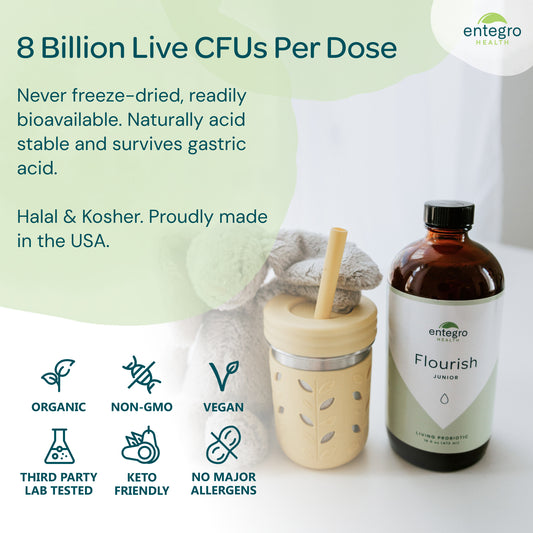
Your Flourish bottle has done its job. It's amber glass, it's sturdy, and it seems a shame to send it straight to the recycling. Here are three things to do with it instead.
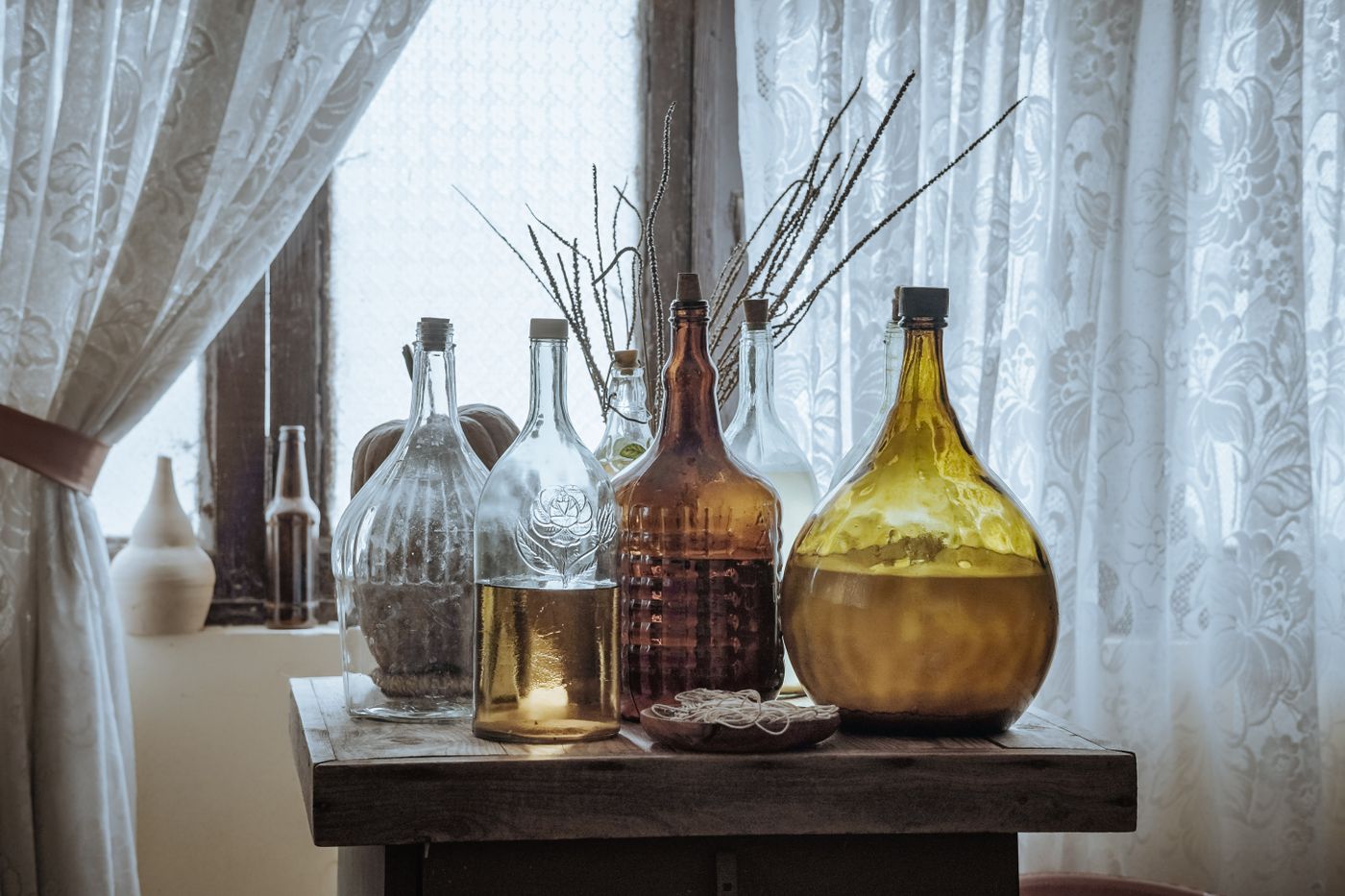
Why amber glass in the first place?
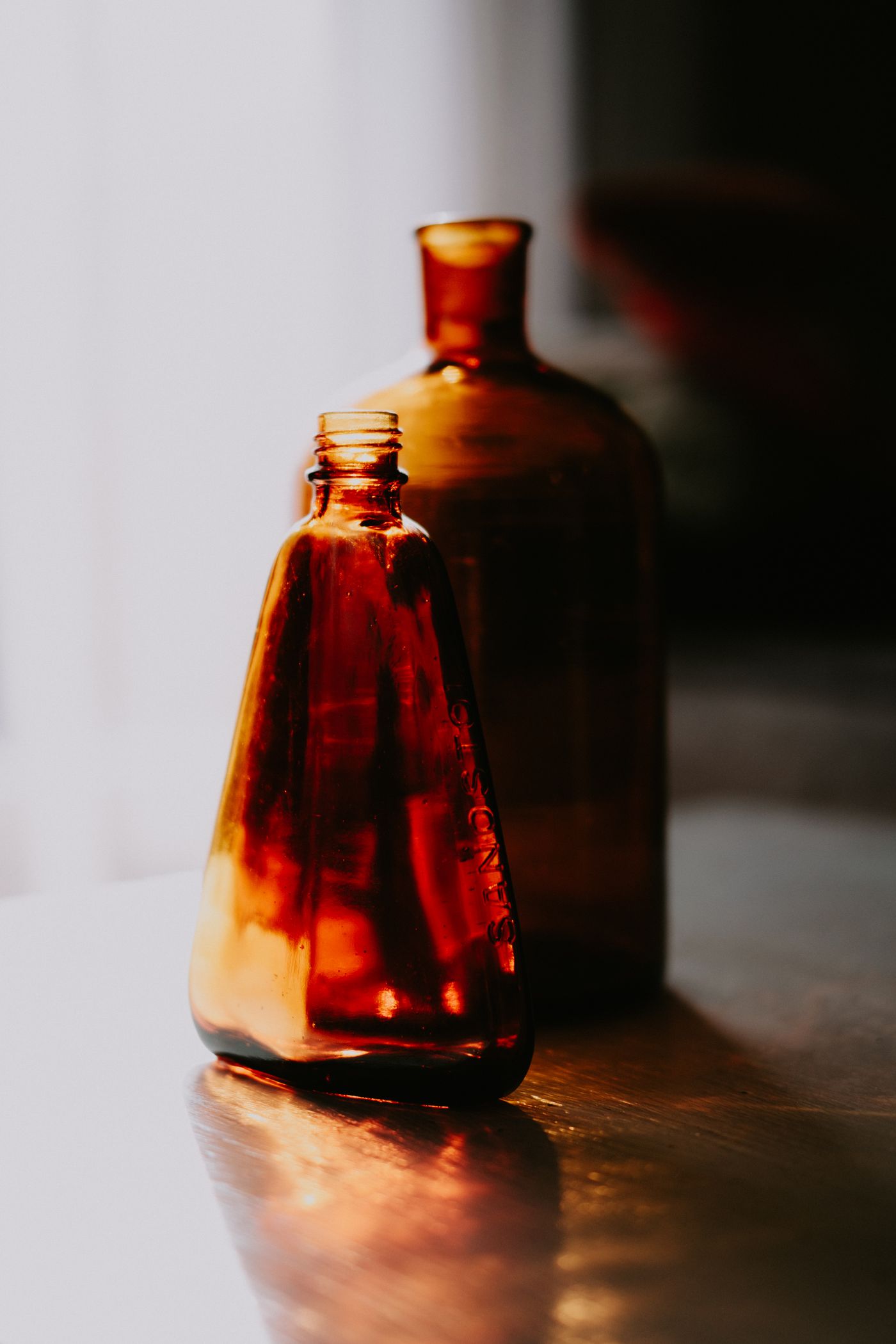
Because light is hard on a living product. Amber glass filters out much of the visible and ultraviolet light that clear glass lets straight through, which is the same reason it has been the default for pharmacy bottles and beer for well over a century.
The happy side effect is that you end up with a genuinely nice bottle. Too nice for the bin, anyway.
First: Getting the label off
Soak the empty bottle in warm, soapy water for fifteen minutes or so and most of the label will lift away in one piece. For the sticky residue underneath, a few drops of lemon oil on a cloth will shift it.
Then wash the bottle properly, inside and out, and let it dry completely. It held a living probiotic, so give it more than a rinse.
One bottle, one job
Once a bottle has held cleaning solution or essential oils, retire it from anything anyone will drink. Label it for whatever it's become and keep it in that lane.
1. Cleaner spray bottle
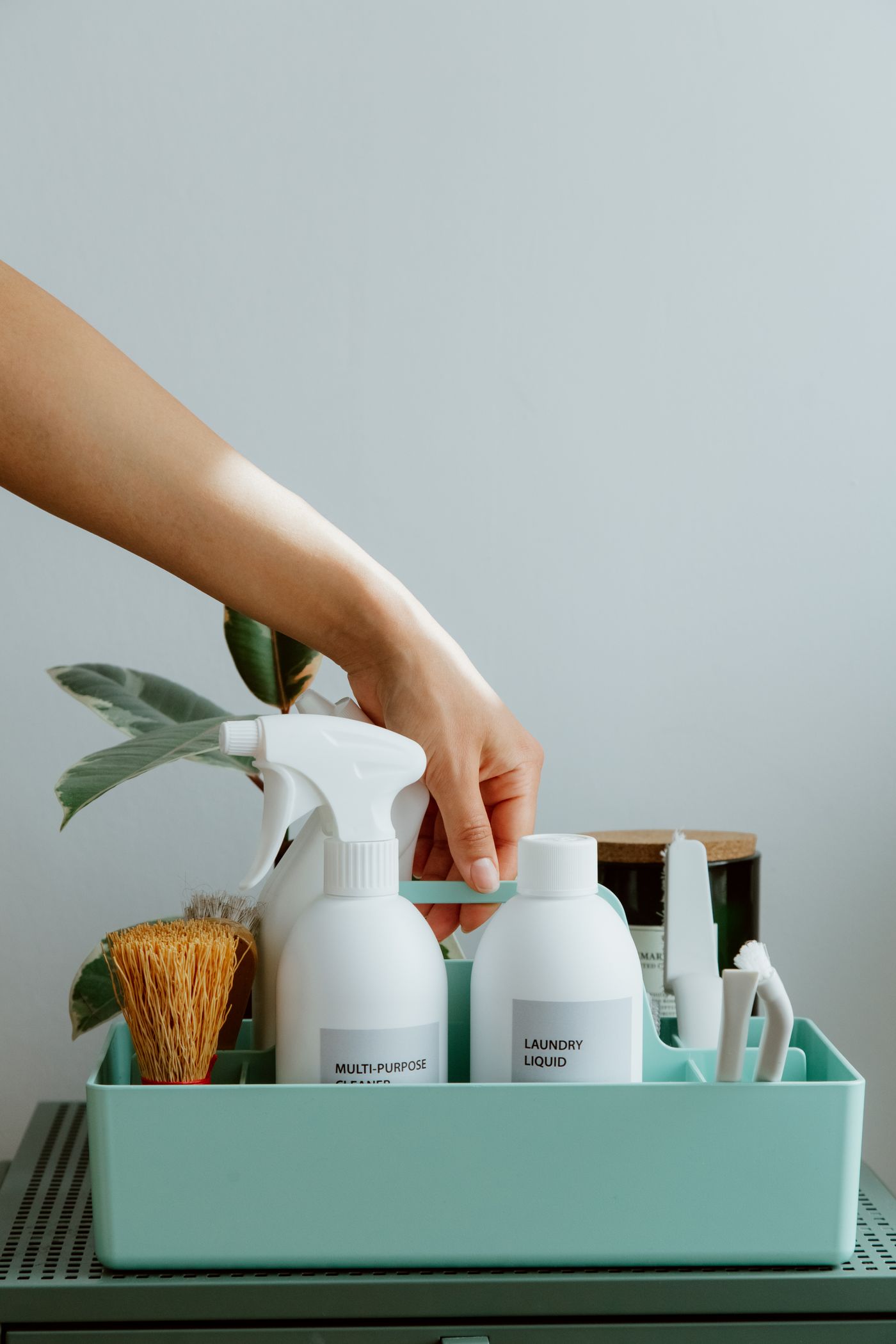
What you need
- Flourish glass bottle, label removed and washed
- Your favorite cleaner, or the DIY recipe below
- A sprayer top — check the thread against your bottle neck before you buy, since not every sprayer fits every bottle
- A funnel
DIY counter cleaner
- 1 cup distilled white vinegar
- 1 cup water
- 3 drops tea tree oil
- 3 drops essential oil of choice — grapefruit, orange or lavender all work
Method
- Funnel the water and vinegar into the bottle.
- Add the oils.
- Shake vigorously before each use — oil and water separate, and they will keep doing so.
Not on natural stone, though
Vinegar sits at roughly pH 2.4, and that acidity etches marble, limestone, travertine and granite. It strips the sealant and dulls the surface, and the damage is physical rather than a stain — no amount of cleaning brings the shine back, only professional honing and re-polishing.1
If your counters are natural stone, skip the vinegar entirely. Warm water with a few drops of pH-neutral dish soap is what stone people actually recommend. This spray is for glass, tile, sealed laminate and the bathroom.
2. Vase
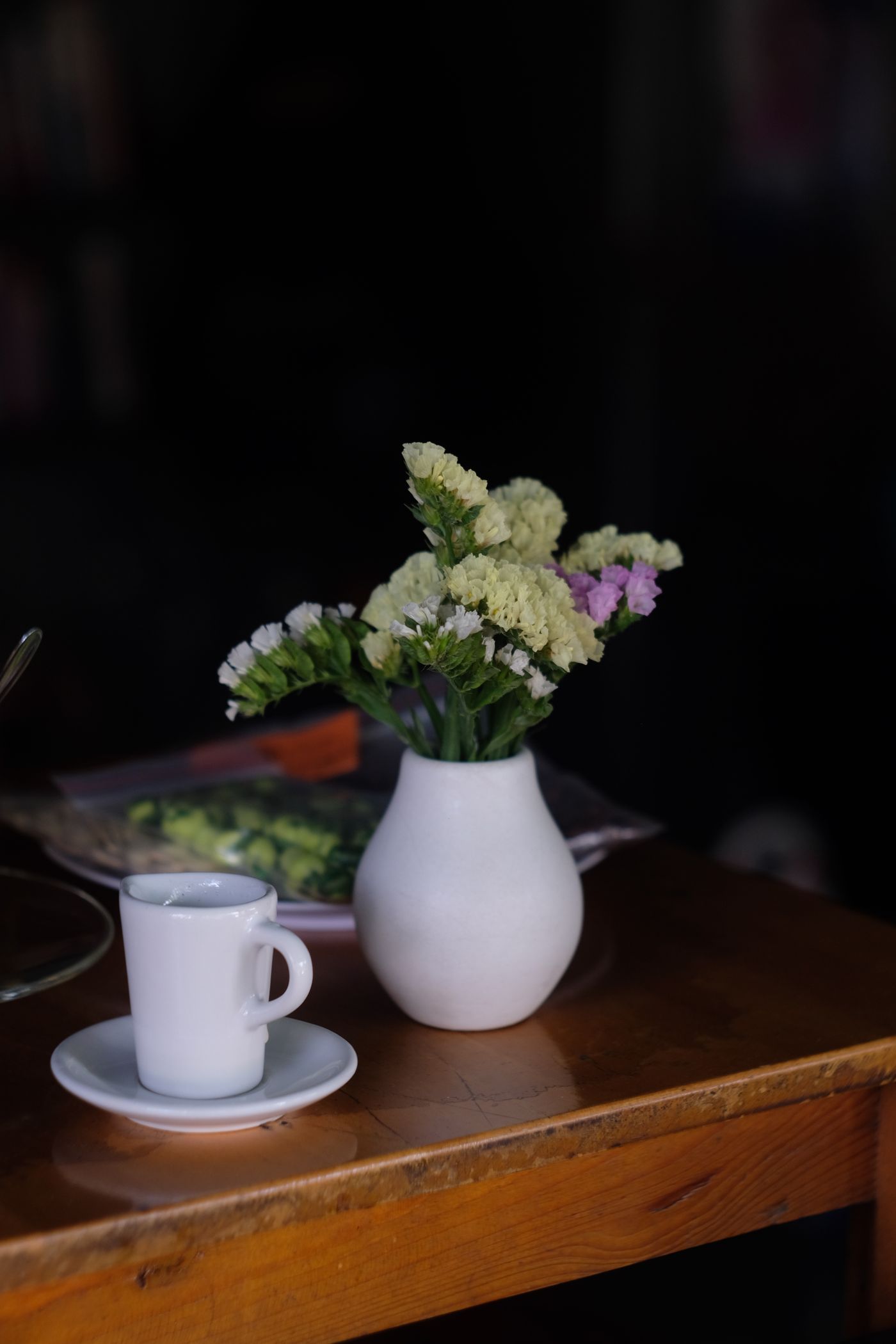
What you need
- Flourish glass bottle, label removed and washed
- Flowers, artificial sprigs of greenery, dried grasses — whatever you like
That's the entire project. The narrow neck does most of the arranging for you, which makes it very difficult to get wrong.
A single stem in an amber bottle looks deliberate in a way that a single stem in a tumbler does not. Three of them along a windowsill looks like you meant it.
3. Reed diffuser
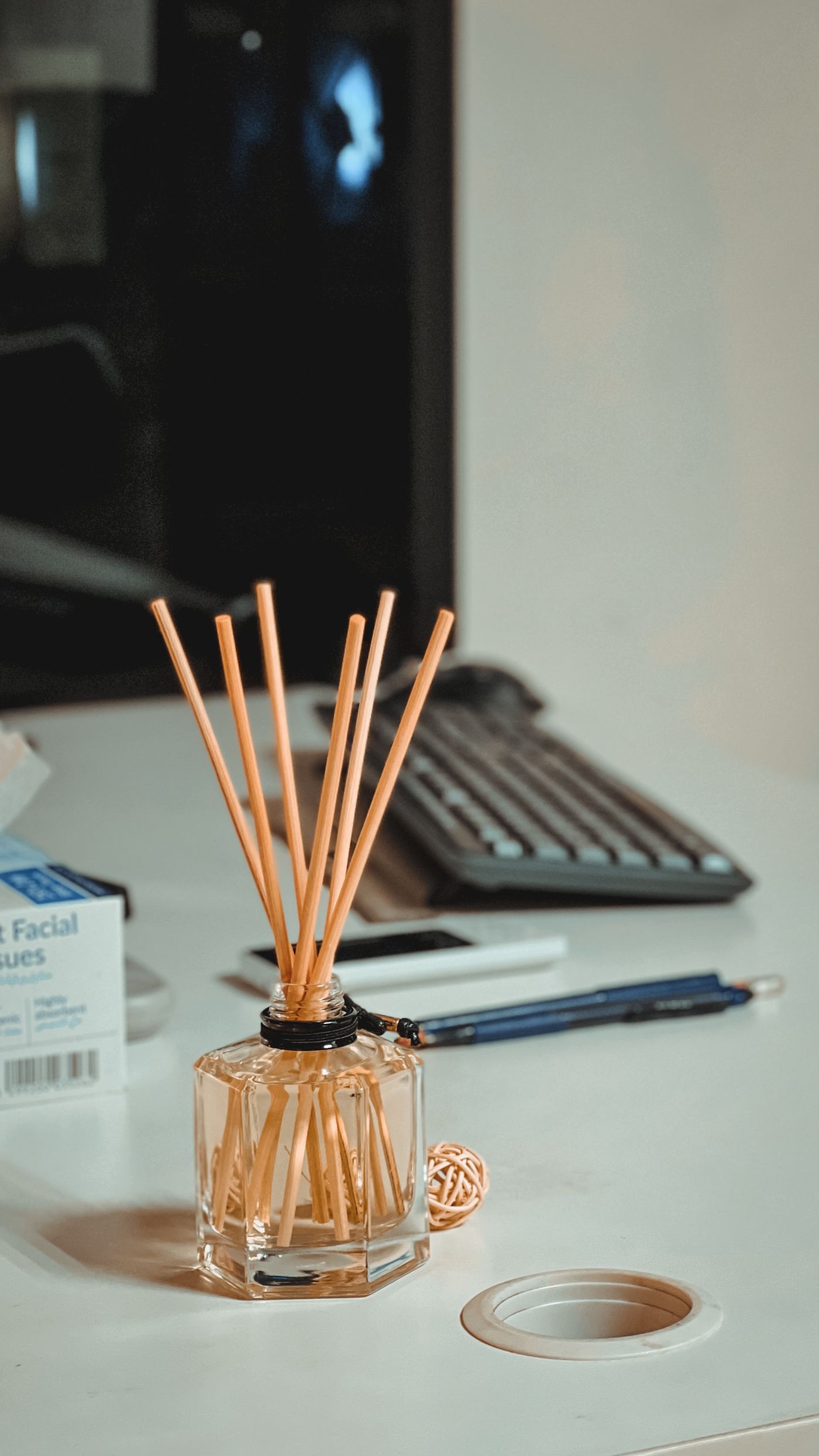
What you need
- Flourish glass bottle, label removed and washed
- An unscented carrier oil — grapeseed or fractionated coconut both work
- Essential oils of your choice
- Reed diffuser rods, skewers or thin dowels
Method
- Pour 2 to 3 inches of carrier oil into the clean bottle.
- Add 5 to 10 drops of your blend.
- Add the reeds, put it in a small or medium room, and take a deep breath.
- Flip the reeds every few days to refresh the scent.
Stand it on a coaster or small tray. Essential oils can mark a finished surface if the bottle weeps.
Blend ideas
Spring Fling
3 drops lavender · 3 drops lemon · 3 drops rosemary
Summer Citrus
3 drops orange · 3 drops grapefruit · 2 drops lemon · 2 drops bergamot
Fall Chai
3 drops cardamom · 2 drops cassia or cinnamon · 2 drops clove · 1 drop ginger
Winter Blend
3 drops fir · 3 drops orange · 2 drops wintergreen
If you have cats, read this bit
Cats lack a liver enzyme that humans and dogs have, which makes them far more sensitive to the phenolic compounds in some essential oils. Wintergreen, citrus, clove, cinnamon, eucalyptus, pine and tea tree are all on the list of oils known to cause poisoning in cats.2,3 Several of them are in the blends above.
The good news on reed diffusers specifically: passive diffusers don't emit oil droplets the way an ultrasonic one does, so the main risk is respiratory irritation unless the bottle tips over or a pet gets into it.2 Keep it somewhere it can't be knocked down, and skip it altogether if a pet has breathing problems.
The tea tree oil in the cleaner recipe deserves more caution than the diffuser does — it's the most commonly reported essential oil poisoning in pets.4 Store it out of reach, and wipe surfaces dry rather than leaving them wet where a pet walks.
What have you made?
These are the three we keep coming back to, but they're not the only options — soap dispenser, olive oil pourer, bud vase for the bathroom, a home for loose change. We'd love to see what you've come up with.
And if you haven't tried Flourish in the glass bottle yet, that's an easy fix.

Ready to try a living probiotic?
Eleven living strains. One daily shot. And a rather good bottle afterwards.
Shop Flourish · Why we keep it liquid · How it's made
A few questions we hear a lot
What's the easiest way to get the label off?
Warm soapy water and fifteen minutes of patience. Most of the label lifts in one piece; a few drops of lemon oil on a cloth handles the adhesive left behind.
Will a standard sprayer top fit?
Check before you buy. Bottle necks and sprayer threads come in several sizes, and a sprayer that doesn't seal will drip down the side of the bottle.
Can I use the vinegar spray on my kitchen counters?
Only if they aren't natural stone. Vinegar etches marble, limestone, travertine and granite permanently.1 On glass, tile and sealed surfaces it's fine.
Is a reed diffuser safe around pets?
Safer than an ultrasonic diffuser, since passive diffusers don't put oil droplets into the air — but several common oils are toxic to cats, so choose the blend with that in mind and keep the bottle where it can't be tipped over.2,3 If a pet has respiratory problems, skip it.
Can I put drinking water in the bottle afterwards?
If it has only ever held Flourish, yes — wash it well. If it has held cleaner or essential oils, no. Give that bottle a permanent job and keep it there.
Why is the bottle amber rather than clear?
Amber glass filters visible and ultraviolet light, which matters for a living product. It's the same reason pharmacies and breweries have used it for generations.
About this article
Ideas gathered by: Lorilyn Van Dyke, Lynn Haak, Kelly Kamerman and Kenna Reick, Entegro Health | Originally published: June 2021
Important information
This article is for general information. Essential oils can be harmful to pets and children — keep them out of reach, and consult your veterinarian if you suspect exposure. In the United States, the ASPCA Animal Poison Control Center is available on (888) 426-4435 and Poison Control on 1-800-222-1222. Test any cleaning solution on an inconspicuous area first, and never mix cleaning products. These statements have not been evaluated by the Food and Drug Administration. This product is not intended to diagnose, treat, cure, or prevent any disease.
Sources
- Rose Restoration. The Dangers of Acidic Cleaners on Natural Stone — vinegar at approximately pH 2.4 etches marble, limestone and travertine, causing physical damage that requires professional honing to reverse. Source
- Pet Poison Helpline. Updates on Essential Oils — oils known to cause poisoning in cats and dogs, and the difference between passive and active diffusers. Source
- ASPCA. The Essentials of Essential Oils Around Pets. Source
- Merck Veterinary Manual. Toxicoses From Essential Oils in Animals — tea tree oil is the most commonly reported essential oil intoxicant in pets; cats are more sensitive due to glucuronyl transferase deficiency. Source