Fermentation Station
Fermentation has been part of human life in almost every culture on earth. So why has it been around so long — and why did most of us quietly stop doing it?

Let's talk about the wondrous world of fermentation. It's older than writing, it happens on every continent, and for most of human history it wasn't a hobby — it was how you got to spring.
So what counts as a fermented food?
The people who study this for a living settled on a definition in 2021: fermented foods are foods made through desired microbial growth and enzymatic conversion of food components.1 The operative word is desired. Rot is microbial growth too. The difference is whether you meant it.
Fermented foods and drinks were among the first processed foods humans ever made. The original job was preservation — stretching the shelf life of milk, fruit, vegetables, grains and meat well past the point where they'd otherwise turn on you. That fermenting also tends to improve flavor and nutritional value was, at the start, a very happy accident.2,9
One thing to get straight early
Fermented is not the same as probiotic. Fermented foods contain live microbes; a probiotic is a defined strain, in a known amount, shown to confer a health benefit. ISAPP is direct that most fermented foods don't meet that bar.1,3
It doesn't make them less worth eating. We go into the evidence properly in Consuming Fermented Foods.
How does a jar of milk become kefir?
Fermentation happens when a food is exposed to microbes at a particular temperature and then left alone for a while. That last part is most of it.
Take kefir. A quart of milk meets a spoonful of kefir grains and rests at room temperature for roughly 20 to 48 hours. The grains aren't grains at all — they're a rubbery little community of lactic acid bacteria, acetic acid bacteria and yeasts living together.2 Lactobacilli do much of the souring, and they will happily eat several sugars but have a particular fondness for the lactose in milk. The yeasts are why finished kefir is faintly fizzy.
What comes out the other end depends entirely on two things: which microbes showed up, and what you gave them to eat.
Preservation
As bacteria eat and grow, they produce metabolites — organic acids, ethanol, and bacteriocins, which are proteins that inhibit the growth of other bacteria. Think of those as targeted discouragement for the bad guys.
The acids drop the pH of the food, which makes it look distinctly uninviting to anything pathogenic. Most foodborne pathogens want a pH somewhere between about 4.6 and 7.5, and below 4.6 is the line the FDA draws for acidified foods, because Clostridium botulinum spores will not germinate under it.4
But acidic doesn't mean sterile
We should be careful here, because "it's fermented, so it's safe" is the wrong lesson. Some pathogens — E. coli O157:H7, Salmonella, Listeria monocytogenes — are acid-tolerant. They may not grow below pH 4.6, but they can survive there for a long time.4 Acidity is one hurdle among several, not a force field.
It's the same logic your stomach runs on, incidentally. That low pH is a deliberate design choice — an attempt to kill off whatever unwelcome bacteria hitched a ride in on your salad.
Flavor
During fermentation, microscopic bacteria make teeny tiny chemical changes that break down larger, less flavorful compounds.
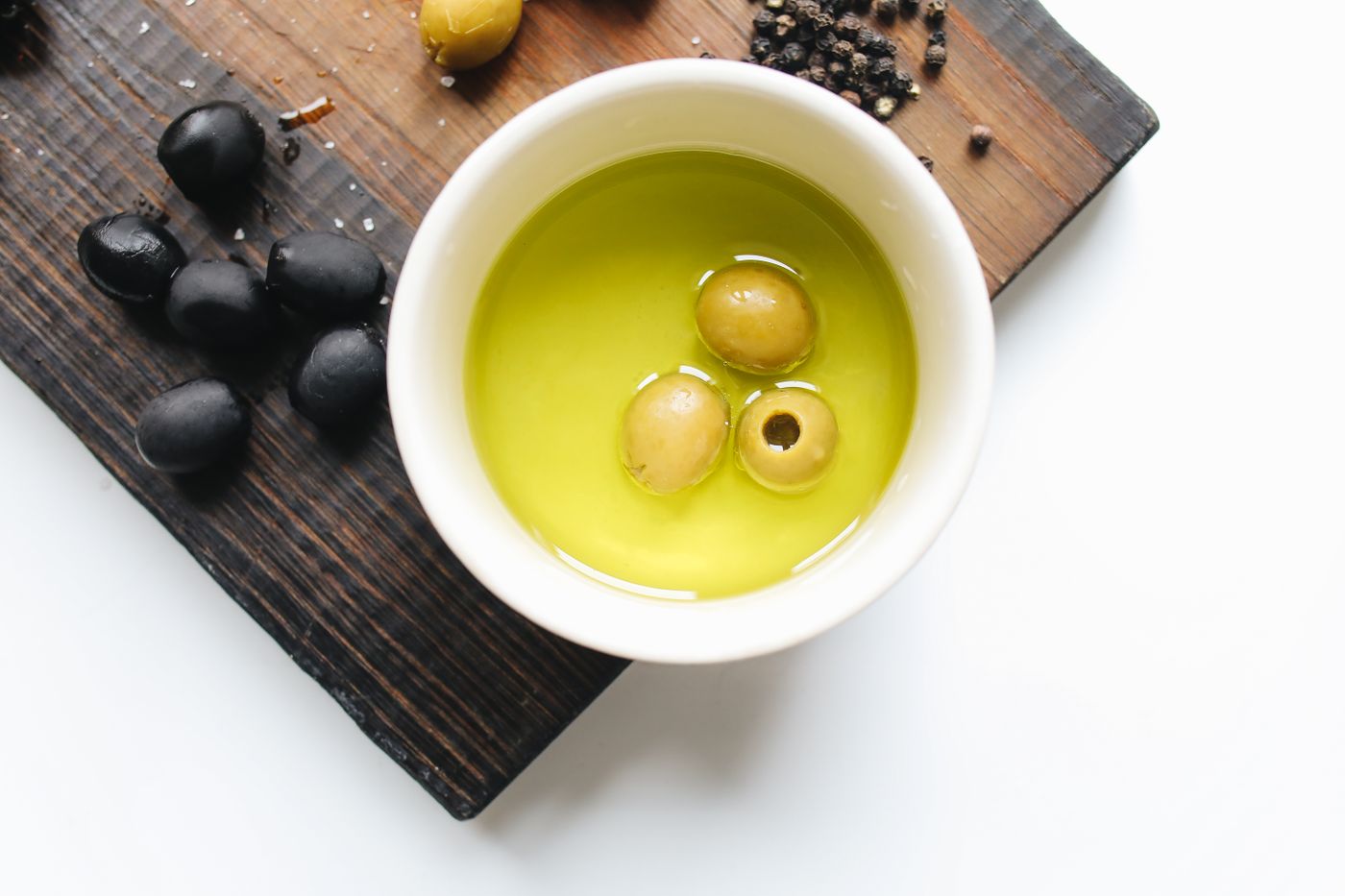
Olives are the clearest case. Straight off the tree they're intensely bitter — nobody is snacking on those — because they're loaded with a compound called oleuropein. Curing and fermenting strip it out, and what's left is the olive you actually recognize. The bitterness wasn't hiding the flavor. Removing it was the flavor.
Live microbes
Here's the metaphor we keep coming back to. Think of the human microbiome as a town with limited housing and a fixed amount of food.
When beneficial bacteria pass through, they take up some of the space and eat some of the supper that less friendly bacteria were hoping to build a life on. Microbiologists call it competitive exclusion, and it's a real mechanism — though it's one of several, alongside organic acid production, bacteriocins, support for the gut lining, and interaction with the immune system.5 Competition is better described as one of the crew.
What does fermentation look like around the world?
Interest has come roaring back. Kombucha went from being the preserve of your slightly unusual hippie aunt to occupying four feet of shelf in every grocery store in the country. But the global catalogue is far stranger and older than the chiller aisle suggests.
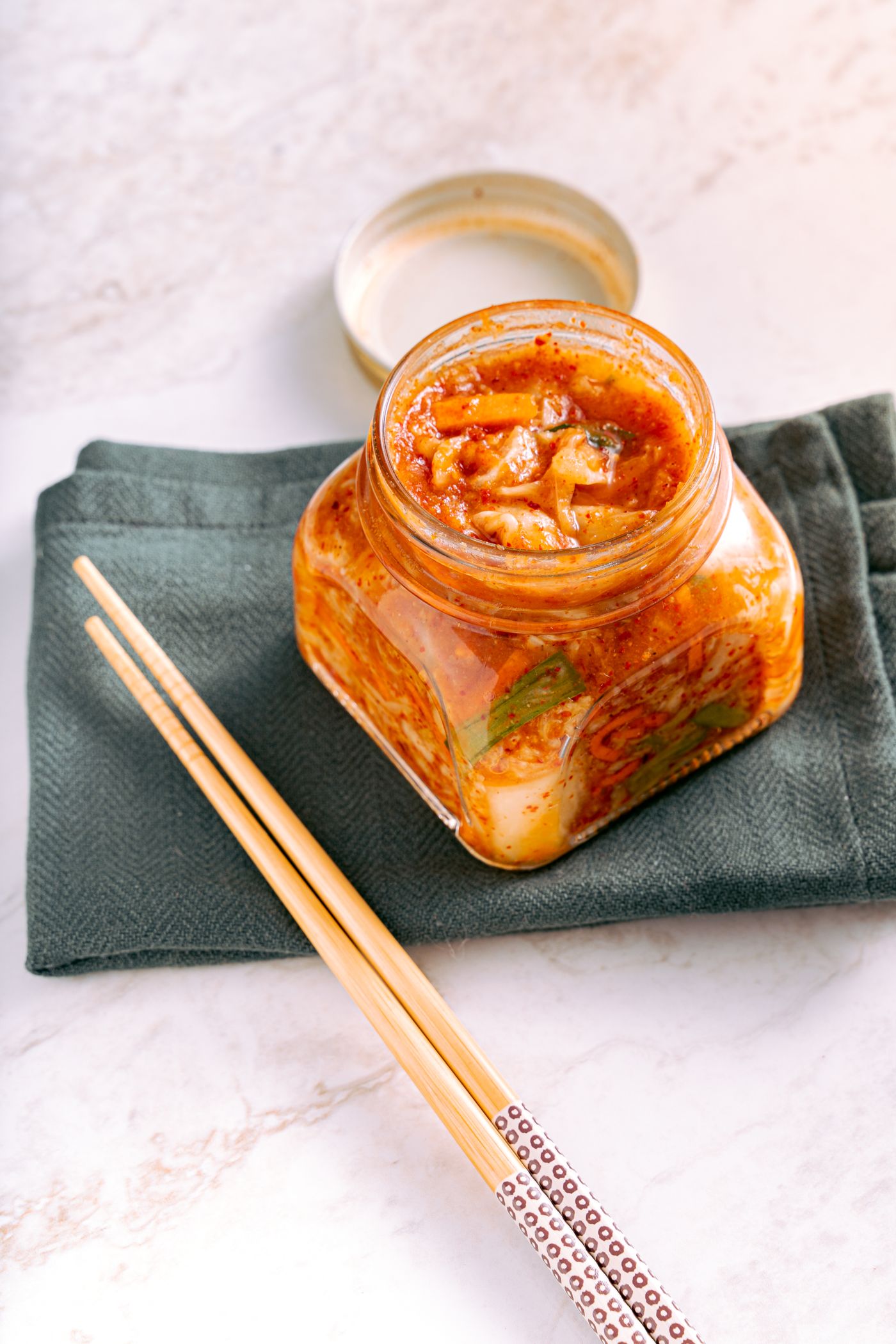
Kimchi — Korea
Cabbage, other vegetables and spices cultured in their own juice and brine for anywhere from 4 to 15 days.
Photo: Antoni Shkraba / AI25.studio / https://www.pexels.com
Natto — Japan
Fermented soybeans, made with Bacillus subtilis var. natto — not a lactic acid bacterium, which makes it an outlier in this list. Fermenting soybeans reduces the anti-nutrients that otherwise limit how much of their protein and minerals you can absorb.6
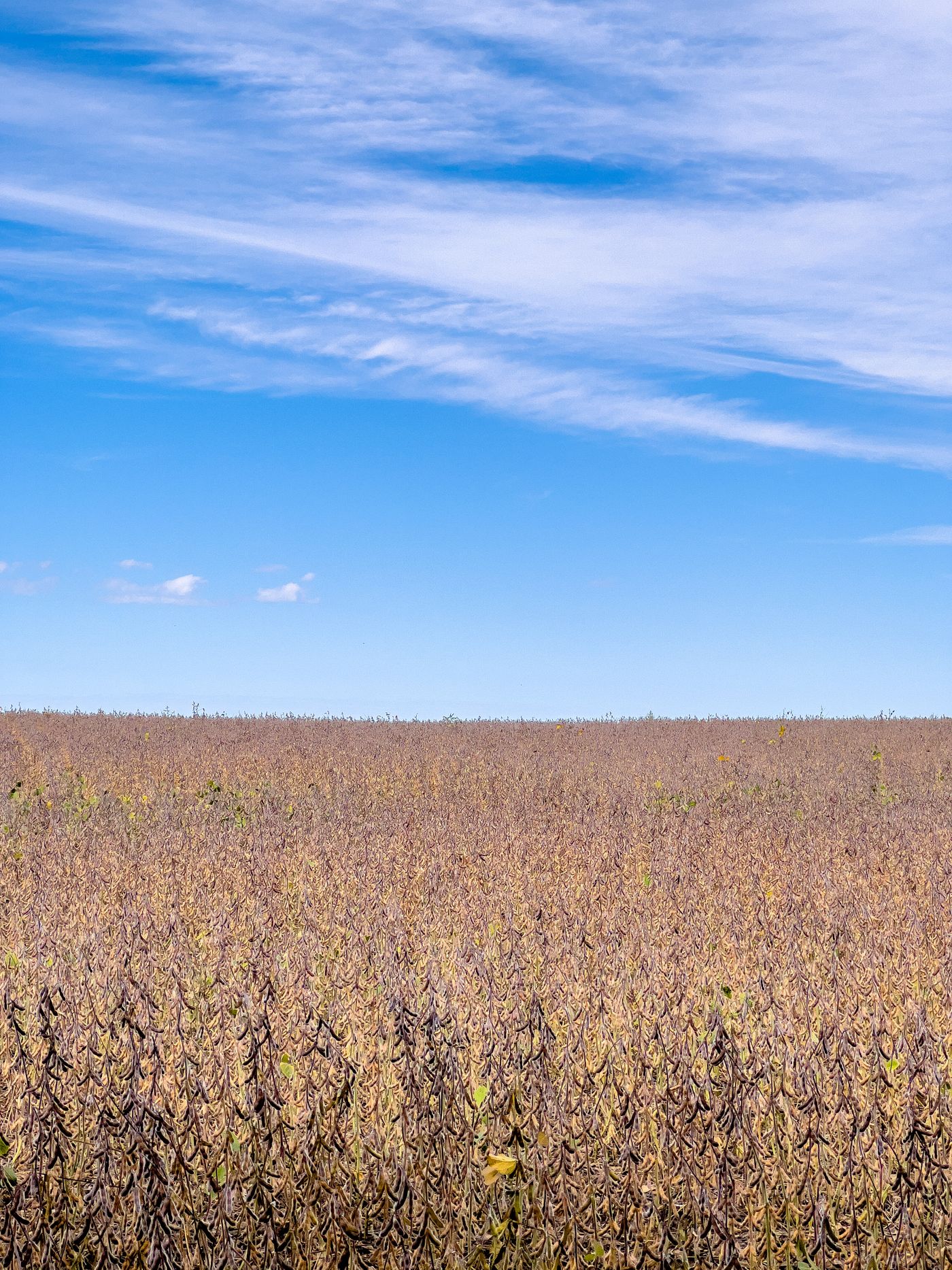
Soybeans ripening in the field. Photo: Mateusz Walendzik / https://www.pexels.com
Gari, fufu and lafun — West Africa
These fermented cassava staples aren't about preservation or anti-nutrients. They're about cyanide.
Raw cassava contains two cyanogenic glucosides, linamarin and lotaustralin, which release hydrogen cyanide when the root is damaged. Fermentation releases the plant's own enzyme, linamarase, which breaks them down — across the stages of making gari, 80 to 95% of the cyanide is lost.7 Generations of cooks worked that out without a single microscope.
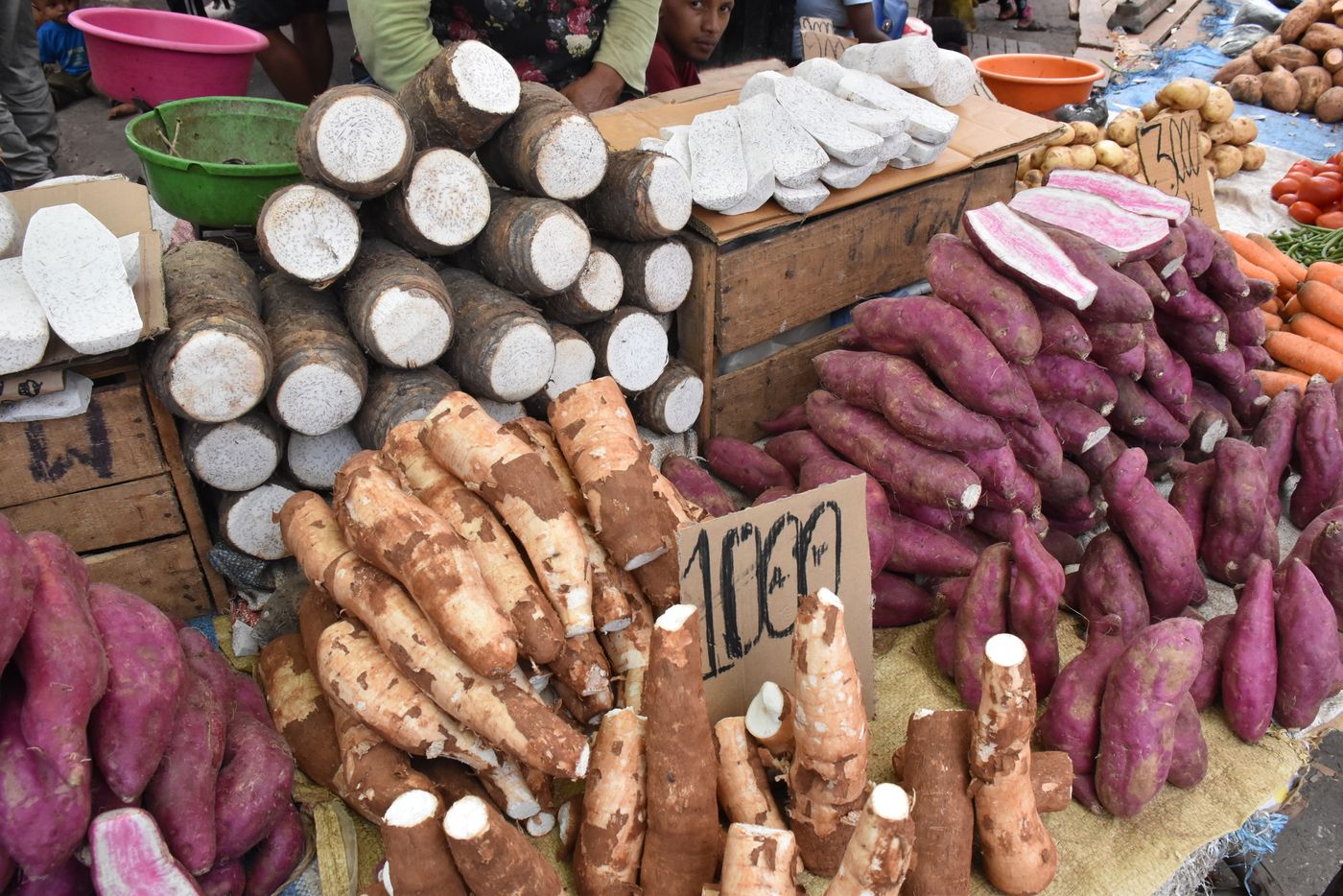
Cassava roots at market. Photo: micka randrianjafisolo / https://www.pexels.com
Salami — more or less everywhere
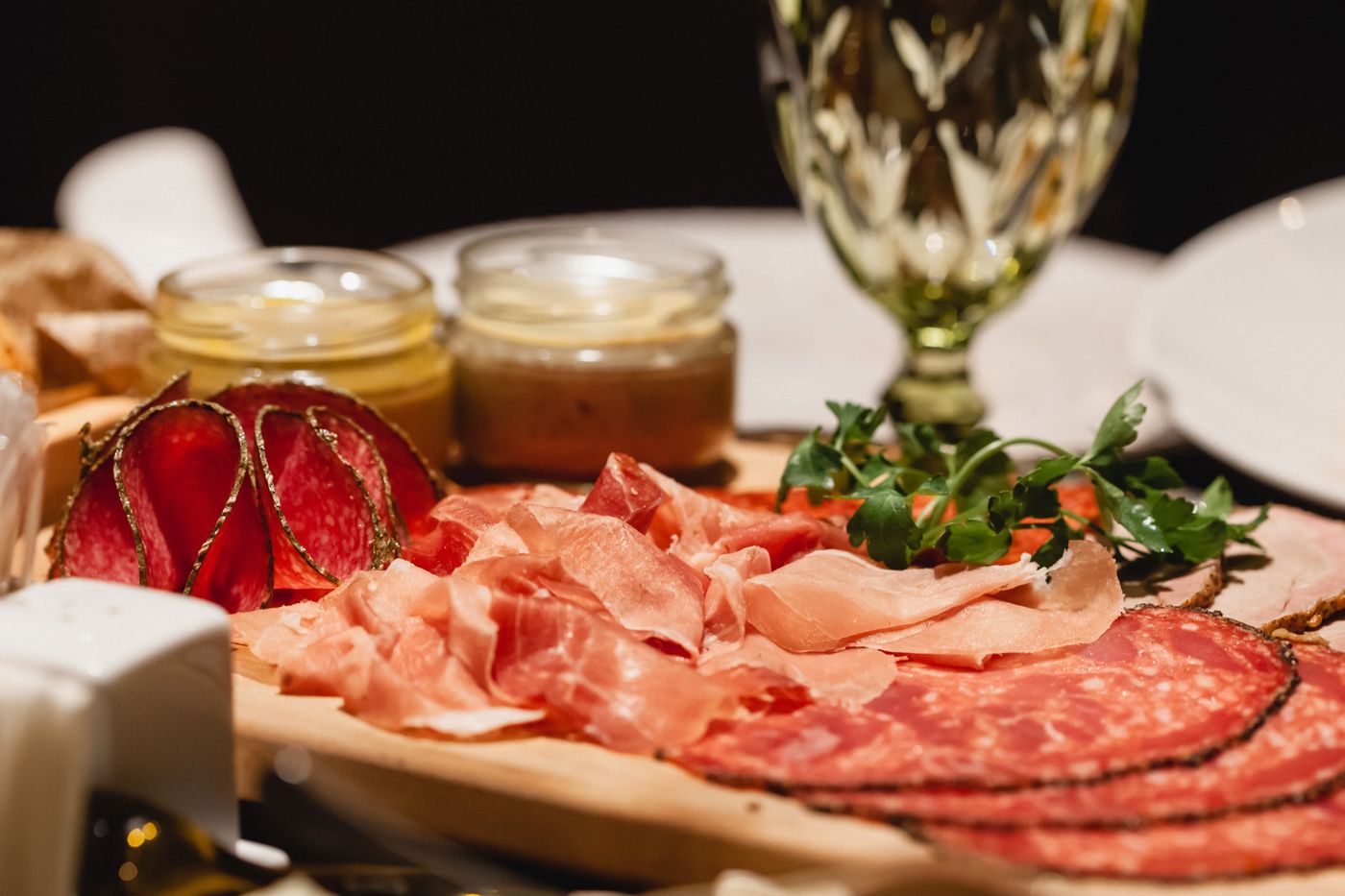
Bacteria, salt, and water pulled out through drying and smoking, all packed into cleaned casings. Nearly every meat-eating culture arrived at some version of this independently — Europe, China, the Middle East and well beyond, each with its own flavor signature.
Photo: Julia Filirovska / https://www.pexels.com
Kiviak — Greenland
And then there's this one. Between 300 and 500 whole little auks — beaks, feathers and all — are packed into a hollowed, fat-lined seal skin, sewn shut, and left to ferment under a pile of stones for three to eighteen months.8
A turducken with commitment issues. It's served by Inughuit communities at Christmas, birthdays and weddings, and it exists because a summer's worth of seabirds had to somehow become a winter's worth of food.
A seabird colony — the birds, not the dish. Photo: Serinus / https://www.pexels.com

Do fermented foods still have a place in a modern kitchen?
They do. They just ask for the one thing we're all short of, which is time and a bit of patience. But it's possible, and honestly it's fun.

One catch worth knowing about. A great many commercially prepared foods that are traditionally full of live microbes get heat-treated for shelf stability. The jarred pickles and canned sauerkraut sitting on a warm middle-aisle shelf have been through temperatures no bacterium survives — good or bad. That's the whole point of them being shelf-stable.
So reach for products labeled "contains live cultures," and look in the refrigerated section. And sorry to say it, but sourdough — delicious, deeply satisfying to make — has no live cultures left once it's been baked.
Can you eat fermented foods and take Flourish?
This is the question we get most often at Entegro Health, and the answer is a resounding yes.

Microbiome diversity is a consistent feature of healthy people, and different ferments carry different organisms.9 The International Scientific Association for Probiotics and Prebiotics defines a probiotic as live microorganisms that, when administered in adequate amounts, confer a health benefit on the host.3 Note the precision in that sentence — it's why we're careful about which of our words we attach to which product.
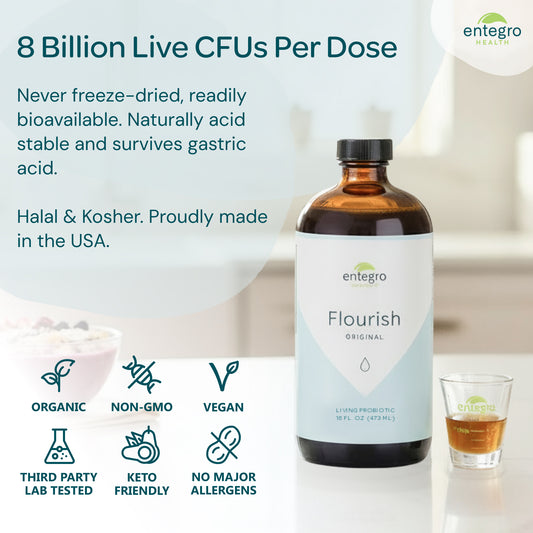
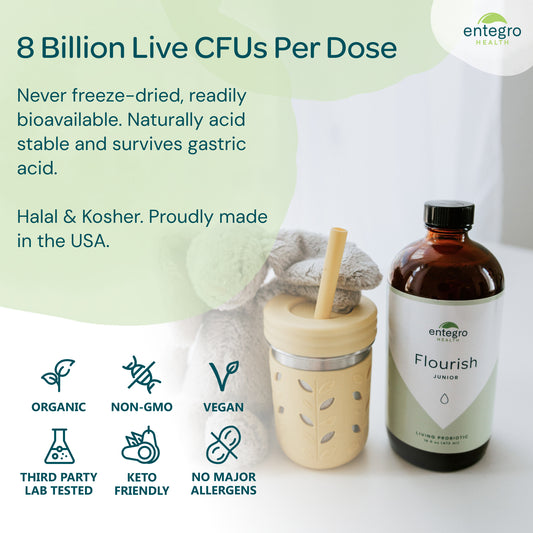
Commercial kombucha, kefir and other fermented foods typically carry a handful of live cultures, and usually nobody has counted them. Flourish Original and Flourish Junior carry eleven live strains from five families, in a known amount, in every bottle.
Naturally fermented, using time and temperature to give the bacteria the environment they want — the same two levers that have been doing this job for thousands of years. A small daily dose is a way to get the traditional thing done without the traditional time commitment. Then eat the kimchi anyway.
Flourish is a dietary supplement made to support digestive and microbiome health. It isn't a treatment for any condition. Check with your doctor before starting a new supplement, and with your pediatrician before giving one to a child.

Ready to try a living probiotic?
Eleven living strains. One daily shot. For the whole family.
Shop Flourish Original · Shop Flourish Junior · Why we keep it liquid
A few questions we hear a lot
Is every fermented food a probiotic?
No. Fermented foods contain live microbes; probiotics are defined strains in known amounts with demonstrated benefit. Most fermented foods have never been characterized to that standard, which doesn't make them less worth eating.1,3
Does fermenting make food safe to eat?
Safer, not safe. Dropping the pH below 4.6 stops C. botulinum from growing, which is why properly fermented vegetables keep. But acid-tolerant pathogens like E. coli O157:H7, Salmonella and Listeria can survive acidic conditions even without growing in them.4 Follow a tested recipe rather than improvising.
Why is shelf-stable sauerkraut different from the refrigerated kind?
Because shelf-stable almost always means heat-treated, and heat kills the live cultures along with everything else. If live microbes are what you're after, buy from the chiller and check the label for "live" or "active cultures."
Does sourdough count?
As a fermented food, absolutely — the ferment is doing real work on the dough. As a source of live cultures, no. The oven settles that.
What's actually in kefir grains?
A symbiotic community of lactic acid bacteria, acetic acid bacteria and yeasts, clumped together in a soft matrix.2 The bacteria do the souring; the yeasts are why it's slightly fizzy.
Can I take Flourish and eat fermented foods?
Yes, and we'd encourage both. They're doing different jobs — food brings variety and the whole food matrix, a supplement brings a known, consistent dose. Neither replaces the other.
About this article
Written by: Lorilyn Van Dyke, Entegro Health | Originally published: March 2021
Important information
This article is for general education and isn't a substitute for professional medical advice, diagnosis, or treatment. Always seek the advice of your physician or another qualified health provider with any questions regarding a medical condition, and before starting a new supplement. Home fermentation carries food safety risks — follow a tested recipe from a reputable source. These statements have not been evaluated by the Food and Drug Administration. This product is not intended to diagnose, treat, cure, or prevent any disease.
Sources
- Marco, M. L., Sanders, M. E., Gänzle, M., et al. (2021). The International Scientific Association for Probiotics and Prebiotics (ISAPP) consensus statement on fermented foods. Nature Reviews Gastroenterology & Hepatology, 18, 196–208. Source
- Dimidi, E., Cox, S. R., Rossi, M., & Whelan, K. (2019). Fermented Foods: Definitions and Characteristics, Impact on the Gut Microbiota and Effects on Gastrointestinal Health and Disease. Nutrients, 11(8), 1806. Source
- Hill, C., Guarner, F., Reid, G., et al. (2014). The International Scientific Association for Probiotics and Prebiotics consensus statement on the scope and appropriate use of the term probiotic. Nature Reviews Gastroenterology & Hepatology, 11, 506–514. Source
- USDA Agricultural Research Service / North Carolina State University. Acidified Foods: Processing and Safety — growth of C. botulinum is prevented in acidified foods by keeping the pH at or below 4.6, while E. coli, Listeria monocytogenes and Salmonella are acid-resistant and can persist below it. Source
- Bermudez-Brito, M., Plaza-Díaz, J., Muñoz-Quezada, S., Gómez-Llorente, C., & Gil, A. (2012). Probiotic mechanisms of action. Annals of Nutrition and Metabolism, 61(2), 160–174. Source
- Adeyemo, S. M., & Onilude, A. A. (2013). Enzymatic Reduction of Anti-nutritional Factors in Fermenting Soybeans by Lactobacillus plantarum Isolates from Fermenting Cereals. Nigerian Food Journal, 31(2), 84–90. Source
- Padmaja, G. (1995). Cyanide detoxification in cassava for food and feed uses. Critical Reviews in Food Science and Nutrition, 35(4), 299–339. Source
- Atlas Obscura. What is kiviaq? — 300 to 500 whole dovekies packed into a seal carcass and buried to ferment for months. Source
- Marco, M. L., Heeney, D., Binda, S., et al. (2017). Health benefits of fermented foods: microbiota and beyond. Current Opinion in Biotechnology, 44, 94–102. Source