Endometriosis and the Gut, A Powerful Connection
Endometriosis affects around one in ten women, takes years to diagnose, and brings digestive symptoms with it in roughly nine cases out of ten. Here is the current picture — including the diagnostic rulebook that changed in 2022, and again this year.

Photo: Fvno Fotografía / https://www.pexels.com
You have almost certainly heard the word. You may know someone living with it. You may be an endometriosis warrior yourself.
The World Health Organization estimates endometriosis affects about 10% of reproductive-age women worldwide — roughly 190 million people.1 The European guideline is more careful about that number, and worth quoting: "The exact prevalence of endometriosis is unknown, but estimates range from 2% to 10% within the general female population and up to 50% in infertile women."2 Both statements are true. The honest version is that it is common, and that nobody can tell you precisely how common, because so much of it goes undiagnosed.
There is no cure, and no known way to prevent it. And the average time from first symptoms to diagnosis is somewhere between four and twelve years.1,3
The gut part of this story is not a footnote. Digestive symptoms are nearly as common in endometriosis as gynecological ones — and they usually are not caused by lesions on the bowel. That is where this article is going.
What endometriosis actually is

Photo: Mikhail Nilov / https://www.pexels.com
The current international definition, as ESHRE states it, is "the presence of endometrium-like epithelium and/or stroma outside the endometrium and myometrium, usually with an associated inflammatory process."2 In plain English: tissue that behaves something like the lining of the uterus, growing where it should not be, with inflammation around it.
The name comes from endometrium, the membrane lining the inside of the uterus — the layer that thickens, breaks down and bleeds across a menstrual cycle. The old memory trick still works: endo for inside, metra for womb.
It grows most often in the pelvis — on the ovaries, the fallopian tubes, and the surfaces between the bladder, uterus, vagina and rectum. It can also turn up on the bowel, and occasionally a long way from the pelvis altogether. ESHRE’s own symptom list includes shoulder tip pain, cyclical cough or coughing blood, and even a collapsed lung timed to menstruation.2
The description you have probably read is that this displaced tissue "acts exactly like the lining inside the uterus" — thickening, breaking down and bleeding, with nowhere for the blood to go. That captures the pain and the scarring, and it is where cysts and adhesions come from. But it undersells what the lesions are.
Endometriotic tissue is not simply uterine lining in the wrong postcode. It has its own biology. Lesions overexpress steroidogenic factor-1 and manufacture their own estrogen via the enzyme aromatase, driving inflammation through unusually high levels of estrogen receptor-β. And they are progesterone-resistant — deficient in the receptor for the hormone that would normally rein estrogen in.4
Endometriosis lesions are not misplaced uterine lining. They make their own estrogen, and they ignore the hormone that would normally hold them back.
That is not a technicality. It is why aromatase inhibitors work for some people whose pain resists everything else, and why "just go on the pill" is genuinely insufficient advice for others.2
Stage does not predict how much it hurts
This is one of the more important things to know and one of the most commonly left out. Minimal disease can come with severe pain; extensive disease can be close to silent. The same disconnect shows up in the digestive symptoms: when researchers compared symptoms to where the lesions actually were, they found "a poor association between symptoms and lesion localization."5
If a scan finds less than your pain would suggest, that is a known feature of this disease, not evidence that you are exaggerating.
Adenomyosis is a different thing
Notice that the definition above excludes the myometrium, the muscular wall of the uterus. Endometrial-like tissue growing within that wall is adenomyosis — a separate condition that causes heavy bleeding and painful periods, shares a great deal of biology with endometriosis, and very often coexists with it.6 If heavy bleeding is your dominant symptom, it is worth having the word in your vocabulary before your appointment.
The symptoms

Photo: Andrea Piacquadio / https://www.pexels.com
The primary symptom is chronic pelvic pain that intensifies around menstruation. Plenty of people cramp during their periods; endometriosis pain tends to be considerably worse than average, and periods tend to be heavier and longer.7
Then there is the rest of the list: lower back and abdominal pain, painful intercourse, painful bowel movements and urination, bloating, diarrhea, constipation, nausea, fatigue, and difficulty conceiving.7 Calling people with endometriosis warriors was not an exaggeration.
And there are the presentations that surprise even clinicians. ESHRE recommends considering endometriosis in anyone with dysmenorrhea, deep dyspareunia, dysuria, dyschezia, painful rectal bleeding or blood in the urine, shoulder tip pain, catamenial pneumothorax, cyclical cough, coughing blood or chest pain, cyclical swelling and pain in a surgical scar, fatigue, or infertility.2 If your pain has a monthly rhythm and it is nowhere near your pelvis, that is still worth saying out loud.
If you are a teenager, or you are raising one
Endometriosis usually starts within a few years of the first period, and adolescents are diagnosed late even by this disease’s standards. ESHRE asks clinicians to consider it in young people with "(cyclical) absenteeism from school, or with use of oral contraceptives for treatment of dysmenorrhoea," and to treat "chronic or acyclical pelvic pain, particularly combined with nausea, dysmenorrhoea, dyschezia, dysuria, dyspareunia" as suggestive.2 Symptoms that begin in adolescence look somewhat different from adult-onset presentations, which is part of why they get missed.8
ACOG’s 2026 diagnostic guideline explicitly states that its recommendations apply to adolescents unless otherwise specified.3 Severe period pain that keeps a teenager home from school is not something to wait out.
The gut connection

Photo: Andrea Piacquadio / https://www.pexels.com
Here is the single most striking finding in this entire literature. In 355 consecutive women undergoing laparoscopy for suspected endometriosis, 90% had gastrointestinal symptoms — bloating the most common at 82.8%, with 71.3% reporting other bowel symptoms too. Bowel lesions were present in only 7.6%.9
Nine in ten women with endometriosis have digestive symptoms. Fewer than one in ten has endometriosis on the bowel.
So the gut symptoms are not, for most people, lesions pressing on the intestine. A Swedish comparison against healthy controls found the symptoms that stood out were abdominal pain, constipation, bloating and flatulence, urgency, and the sensation of not having finished — and that they were not associated with where the lesions were, with one exception: nausea and vomiting were elevated in women who did have bowel-associated lesions.5
Which brings us to IBS
If you have been reading that symptom list and thinking it sounds like irritable bowel syndrome, you are in good company — including, quite often, the company of the doctors doing the diagnosing.
Two meta-analyses put numbers on it. One found a pooled risk estimate of 2.39 (95% CI 1.83–3.11) for IBS in women with endometriosis; the other, covering eleven studies, found 3.26 (95% CI 1.97–5.39).10,11 "Two to three times more likely" sits squarely between them and is a fair thing to say.
The misdiagnosis pattern is even better documented. In UK general-practice records covering 5,540 women with endometriosis and 22,160 matched controls, women with endometriosis were 3.5 times more likely to have already received an IBS diagnosis (OR 3.5, 95% CI 3.1–3.9) — and still two and a half times more likely to receive a new IBS diagnosis even after endometriosis had been confirmed.12 In the laparoscopy series above, 21.4% had previously been told they had IBS, and 79% of those women had endometriosis confirmed on the table.9
One caveat the cheerful version of this section usually skips, and it is worth having. The authors of the first meta-analysis note it is "uncertain whether there is a true comorbidity between endometriosis and IBS, or whether the gastrointestinal symptomatology in endometriosis depends on medication."10 That is not idle hedging: women taking opioids or GnRH analogues for endometriosis had measurably worse gut symptoms than those who were not.5 Some of the overlap is the disease. Some of it is the treatment.
And inflammatory bowel disease
A Danish national registry followed 37,661 women hospitalized with endometriosis between 1977 and 2007. Incidence of inflammatory bowel disease was 1.5 times the expected rate (standardized incidence ratio 1.5, 95% CI 1.4–1.7), and the association was still there twenty years after the endometriosis diagnosis.13
The authors were careful about what that means. It "may either reflect common immunological features or an impact of endometriosis treatment with oral contraceptives on risk of IBD."13 A 1.5-fold increase on a small baseline is worth knowing about and not worth losing sleep over.
Immunity, inflammation and the microbiome
The gut is where the immune system meets the outside world, and it holds more immune tissue than any other organ. The figure usually quoted comes from a 2008 review: gut-associated lymphoid tissue "represents almost 70% of the entire immune system; moreover, about 80% of plasma cells [mainly immunoglobulin A-bearing cells] reside in GALT."14 Those are two different numbers about two different things, and they get welded together into a single "80% of your immune system" line more or less constantly. Even the 70% is an approximation offered without a primary measurement behind it.
The underlying point survives the arithmetic: your gut microbiome and your immune system are in constant conversation, and that conversation does not stay in the abdomen.15
Endometriosis, meanwhile, involves clear immune dysregulation. People with the disease can have less responsive natural killer cells and regulatory T cells, and higher concentrations of macrophages that promote inflammation.16 Concentrations of interleukin-17 in peritoneal fluid correlate with disease severity.17
And gut bacteria demonstrably influence inflammation at a distance — in mice, microbial signaling through MyD88 is necessary for a systemic neutrophilic inflammatory response,18 and gut microbiota–host interactions have been investigated in inflammatory conditions well outside the digestive tract.19
So the hypothesis writes itself: gut bacteria shape inflammation, inflammation shapes endometriosis, therefore gut bacteria shape endometriosis. It is a good hypothesis. The evidence for it is thinner than the enthusiasm.
What the microbiome research actually shows
- The systematic review. The most-cited review concluded that the relationship "has begun to be characterised," and that certain bacteria "appear to be associated" with endometriosis while others "remain unclear." It was a qualitative synthesis that included animal studies, not a meta-analysis.20
- The Endobiota study. Fourteen women with stage 3/4 endometriosis and fourteen controls. The notable differences were vaginal and cervical. The gut microbiota was described as "overall similar." The authors close by asking whether the association is causal at all, and if so which way round.21
- The largest single cohort. Sixty-six patients against 198 matched controls found lower diversity in the endometriosis group. But within that group, differences by gastrointestinal symptoms disappeared once corrected for multiple testing.22
- The two most recent meta-analyses disagree. One found no significant difference in gut alpha diversity; the other, published two years later on an overlapping pool of studies, found a significant difference on one index and not another.23,24
- The butyrate study is a mouse study. Mice with endometriosis had less butyrate in their stool, and butyrate slowed lesion growth in mice. The authors describe it as enabling future work.25
- Even the paper that named the microbiome a "puppet master" put a question mark on the end of its own title.26
The defensible summary: several small studies have found differences in gut bacteria in women with endometriosis, the meta-analyses cannot agree on whether overall diversity differs, nobody knows which direction any causality runs, and no microbiome-based treatment for endometriosis has been demonstrated in humans.
The Fusobacterium story, and why it is not settled
In 2023 a Japanese team reported that 64% of women with endometriosis had Fusobacterium in the endometrium, against under 10% of controls, traced a plausible mechanism through TGF-β signaling and myofibroblast transition, and showed that antibiotics largely prevented lesions from establishing in mice.27 It was a genuinely important paper and it made headlines everywhere.
In 2025 a US group tested 92 women from a Pennsylvania cohort and found no significant difference in Fusobacterium abundance in the endometrium between cases and controls, at any disease severity.28
Note also that this is uterine, not intestinal — it is a story about bacteria in the endometrium, not about your gut. Where it leaves us: a real question, an interesting lead, and an unfinished argument. A confirmatory antibiotic trial is under way.
The estrogen question
Gut bacteria produce β-glucuronidase, an enzyme that frees estrogen from the inactive, bound form the liver packages it into — so instead of being excreted, it is reabsorbed. The collection of gut bacterial genes doing this work is sometimes called the estrobolome. It is worth being precise about the word: it names a set of genes and their enzymes, not a special group of bacteria.29
Change the gut community and you can change how much estrogen circulates. The direction is where a lot of published summaries go astray. The review most often cited on this states that when deconjugation is impaired through dysbiosis, "the decrease in deconjugation results in a reduction of circulating estrogens."29 The version usually invoked for estrogen-driven disease runs the opposite way — more β-glucuronidase activity, more reabsorption, more estrogen exposure. Both appear in the literature. Neither has been shown to change endometriosis outcomes in people.
What is established is that endometriosis is estrogen-dependent.4,16 The refinement worth carrying away is that the important estrogen is largely local: the lesions produce it themselves through aromatase, and they resist progesterone.4 Animal work adds a related strand — estrogen-induced proliferation of endometrial tissue is amplified in obese rats.30
So "balance your gut and fix your hormones" is a hypothesis with real biochemistry underneath it and no human outcome data on top. Be wary of anything sold on the promise that it does — ours included.
Getting a diagnosis — and what changed

Photo: Cedric Fauntleroy / https://www.pexels.com
If you take one thing from this article, take this section. It is the part where nearly everything published before 2022 is now wrong.
For decades, diagnostic laparoscopy was the gold standard: keyhole surgery, general anesthetic, look for lesions, take a biopsy. ESHRE’s 2022 guideline retired that position in its own words: "While previously a laparoscopy was regarded as the diagnostic gold standard, it is now only recommended in patients with negative imaging results and/or where empirical treatment was unsuccessful or inappropriate."2
ACOG followed with a new Clinical Practice Guideline on the diagnosis of endometriosis in March 2026, developed using the NICE evidence review, applying to adults and adolescents alike.3
What that means in practice:
- Imaging comes first. "Clinicians are recommended to use imaging (ultrasound (US) or MRI) in the diagnostic work-up for endometriosis" — strong recommendation.2
- A normal scan does not rule it out. The same sentence continues: "they need to be aware that a negative finding does not exclude endometriosis, particularly superficial peritoneal disease."2
- Nor does a normal pelvic exam. "In women with suspected endometriosis, further diagnostic steps, including imaging, should be considered even if the clinical examination is normal" — strong recommendation.2
- There is no blood test. "Clinicians should not use measurement of biomarkers in endometrial tissue, blood, menstrual or uterine fluids to diagnose endometriosis" — a strong recommendation carrying the highest evidence grade in the whole diagnostic section. That includes CA-125.2
- Surgery is for when imaging is negative or treatment has not worked — not the opening move. And a negative laparoscopy does not entirely rule the disease out either.2
The reason imaging can rule endometriosis in but not out is anatomical. Specialist transvaginal ultrasound reliably detects ovarian endometriomas and is highly specific for deep endometriosis — but "a negative scan cannot preclude endometriosis," and the sonographic evaluation of superficial disease is, in the reviewers’ phrase, still in its infancy.31 The older pooled data agreed: no imaging modality could detect pelvic endometriosis accurately enough to replace surgery outright.32
So if your scan came back clear and you are still in pain, that is not the end of the conversation. By the guideline’s own wording, it cannot be.
Why it takes so long
Four to twelve years, says WHO; four to eleven on average, says ACOG.1,3 A 2025 meta-analysis broke the delay into causes and found that both patient-side factors — normalizing the pain, not presenting — and provider-side factors including outright misdiagnosis contributed substantially, with the provider-side effect showing almost no heterogeneity across studies.33
The commonest wrong turn, as above, is IBS.12 Which is not a criticism of anyone in particular: the symptoms genuinely overlap, and for most of that period the definitive test was surgery.
What to take to the appointment
- A symptom diary covering at least two cycles — pain, bleeding, bowel and bladder symptoms, and where each falls in the cycle
- Any family history of endometriosis
- Your age at first period and your usual cycle length
- What you have already tried, and whether it helped
- The specific questions: could this be endometriosis? and should I have a transvaginal ultrasound?
Ask promptly rather than waiting if you have heavy bleeding you cannot manage, pain that is escalating, or new bowel or bladder symptoms. And if a teenager is missing school every month, that is the appointment, not something to wait out.
Treatment, honestly
There is no cure. There is a real, graded hierarchy of options, and ESHRE ranks them roughly like this:
- Analgesia. NSAIDs or other pain relief, alone or alongside other treatments.2
- Combined hormonal contraceptives and progestogens. "It is recommended to prescribe women progestogens to reduce endometriosis-associated pain" — strong recommendation.2
- A levonorgestrel-releasing intrauterine system, or an etonogestrel implant. Strong recommendation, and the highest evidence grade in the entire pain section — which is more than "an IUD" usually conveys.2
- GnRH agonists. Second-line, because of the side effect profile. ESHRE also makes a strong recommendation for combined hormonal add-back therapy alongside them, to prevent bone loss and menopausal symptoms.2
- GnRH antagonists. Also second-line, and the newest arrivals. Two are FDA-approved for endometriosis pain: elagolix (Orilissa), approved July 2018, and relugolix combination therapy (Myfembree), approved for moderate-to-severe endometriosis pain in August 2022, with use limited to 24 months because of bone loss.2,34,35
- Aromatase inhibitors. For pain refractory to other medical or surgical treatment — not a first move.2
- Surgery. Excision of lesions; for endometriomas, cystectomy rather than drainage, which reduces recurrence.2
On hysterectomy, ESHRE is direct: "Women should be informed that hysterectomy will not necessarily cure the symptoms or the disease."2 A review of 67 studies found a 62% recurrence rate in advanced disease where the ovaries were conserved, with ovarian conservation carrying roughly a sixfold risk of recurrent pain and eightfold risk of reoperation — and identified incomplete excision as the most common reason for recurrence in the literature.36 Against which ESHRE weighs "the long-term consequences of early menopause."2
Two things you may have been told that are not true
"Get pregnant, it will help." ESHRE makes this a strong recommendation in the other direction: "Patients should not be advised to become pregnant with the sole purpose of treating endometriosis, as pregnancy does not always lead to improvement of symptoms or reduction of disease progression."2 The systematic review behind that found "no evidence that pregnancy can be expected to generally reduce the size and number of endometriotic lesions," and that results on symptoms are "controversial and strongly biased."37
"It will go away at menopause." Symptoms often ease as estrogen falls, and for many people that is how it goes. But ESHRE concluded that "clinicians should be aware that endometriosis can still be active/symptomatic after menopause," and makes a strong recommendation that clinicians "avoid prescribing oestrogen-only regimens" for menopausal symptoms in women with a history of endometriosis, because those regimens "may be associated with a higher risk of malignant transformation."2,38 Combined menopausal hormone therapy is the option they leave open. This is a specific, actionable thing to raise with whoever prescribes your HRT.
What about diet?

Photo: Alesia Kozik / https://www.pexels.com
Two questions usually get merged here, and separating them is the most useful thing this section can do.
Does diet treat endometriosis? No, on the current evidence.
ESHRE is unusually blunt: "no recommendations can be made for any specific non-medical intervention (Chinese medicine, nutrition, electrotherapy, acupuncture, physiotherapy, exercise and psychological interventions) to reduce pain or improve quality of life measures in women with endometriosis, as the potential benefits and harms are unclear."2
The one dietary thing the guideline does say is about prevention, and it is deliberately mild: although there is no direct evidence of benefit, "women can be advised of aiming for a healthy lifestyle and diet, with reduced alcohol intake and regular physical activity."2
Does diet help the digestive symptoms? Yes — and the good study arrived in 2025.
EndoFOD was a randomized, single-blinded, controlled crossover feeding trial in 35 women with endometriosis and poorly controlled gut symptoms. Twenty-eight days on a low FODMAP diet (under 5 g of FODMAPs a day) and 28 days on a control diet (20 g), both modeled on national dietary guidelines, with a washout in between.39
Twenty-one of 35 women (60%) responded to the low FODMAP diet, against nine of 35 (26%) on the control diet (p=0.008). By week four, overall symptom scores were 35 mm on low FODMAP versus 58 mm on control (p<0.001). Abdominal pain, bloating, stool form and quality of life — on both the gastrointestinal and the endometriosis-associated scales — were significantly better on the low FODMAP diet.39
Two caveats, both worth stating. The authors’ own: "Confirmation of these findings in a real-world setting is required." And a disclosed conflict of interest: several work in a department that benefits financially from a FODMAP app and associated materials.39
Earlier work pointed the same way. At a specialist IBS clinic in New Zealand, 36% of women meeting IBS criteria turned out to have endometriosis — and 72% of them reported a greater than 50% improvement in bowel symptoms after four weeks of a low FODMAP diet, against 49% of those without endometriosis.40
One practical note: low FODMAP is a structured, time-limited process done with a dietitian, with a reintroduction phase that is the whole point. It is not a permanent elimination diet, and it is not a do-it-yourself project.
The rest of the usual list
Insoluble fiber and caffeine. Discouraging bran and capping tea and coffee at three cups a day are NICE’s advice for IBS, and reasonable if IBS symptoms are part of your picture.41 They are not endometriosis treatments.
Gluten. Thinner than its reputation. The study everyone cites gave a gluten-free diet to 207 women with painful endometriosis and reassessed them twelve months later; 75% reported significant improvement. There was no control group, it was retrospective, and pain in this condition fluctuates naturally and responds substantially to placebo.42 Interesting; not evidence.
Preservatives, artificial coloring and chocolate. No guideline basis at all. They persist in IBS and endometriosis advice by repetition.
The general habits — fiber, sleep, water, movement, and managing stress — are worth doing on their own terms, and our guide to simple gut-friendly habits covers them. Just don’t let anyone sell them to you as a treatment for the disease.
What about probiotics?
The honest answer is two small trials and a great deal of hope.
The 2011 study. Sixty-six patients with a clinical diagnosis of endometriosis, 62 of whom completed; tablets containing 100 mg of Lactobacillus gasseri OLL2809 or placebo, once daily for twelve weeks. Pain intensity at menstruation and dysmenorrhea scores both improved significantly against placebo, with no adverse effects.43 Before that lands too heavily: the study was designed, run and written by employees of a dairy company on that company’s own proprietary strain, published in a cell-culture journal, and it has never been independently replicated.
The 2019 study. A pilot in 37 women with surgically confirmed stage 3–4 disease, eight weeks of a branded Lactobacillus capsule against placebo. Dysmenorrhea scores fell further in the active group (p=0.018). The group is tiny, the active group started with higher pain scores, and the authors’ own conclusion is that it "showed some beneficial effects."44
We could find no randomized trial or meta-analysis of probiotics in endometriosis published since. That is a real gap, and saying so is more useful than filling it with adjectives.
For the IBS symptoms specifically, the guideline bodies split, openly:
- AGA (2020): probiotics for IBS "only in the context of a clinical trial" — filed as a knowledge gap.45
- ACG (2021): "We suggest against probiotics for the treatment of global IBS symptoms." Conditional recommendation; very low quality of evidence.46
- BSG (2021): they may be effective for general symptoms and abdominal pain, "but it is not possible to recommend a specific species or strain." Weak recommendation; very low quality evidence.47
- NICE: if you want to try one, take it for at least four weeks at the manufacturer’s dose while monitoring the effect.41
Which makes NICE’s the only genuinely actionable line in the set: one product, labeled dose, four weeks, then decide. And how to choose one matters more than the category does.
Living with it

Photo: Jeff Vinluan / https://www.pexels.com
Mental health. An Ontario study matched 35,944 people with a first endometriosis diagnosis against 71,888 without. Mental health events ran at 105.3 per 1,000 person-years versus 66.5, with adjusted hazard ratios between 1.28 and 1.36 depending on how the diagnosis was made — and the risk was highest in the first year after diagnosis.48 The authors’ recommendation is proactive mental health screening for the newly diagnosed. That is a reasonable thing to ask for rather than wait to be offered.
Fertility. "Endometriosis causes infertility" is bleaker than the evidence. Difficulty conceiving is common but far from universal,7 and ESHRE’s 2022 guideline introduced an Endometriosis Fertility Index specifically to predict natural conception after surgery.2 If pregnancy is on your horizon, the conversation to have is a specific one, not a verdict.
Cancer risk, in absolute terms. This is where relative numbers frighten people out of proportion. ESHRE makes a strong recommendation that clinicians tell women "endometriosis is not associated with a significantly higher risk of cancer overall," and that although it is associated with higher risk of ovarian, breast and thyroid cancers in particular, "the increase in absolute risk compared with women in the general population is low."2,49
The clearest absolute figures come from a 2024 study of 78,893 women with endometriosis matched against five times as many without. The adjusted risk difference for ovarian cancer was 9.90 per 10,000 women — about one extra case per thousand. For deep infiltrating endometriosis or endometriomas specifically it was 26.71 per 10,000, or roughly three per thousand.50 ESHRE also advises against adding cancer screening beyond the standard population programs.2
None of which makes endometriosis easy. It makes it survivable, manageable, and increasingly well understood — and it is worth knowing which of the frightening numbers deserve your attention and which do not.
To anyone in the middle of this: you are not alone, and you are not forgotten.
A note about Flourish

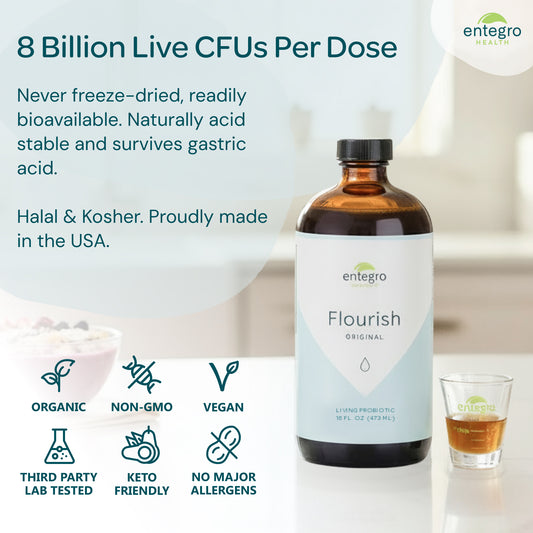
Flourish is a living liquid probiotic taken daily by adults for general digestive and microbiome support — eleven strains from five families, fermented together as one culture, third-party tested every batch.
It is not a treatment for endometriosis, and it is not a treatment for IBS. The two probiotic trials described above are small, used different strains, and were never replicated; the gastroenterology societies do not agree that probiotics treat either condition. If you would like to try a probiotic for general digestive support, speak to whoever is managing your endometriosis first — particularly if you are on hormonal treatment.
Flourish is a dietary supplement intended to support digestive and microbiome health. It is not a treatment for endometriosis, irritable bowel syndrome, or any other condition. Speak to your healthcare provider before starting any supplement, and follow the dosage on the label.
Ready to try a living probiotic?
Eleven living strains. One shared culture. One daily shot.
Shop Flourish Original · What’s inside · Product FAQ
A few questions we hear a lot
Do I need a laparoscopy to be diagnosed?
Not as a first step. Since 2022 the European guideline has recommended laparoscopy only where imaging is negative or empirical treatment has not worked or is inappropriate, and ACOG’s 2026 guideline takes the same broad approach.2,3 Imaging and a careful history come first.
My ultrasound was normal. Does that mean I do not have endometriosis?
No. ESHRE says so explicitly: a negative imaging finding "does not exclude endometriosis, particularly superficial peritoneal disease."2 Superficial disease is largely invisible to current imaging.31 A clear scan means the scan was clear, not that your pain is imaginary.
Is there a blood test for endometriosis?
No. ESHRE gives a strong recommendation, at the highest evidence grade in its diagnostic section, that clinicians should not use biomarkers in blood, endometrial tissue, menstrual or uterine fluids to diagnose it — CA-125 included.2 Saliva-based tests are being studied but are not established practice.
I have been told I have IBS. Could it actually be endometriosis?
It is worth asking. Women later diagnosed with endometriosis are around 3.5 times more likely to have already been given an IBS diagnosis,12 and in one surgical series 21.4% had been told they had IBS — with 79% of those women having endometriosis confirmed.9 If your bowel symptoms track your cycle, or come with painful periods or painful intercourse, say that specifically.
Are my gut symptoms caused by endometriosis on my bowel?
Usually not. In a series of 355 women, 90% had gastrointestinal symptoms but only 7.6% had bowel lesions.9 The symptoms are real; the explanation is more often shared inflammation, visceral hypersensitivity, and sometimes the side effects of treatment.5,10
Will a low FODMAP diet help?
For the digestive symptoms, quite possibly. A 2025 randomized crossover feeding trial found 60% of women with endometriosis responded to a low FODMAP diet against 26% on a control diet.39 It is not a treatment for the endometriosis itself, and it should be done with a dietitian and followed by structured reintroduction.
Will getting pregnant help?
No one should be told to. ESHRE makes a strong recommendation that patients "should not be advised to become pregnant with the sole purpose of treating endometriosis," and the review behind it found no evidence that pregnancy generally reduces lesions.2,37
Will it go away at menopause?
Often it eases, but not always. ESHRE concluded that endometriosis "can still be active/symptomatic after menopause," and specifically advises against estrogen-only hormone therapy in women with a history of it.2,38
Does endometriosis cause cancer?
It is not associated with a significantly higher risk of cancer overall.2 Ovarian cancer risk is higher in relative terms, but the absolute difference is roughly one extra case per thousand women — about three per thousand for deep disease or endometriomas.50 Guidelines do not recommend extra screening beyond the standard programs.2
About this article
Written by: Kelsy Armstrong, Entegro Health | Originally published: March 2022
Important information
This article is for general education and is not a substitute for professional medical advice, diagnosis, or treatment. Endometriosis shares symptoms with several other conditions, and decisions about investigation and treatment should be made with a qualified clinician who knows your history. Guideline recommendations are summarized here in brief; the linked documents contain the full wording, the strength of each recommendation and the quality of the underlying evidence. Where findings come from animal studies, that is stated in the text. Probiotic effects are specific to the strain, the dose and the population studied, and evidence for one product does not transfer to another. These statements have not been evaluated by the Food and Drug Administration. This product is not intended to diagnose, treat, cure, or prevent any disease.
Sources
- World Health Organization (updated 15 October 2025). Endometriosis (fact sheet) — "an estimated 10% (190 million) of reproductive age women worldwide"; time to diagnosis "between 4 and 12 years." Source
- ESHRE Endometriosis Guideline Group; Becker, C. M., Bokor, A., Heikinheimo, O., et al. (2022). ESHRE guideline: endometriosis. Human Reproduction Open, 2022(2), hoac009 — 109 recommendations; the guideline that retired diagnostic laparoscopy as the gold standard. Source
- American College of Obstetricians and Gynecologists (2026). Diagnosis of endometriosis. ACOG Clinical Practice Guideline. Obstetrics & Gynecology, 147(3), 432–448 — applies to adults and adolescents; built on the NICE evidence review. Source
- Bulun, S. E., Yilmaz, B. D., Sison, C., et al. (2019). Endometriosis. Endocrine Reviews, 40(4), 1048–1079 — local estrogen production via steroidogenic factor-1, and progesterone receptor deficiency. Source
- Ek, M., Roth, B., Ekström, P., et al. (2015). Gastrointestinal symptoms among endometriosis patients — a case-cohort study. BMC Women’s Health, 15, 59 — 109 patients vs 65 controls; symptoms poorly associated with lesion location; opioids and GnRH analogs worsen them. Source
- Bulun, S. E., Yildiz, S., Adli, M., et al. (2023). Endometriosis and adenomyosis: shared pathophysiology. Fertility and Sterility, 119(5), 746–750. Source
- Mayo Clinic. Endometriosis — symptoms and causes. Source
- DiVasta, A. D., Vitonis, A. F., Laufer, M. R., & Missmer, S. A. (2018). Spectrum of symptoms in women diagnosed with endometriosis during adolescence vs adulthood. American Journal of Obstetrics & Gynecology, 218(3), 324.e1–324.e11. Source
- Maroun, P., Cooper, M. J. W., Reid, G. D., & Keirse, M. J. N. C. (2009). Relevance of gastrointestinal symptoms in endometriosis. Australian and New Zealand Journal of Obstetrics and Gynaecology, 49(4), 411–414 — 355 women; 90% with GI symptoms, bloating 82.8%, bowel lesions only 7.6%. Source
- Saidi, K., Sharma, S., & Ohlsson, B. (2020). A systematic review and meta-analysis of the associations between endometriosis and irritable bowel syndrome. European Journal of Obstetrics & Gynecology and Reproductive Biology, 246, 99–105 — pooled estimate 2.39 (95% CI 1.83–3.11). Source
- Chiaffarino, F., Cipriani, S., Ricci, E., et al. (2021). Endometriosis and irritable bowel syndrome: a systematic review and meta-analysis. Archives of Gynecology and Obstetrics, 303(1), 17–25 — 11 studies; OR 3.26 (95% CI 1.97–5.39). Source
- Seaman, H. E., Ballard, K. D., Wright, J. T., & de Vries, C. S. (2008). Endometriosis and its coexistence with irritable bowel syndrome and pelvic inflammatory disease. BJOG, 115(11), 1392–1396 — 5,540 cases and 22,160 controls; OR 3.5 for a prior IBS diagnosis. Source
- Jess, T., Frisch, M., Jørgensen, K. T., Pedersen, B. V., & Nielsen, N. M. (2012). Increased risk of inflammatory bowel disease in women with endometriosis: a nationwide Danish cohort study. Gut, 61(9), 1279–1283 — 37,661 women; SIR 1.5. Source
- Vighi, G., Marcucci, F., Sensi, L., Di Cara, G., & Frati, F. (2008). Allergy and the gastrointestinal system. Clinical & Experimental Immunology, 153(Suppl. 1), 3–6 — the origin of the widely quoted 70% and 80% figures. Source
- Dieterich, W., Schink, M., & Zopf, Y. (2018). Microbiota in the gastrointestinal tract. Medical Sciences, 6(4), 116. Source
- Ahn, S. H., Monsanto, S. P., Miller, C., Singh, S. S., Thomas, R., & Tayade, C. (2015). Pathophysiology and immune dysfunction in endometriosis. BioMed Research International, 2015, 795976 — "an estrogen-dependent, chronic, proinflammatory disease." Source
- Zhang, X., Xu, H., Lin, J., Qian, Y., & Deng, L. (2005). Peritoneal fluid concentrations of interleukin-17 correlate with the severity of endometriosis and infertility of this disorder. BJOG, 112(8), 1153–1155. Source
- Karmarkar, D., & Rock, K. L. (2013). Microbiota signaling through MyD88 is necessary for a systemic neutrophilic inflammatory response. Immunology, 140(4), 483–492 — a mouse study. Source
- Arvonen, M., Berntson, L., Pokka, T., Karttunen, T. J., Vähäsalo, P., & Stoll, M. L. (2016). Gut microbiota-host interactions and juvenile idiopathic arthritis. Pediatric Rheumatology Online Journal, 14, 44. Source
- Leonardi, M., Hicks, C., El-Assaad, F., El-Omar, E., & Condous, G. (2020). Endometriosis and the microbiome: a systematic review. BJOG, 127(2), 239–249 — a qualitative synthesis including animal studies, not a meta-analysis. Source
- Ata, B., Yildiz, S., Turkgeldi, E., et al. (2019). The Endobiota study: comparison of vaginal, cervical and gut microbiota between women with stage 3/4 endometriosis and healthy controls. Scientific Reports, 9, 2204 — 14 cases and 14 controls; microbiota "overall similar." Source
- Svensson, A., Brunkwall, L., Roth, B., et al. (2021). Associations between endometriosis and gut microbiota. Reproductive Sciences, 28(8), 2367–2377 — 66 patients vs 198 controls; within-group differences vanished after correction for multiple testing. Source
- Colonetti, T., Saggioratto, M. C., Grande, A. J., et al. (2023). Gut and vaginal microbiota in endometriosis: systematic review and meta-analysis. BioMed Research International, 2023, 2675966 — no significant difference in gut alpha diversity. Source
- Yuanyue, L., Dimei, O., Ling, L., et al. (2025). Association between endometriosis and gut microbiota: a systematic review and meta-analysis. Frontiers in Microbiology, 16, 1552134 — 11 studies, 1,727 women; significant on Shannon, not on Chao. Source
- Chadchan, S. B., Popli, P., Ambati, C. R., et al. (2021). Gut microbiota-derived short-chain fatty acids protect against the progression of endometriosis. Life Science Alliance, 4(12), e202101224 — a mouse study. Source
- Laschke, M. W., & Menger, M. D. (2016). The gut microbiota: a puppet master in the pathogenesis of endometriosis? American Journal of Obstetrics & Gynecology, 215(1), 68.e1–68.e4 — a hypothesis paper. Source
- Muraoka, A., Suzuki, M., Hamaguchi, T., et al. (2023). Fusobacterium infection facilitates the development of endometriosis through the phenotypic transition of endometrial fibroblasts. Science Translational Medicine, 15(700), eadd1531. Source
- Graciano-España, M. C., Barnhart, K., Gonzalez-Monfort, M., et al. (2025). Fusobacterium nucleatum is not significantly present in eutopic endometrium from patients with minimal-mild and moderate-severe endometriosis. Fertility and Sterility, 124(5 Pt 2), 1071–1081 — 92 women; no significant difference. Source
- Baker, J. M., Al-Nakkash, L., & Herbst-Kralovetz, M. M. (2017). Estrogen-gut microbiome axis: physiological and clinical implications. Maturitas, 103, 45–53. Source
- Zhang, Q., Shen, Q., Celestino, J., et al. (2009). Enhanced estrogen-induced proliferation in obese rat endometrium. American Journal of Obstetrics & Gynecology, 200(2), 186.e1–186.e8 — an animal study. Source
- Avery, J. C., Deslandes, A., Freger, S. M., et al. (2024). Noninvasive diagnostic imaging for endometriosis part 1. Fertility and Sterility, 121(2), 164–188 — "a negative scan cannot preclude endometriosis." Source
- Nisenblat, V., Bossuyt, P. M. M., Farquhar, C., Johnson, N., & Hull, M. L. (2016). Imaging modalities for the non-invasive diagnosis of endometriosis. Cochrane Database of Systematic Reviews, 2, CD009591. Source
- Li, W., Feng, H., & Ye, Q. (2025). Factors contributing to the delayed diagnosis of endometriosis — a systematic review and meta-analysis. Frontiers in Medicine, 12, 1576490. Source
- U.S. Food and Drug Administration. Orilissa (elagolix sodium), NDA 210450, approved 23 July 2018 for the management of moderate to severe pain associated with endometriosis. Source
- Myovant Sciences and Pfizer (5 August 2022). U.S. FDA approval of MYFEMBREE (relugolix, estradiol and norethindrone acetate) for the management of moderate to severe pain associated with endometriosis; use limited to 24 months. Source
- Rizk, B., Fischer, A. S., Lotfy, H. A., et al. (2014). Recurrence of endometriosis after hysterectomy. Facts, Views & Vision in ObGyn, 6(4), 219–227 — 62% recurrence with ovarian conservation in advanced disease. Source
- Leeners, B., Damaso, F., Ochsenbein-Kölble, N., & Farquhar, C. (2018). The effect of pregnancy on endometriosis — facts or fiction? Human Reproduction Update, 24(3), 290–299. Source
- Cassani, C., Tedeschi, S., Cucinella, L., et al. (2024). Menopause and endometriosis. Maturitas, 190, 108129. Source
- Varney, J. E., So, D., Gibson, P. R., et al. (2025). Clinical trial: effect of a 28-day low FODMAP diet on gastrointestinal symptoms associated with endometriosis (EndoFOD) — a randomised, controlled crossover feeding study. Alimentary Pharmacology & Therapeutics, 61(12), 1889–1903. Source
- Moore, J. S., Gibson, P. R., Perry, R. E., & Burgell, R. E. (2017). Endometriosis in patients with irritable bowel syndrome: specific symptomatic and demographic profile, and response to the low FODMAP diet. Australian and New Zealand Journal of Obstetrics and Gynaecology, 57(2), 201–205. Source
- National Institute for Health and Care Excellence (2008, updated 2017). Irritable bowel syndrome in adults: diagnosis and management (Clinical guideline CG61). Source
- Marziali, M., Venza, M., Lazzaro, S., Lazzaro, A., Micossi, C., & Stolfi, V. M. (2012). Gluten-free diet: a new strategy for management of painful endometriosis related symptoms? Minerva Chirurgica, 67(6), 499–504 — retrospective, single-arm, no control group. Source
- Itoh, H., Uchida, M., Sashihara, T., et al. (2011). Lactobacillus gasseri OLL2809 is effective especially on the menstrual pain and dysmenorrhea in endometriosis patients: randomized, double-blind, placebo-controlled study. Cytotechnology, 63(2), 153–161 — 62 completed; conducted and authored by employees of the manufacturer. Source
- Khodaverdi, S., Mohammadbeigi, R., Khaledi, M., et al. (2019). Beneficial effects of oral Lactobacillus on pain severity in women suffering from endometriosis: a pilot placebo-controlled randomized clinical trial. International Journal of Fertility & Sterility, 13(3), 178–183 — a pilot, n=37. Source
- Su, G. L., Ko, C. W., Bercik, P., et al. (2020). AGA clinical practice guidelines on the role of probiotics in the management of gastrointestinal disorders. Gastroenterology, 159(2), 697–705. Source
- Lacy, B. E., Pimentel, M., Brenner, D. M., et al. (2021). ACG clinical guideline: management of irritable bowel syndrome. The American Journal of Gastroenterology, 116(1), 17–44. Source
- Vasant, D. H., Paine, P. A., Black, C. J., et al. (2021). British Society of Gastroenterology guidelines on the management of irritable bowel syndrome. Gut, 70(7), 1214–1240. Source
- Thiel, P. S., Bougie, O., Pudwell, J., et al. (2024). Endometriosis and mental health: a population-based cohort study. American Journal of Obstetrics & Gynecology, 230(6), 649.e1–649.e19 — 35,944 cases vs 71,888 matched. Source
- Kvaskoff, M., Mahamat-Saleh, Y., Farland, L. V., et al. (2021). Endometriosis and cancer: a systematic review and meta-analysis. Human Reproduction Update, 27(2), 393–420. Source
- Barnard, M. E., Farland, L. V., Yan, B., et al. (2024). Endometriosis typology and ovarian cancer risk. JAMA, 332(6), 482–489 — 78,893 women; adjusted risk difference 9.90 per 10,000. Source
Further reading
Retained from the original article. These are commercial and consumer publications rather than peer-reviewed literature, and no factual claim above rests on them.
- Clinning, K. (August 2019). The relationship between gut health and endometriosis. White Lotus Integrative Medicine. Source
- Dalal, A. (September 2021). Endometriosis and gut health are linked. Health Shots. Source
- Wolski, C. (September 2020). Endometriosis and gut health. The Healthy Eating Clinic. Source
- Giudice, L. C., & Kao, L. C. (2004). Endometriosis. The Lancet, 364(9447), 1789–1799. Source
- Vercellini, P., Viganò, P., Somigliana, E., & Fedele, L. (2014). Endometriosis: pathogenesis and treatment. Nature Reviews Endocrinology, 10(5), 261–275. Source
- Zondervan, K. T., Becker, C. M., & Missmer, S. A. (2020). Endometriosis. New England Journal of Medicine, 382(13), 1244–1256. Source