5 Essential Tips for Building a New Habit in 2026
Most advice about New Year’s resolutions opens by telling you they fail. The largest study ever done on them says something more interesting — and considerably more useful.

Photo: Letícia Alvares/ https://www.pexels.com
Researchers in Sweden randomized 1,066 people making New Year’s resolutions and followed them for a year. At the one-year mark, 55% of the people who responded still considered themselves successful1. That is not the story you usually hear.
The study also found something worth building a whole year around. People whose resolution was framed as something to start did significantly better than people whose resolution was framed as something to stop — 58.9% versus 47.1%1. Approach beats avoidance. What you are moving toward matters more than what you are giving up.
So resolutions are not doomed. They are just badly designed most of the time. Here are five things the research actually supports, and what each one looks like on a Tuesday in February when nobody is watching.
1. Start ridiculously small

Photo: cottonbro studio/ https://www.pexels.com
The most common way to lose is to start too big. BJ Fogg, who founded and directs Stanford’s Behavior Design Lab, observes that motivation comes in waves — high on the first of January, considerably lower by the third — which makes it a terrible foundation to build on. His answer is to make the new behavior so small that you do not need motivation to do it.
His framework is B = MAP: a behavior happens when Motivation, Ability and a Prompt arrive at the same moment2. If any one is missing, nothing happens. You cannot control motivation, but you can make the behavior so easy that low motivation is enough. It is a design framework from human-computer interaction rather than a tested psychological theory, and it is worth knowing that — but as practical advice it holds up well.
One thing the foundational study actually found
In Lally’s habit-formation study, people were far more consistent with simple behaviors than complex ones: 93% compliance for a daily drinking habit versus 80% for eating and 86% for exercise3. Interestingly, the simple habits did not become automatic faster in a statistically significant way. What they did was get done more reliably — and consistency is the engine of the whole process.
Small is not a compromise. Small is the mechanism.
Action step
Take the habit you want and scale it down until it is almost embarrassing. Want to read more? One page. Want to move more? Put your shoes on. Want to add a daily supplement? Start with a single one rather than a shelf of them. Once the small version runs by itself, you can grow it.
2. Hang it off something you already do

Photo: Anastasia Shuraeva/ https://www.pexels.com
This is the tip with the strongest research behind it, and it is usually explained under the wrong name.
Psychologists call it an implementation intention — a plan that specifies the when and where, not just the what. The formula is “If situation Y is encountered, then I will initiate goal-directed behavior X!” A meta-analysis pooling 94 independent tests found these plans had a “positive effect of medium-to-large magnitude (d = .65) on goal attainment”4. A workplace field experiment showed the same thing outside the lab, with real behavior on a real shop floor5.
Naming the moment is most of the work. Vague intentions lose to specific ones, reliably.
The easiest way to build one is to set the “if” to something you already do every day without thinking:
- After I start the coffee machine, I will take my supplement.
- After I sit down for lunch, I will eat a piece of fruit.
- After I brush my teeth at night, I will lay out tomorrow’s clothes.
Popular writers call this habit stacking. It is a convenient special case of the same idea, with your existing routine serving as the cue. Worth knowing that the researched construct is the implementation intention — habit stacking is the friendly packaging, and it has no separate trial evidence of its own.
Action step
Write yours down in the if–then form and put it where you will see it. Not “I’ll take it in the morning,” but “after the kettle goes on.”
3. Aim at who you are becoming, not what you want

Photo: Martin Dalsgaard/ https://www.pexels.com
There is a difference between someone trying to exercise more and someone who thinks of themselves as a person who walks every morning. The first negotiates with the weather. The second puts a coat on.
Writer James Clear, author of Atomic Habits, puts the idea as a loop: your habits shape your identity and your identity shapes your habits. He is a writer rather than a researcher, and the framing is his — but there is real evidence underneath it.
Across 40 independent tests and 11,607 people, a meta-analysis found a “large, sample-weighted average correlation between self-identity and behavioral intention (r+ = .47)”, and that self-identity explained an additional slice of the variance in intention even after accounting for attitudes, social pressure, perceived control and past behavior6.
Being precise about what that means
Identity most strongly predicts what you intend to do, and its effect on behavior runs largely through the strength of that intention6. So identity is not a magic trick that does the work for you. It changes what you are willing to sign up for, and how readily you renegotiate at 6 a.m. That is quite a lot, and it is less than the internet usually promises.
Action step
Instead of “lose twenty pounds,” try finishing this sentence: I am becoming someone who… Then pick the smallest action that a person like that would obviously do, and do that. Note that this is also the approach-oriented framing the resolution study found worked better1.
4. Let your environment do the remembering
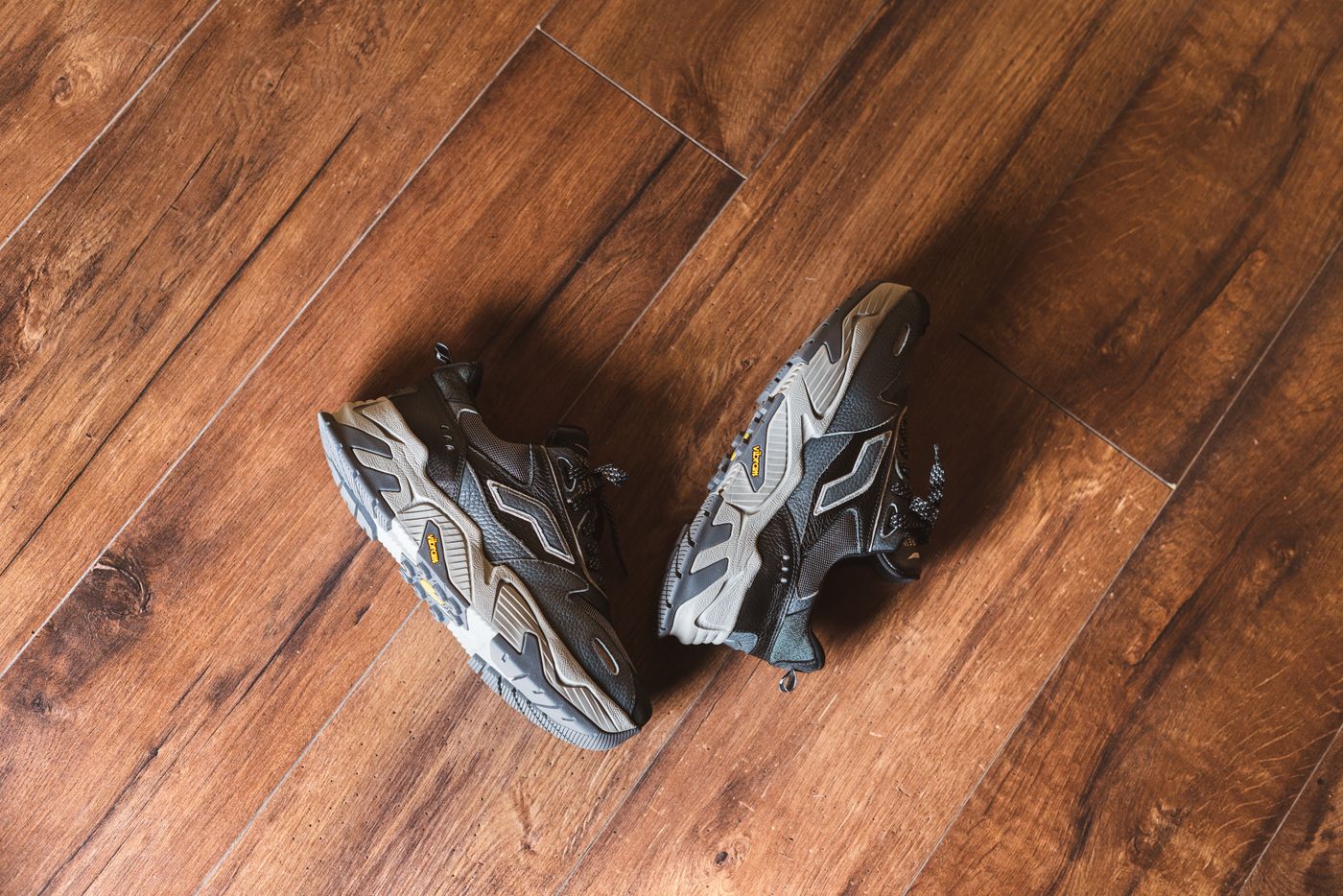
Photo: Sneep Crew/ https://www.pexels.com
A great deal of what you did today, you did because of where you were. In a classic diary study of everyday behavior, researchers found that between a third and a half of all behaviors people recorded were habits — performed almost daily, and usually in the same place7. The same study found people felt less stress doing habitual things than non-habitual ones, because they did not have to steer.
That is why context is the lever. The authoritative review of the field concludes that habits change through specific interventions, notably changes in context cues8. Not through trying harder.
James Clear puts the practical version well: “By changing your surroundings, you can place a hurdle in the way of bad behaviors and remove the barriers to good ones.”9 Count the steps between you and the thing you want to do, then remove one. Count the steps between you and the thing you do not, then add one.
The most striking demonstration of this is not about habits at all. When researchers compared organ donation rates across European countries, the difference between near-universal consent and very low consent was largely which way the form was worded by default10. People mostly go with the setup they are handed. You may as well be the one who set it up.

- For a daily supplement: keep it where the routine already happens — beside the kettle, on the counter, in the fridge door at eye level. Out of sight really is out of mind.
- For exercise: lay the kit out the night before, by the door or the bed. You are removing a decision from a version of yourself who will not want to make it.
- For something you want to do less of: add friction. Put it in another room, behind a cupboard door, or off the home screen.
Action step
Pick your one important habit. Remove a single barrier to doing it, and add a single visible cue that reminds you. Two small changes to a room beat a month of willpower.
5. Celebrate immediately, and never miss twice

Photo: Letícia Alvares/ https://www.pexels.com
Fogg’s argument is that the good feeling is the point — that what makes a habit stick is not repetition alone, but how you feel the moment you finish. Take the two seconds. Say “yes,” mark the calendar, enjoy it visibly.
A quick word about dopamine
You will see it claimed everywhere that celebrating triggers a dopamine release that hardwires the habit. That is not quite what dopamine does, and the real story is more interesting.
Dopamine neurons are “activated by rewarding events that are better than predicted, remain uninfluenced by events that are as good as predicted, and are depressed by events that are worse than predicted. By signaling rewards according to a prediction error, dopamine responses have the formal characteristics of a teaching signal”11.
In other words, dopamine tracks surprise — the gap between what you expected and what you got. A celebration you planned in advance and then performed yourself is about as unsurprising as an event can be. Habit formation also involves more than one brain system: current reviews describe habits as the output of a stimulus-response system working alongside a goal-directed one12, which is not something a fist pump reaches into.
So celebrate — but for the honest reason. Behaviors that feel good are behaviors you are more willing to repeat tomorrow, and repetition in a consistent setting is what actually builds the habit. That is enough. It does not need neuroscience it has not earned.
And the part that will save you
Here is the finding that matters most in this entire article, from the study that mapped habit formation in real life: “Missing one opportunity to perform the behaviour did not materially affect the habit formation process.”3 A single missed day costs you almost nothing.
The same paper draws the line clearly: missing one opportunity does not prevent a habit forming, but missing a week’s worth reduces the likelihood of future performance and hinders habit acquisition3. Which gives you the simplest rule in behavior change: never miss twice.
One missed day is an accident. Two is the beginning of a new habit, and not the one you wanted.
This is also why perfectionism is such a poor strategy. In a two-year study of New Year’s resolvers, 53% of the people who ultimately succeeded had at least one slip, with an average of fourteen slips across the two years13. Slipping is not the opposite of succeeding. It is part of the shape of it.
Action step
Choose a celebration you will actually do — a fist pump, an X on the calendar, a long satisfied breath. Do it every single time. And if you miss a day, skip the guilt and put the streak back tomorrow.
How long this actually takes
You have probably heard twenty-one days. It is not true, and believing it is one of the main reasons people quit on day twenty-two convinced they have failed.
The real numbers, from the best evidence available:
- The landmark real-world study found a median of 66 days for a new daily behavior to reach its plateau of automaticity — with a range of 18 to 254 days3
- A 2024 systematic review and meta-analysis of 20 studies and 2,601 people found median times to habit formation of 59–66 days and means of 106–154 days, with individual variation from 4 to 335 days14
- And a study applying machine learning to over 12 million gym visits and over 40 million handwashing observations concluded that, “contrary to the popular belief in a ‘magic number’ of days to develop a habit, we find that it typically takes months to form the habit of going to the gym but weeks to develop the habit of handwashing”15
So there is no magic number, and different habits form at genuinely different speeds. A glass of water with breakfast will settle in far sooner than a running routine, and that is not a character flaw — it is the shape of the thing.
The useful way to read all that
If you are on day thirty and it still takes effort, nothing has gone wrong. You are somewhere in the middle of a normal range. The people who succeed are mostly the people who were not expecting to be finished by now.
Sustainable change
None of this requires unusual willpower. It requires designing the thing so that willpower is not the load-bearing part. Start small enough to be almost silly. Hang it off something you already do. Aim at the person you are becoming rather than the number you want. Set the room up so the right thing is the easy thing. Celebrate it, forgive the missed days, and never miss twice.
Then give it longer than you think. Two months is ordinary. The habits you build this year are the ones you will still have in the next one, and that is worth a bit of patience.
About this article
Written by: Lynn Haak, Entegro Health | Originally published: December 2025
Important information
This article is for general education and isn’t a substitute for professional medical advice, diagnosis, or treatment. Nothing here diagnoses, treats, cures or prevents any condition. If you have a health concern, please speak to a qualified health professional.
These statements have not been evaluated by the Food and Drug Administration. This product is not intended to diagnose, treat, cure, or prevent any disease.
Sources
- Oscarsson, M., Carlbring, P., Andersson, G., & Rozental, A. (2020). A large-scale experiment on New Year’s resolutions: approach-oriented goals are more successful than avoidance-oriented goals. PLoS ONE, 15(12), e0234097 — “Participants (N = 1066) from the general public were randomized into three groups… At a one-year follow-up, 55% of responders considered themselves successful in sustaining their resolutions. Participants with approach-oriented goals were significantly more successful than those with avoidance-oriented goals (58.9% vs. 47.1%).” Source
- Fogg, B. J. (2009). A behavior model for persuasive design. Proceedings of the 4th International Conference on Persuasive Technology, Article 40 — the B = MAP model (Motivation, Ability, Prompt). A peer-reviewed human-computer interaction conference paper and a widely used design framework, rather than a psychological theory with a large validation record. Source
- Lally, P., van Jaarsveld, C. H. M., Potts, H. W. W., & Wardle, J. (2010). How are habits formed: modelling habit formation in the real world. European Journal of Social Psychology, 40(6), 998–1009 — “The median time to reach 95% of asymptote was 66 days, with a range from 18 to 254 days”; “Missing one opportunity to perform the behaviour did not materially affect the habit formation process”; “missing one opportunity does not preclude habit formation, but missing a week’s worth of opportunities reduces the likelihood of future performance and hinders habit acquisition”. Compliance across behavior types was 80% (eating), 93% (drinking) and 86% (exercise), a significant difference; differences in time to automaticity between those categories were not statistically significant. Source
- Gollwitzer, P. M., & Sheeran, P. (2006). Implementation intentions and goal achievement: a meta-analysis of effects and processes. Advances in Experimental Social Psychology, 38, 69–119 — implementation intentions spell out “the when, where, and how of goal striving in advance (‘If situation Y is encountered, then I will initiate goal-directed behavior X!’)”; “Findings from 94 independent tests showed that implementation intentions had a positive effect of medium-to-large magnitude (d = .65) on goal attainment.” Source
- Holland, R. W., Aarts, H., & Langendam, D. (2006). Breaking and creating habits on the working floor: a field-experiment on the power of implementation intentions. Journal of Experimental Social Psychology, 42(6), 776–783 — a workplace field experiment demonstrating implementation intentions changing real behavior outside the laboratory. Source
- Rise, J., Sheeran, P., & Hukkelberg, S. (2010). The role of self-identity in the theory of planned behavior: a meta-analysis. Journal of Applied Social Psychology, 40(5), 1085–1105 — “Altogether, 40 independent tests (N = 11607) could be included in the review. A large, sample-weighted average correlation between self-identity and behavioral intention was observed (r+ = .47)… self-identity explained an increment of 6% of the variance in intention after controlling for the TPB components, and explained an increment of 9% of the variance when past behavior and the TPB components were controlled. The influence of self-identity on behavior was largely mediated by the strength of behavioral intentions.” Source
- Wood, W., Quinn, J. M., & Kashy, D. A. (2002). Habits in everyday life: thought, emotion, and action. Journal of Personality and Social Psychology, 83(6), 1281–1297 — “between a third and a half of all behaviors listed were classified as habits, given that they were performed just about every day and usually in the same location” (35% in Study 1, 43% in Study 2); habitual behavior was associated with “lesser feelings of stress… than nonhabitual behavior.” Source
- Wood, W., & Rünger, D. (2016). Psychology of habit. Annual Review of Psychology, 67, 289–314 — the authoritative review of habit research; habits change through specific interventions, notably changes in context cues. Source
- Clear, J. — “How to improve your health and productivity without thinking,” jamesclear.com: “By changing your surroundings, you can place a hurdle in the way of bad behaviors and remove the barriers to good ones.” James Clear is a writer and the author of Atomic Habits, not a researcher; quoted here for framing rather than as evidence. Source
- Johnson, E. J., & Goldstein, D. (2003). Do defaults save lives? Science, 302(5649), 1338–1339 — the organ-donation default study, and the canonical demonstration that how an option is set by default largely determines what people choose. Source
- Schultz, W. (1998). Predictive reward signal of dopamine neurons. Journal of Neurophysiology, 80(1), 1–27 — “All responses to rewards and reward-predicting stimuli depend on event predictability. Dopamine neurons are activated by rewarding events that are better than predicted, remain uninfluenced by events that are as good as predicted, and are depressed by events that are worse than predicted. By signaling rewards according to a prediction error, dopamine responses have the formal characteristics of a teaching signal postulated by reinforcement learning theories.” Source
- Buabang, E. K., Boddez, Y., de Houwer, J., & Moors, A. (2025). Leveraging cognitive neuroscience for making and breaking real-world habits. Trends in Cognitive Sciences, 29(1), 41–59 — “Habits are the behavioral output of two brain systems. A stimulus-response (S-R) system that encourages us to efficiently repeat well-practiced actions in familiar settings, and a goal-directed system concerned with flexibility, prospection, and planning.” Source
- Norcross, J. C., & Vangarelli, D. J. (1988). The resolution solution: longitudinal examination of New Year’s change attempts. Journal of Substance Abuse, 1(2), 127–134 — 200 New Year’s resolvers tracked over two years: “Seventy-seven percent maintained their pledges for 1 week but only 19% for 2 years… Fifty-three percent of the successful group experienced at least one slip, and the mean number of slips over the 2-year interval was 14.” Source
- Singh, B., Murphy, A., Maher, C., & Smith, A. E. (2024). Time to form a habit: a systematic review and meta-analysis of health behaviour habit formation and its determinants. Healthcare (Basel), 12(23), 2488 — “A total of 20 studies involving 2601 participants… Four studies reported the median or mean times to reach habit formation, ranging from 59–66 days (median) and 106–154 days (means), with substantial individual variability (4–335 days).” Source
- Buyalskaya, A., Ho, H., Milkman, K. L., Li, X., Duckworth, A. L., & Camerer, C. (2023). What can machine learning teach us about habit formation? Evidence from exercise and hygiene. Proceedings of the National Academy of Sciences, 120(17), e2216115120 — “Contrary to the popular belief in a ‘magic number’ of days to develop a habit, we find that it typically takes months to form the habit of going to the gym but weeks to develop the habit of handwashing in the hospital.” Source